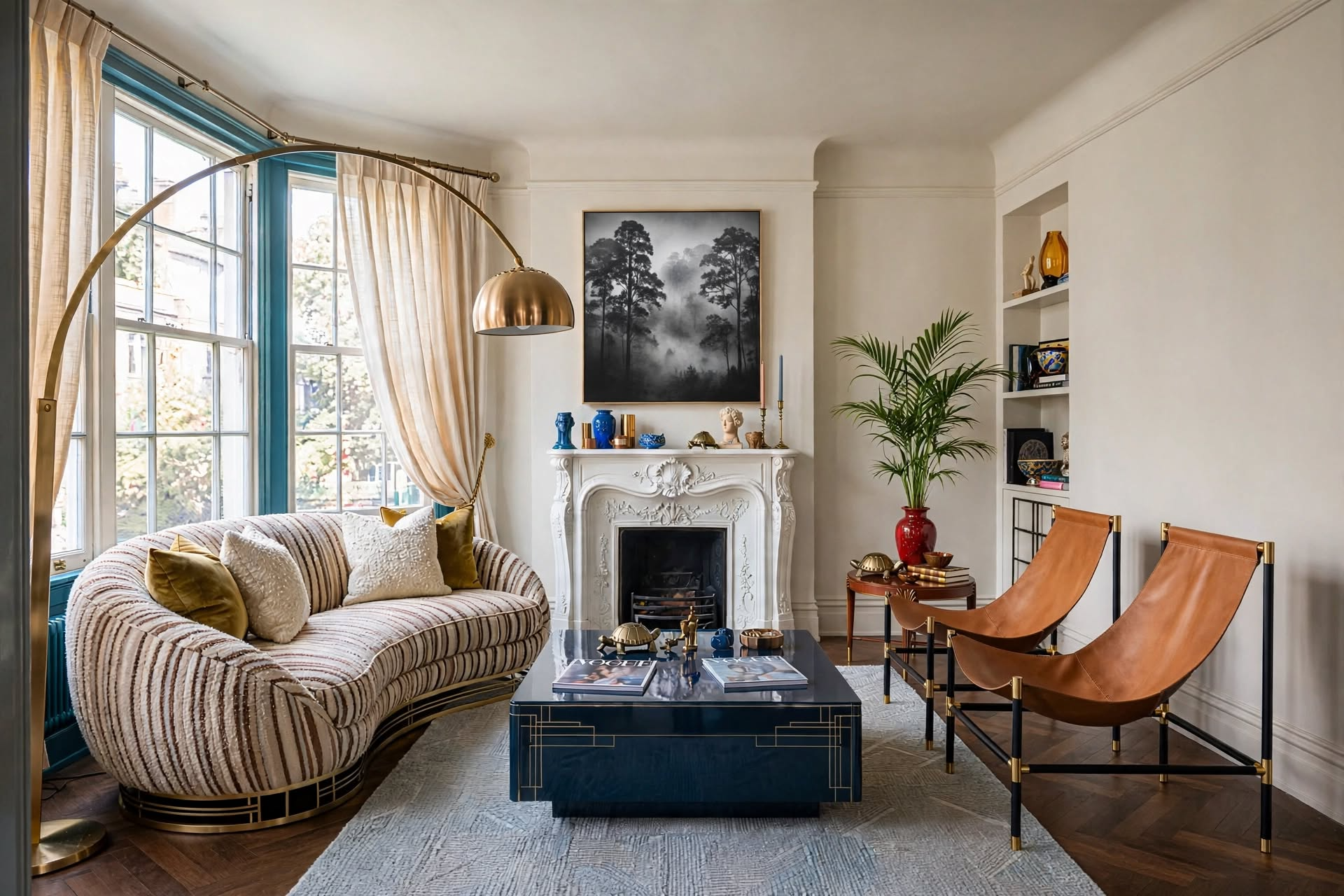
Getting your apartment furniture essentials right from day one saves you money, prevents costly mistakes, and makes even the smallest rental feel intentional and designed. Whether you’re furnishing your first apartment or finally upgrading a space that never quite came together, this guide gives you the exact framework interior designers use — room by room, budget bracket by bracket — so you walk away with a plan, not just a wishlist.

In this post, we’re covering every room — living room, bedroom, dining area, home office, and more — with honest advice about what to buy first, what to skip, and the designer-level principles that make a space look pulled together on any budget. These are the rental apartment furniture essentials that actually matter.
The must-have apartment furniture essentials are: a quality sofa, bed frame + mattress, dining table, a desk + chair, storage solutions, layered lighting, and at least one area rug. Prioritize anchor pieces first — the sofa and bed — then build out with functional accessories. For rentals specifically: choose furniture you can move easily, avoid permanent installations, and focus on scale over quantity.
📋 What You’ll Learn In This Guide+
- Living Room Furniture Essentials
- Bedroom Furniture Essentials
- Dining Area Furniture Essentials
- Home Office Furniture Essentials
- Lighting — The Essential You’re Probably Missing
- Multifunctional Furniture for Small Apartments
- What to Buy First: The Apartment Furniture Priority Order
- Budget Breakdown by Room
- Rental-Specific Rules
- Before & After: The Most Common Mistakes
- Furniture Essentials by Design Aesthetic
- The Measurements You Actually Need
- Interior Design Cheat Sheet (Copy & Keep)
- FAQs
Living Room Furniture Essentials
The living room is where your apartment’s personality shows up first — and where most people overspend on the wrong pieces. The core apartment furniture essentials for a living room are a sofa, a coffee table, a rug, a media console, and at least one accent chair. Get those five right and the room practically designs itself.

The Sofa: Your Single Most Important Purchase
Your sofa sets the scale and tone for the entire living room. In an apartment, the most common mistake is buying a sofa that’s either too large (it visually devours the room) or too small (it floats awkwardly in the space). The rule: leave at least 18 inches between the sofa and the coffee table, and ensure the sofa doesn’t block any natural pathways through the room.
The sofa should be no more than two-thirds the width of the wall it faces. For most studio and one-bedroom apartments, a sofa between 72–84 inches hits the sweet spot between comfort and proportion. Avoid sectionals in rooms under 14×14 ft — they rarely fit well and limit your layout options.
✓ Do This
- Choose tight-back cushions for a cleaner, more “put-together” look in small spaces
- Opt for performance fabric (bouclé, microfiber) if you have pets or kids
- Test the frame quality — lift a corner; it should feel solid, not flex
- Pick a neutral base (cream, greige, charcoal) and add personality with pillows
✗ Avoid This
- Buying a sofa without measuring your doorway first (common disaster)
- Pushing the sofa directly against the wall — it kills visual depth
- Choosing a feather-filled sofa if you want it to maintain shape long-term
- Oversized sectionals that leave no room for a rug or accent chair
 Editor’s Pick
Farmhouse Slipcovered Sofa
The slipcover is the secret weapon for renters — washable, changeable, and damage-deposit friendly. The solid frame holds up over years of daily use.
Best for: casual-chic apartments, pet owners, renters who want long-term flexibility
Shop on Wayfair Storage Win
Round Storage Coffee Table
Round tables reduce the visual clutter of hard corners in tight spaces and the hidden storage solves the “where does everything go?” problem every apartment renter faces.
Best for: studios and small living rooms where floor space is precious
Shop on Wayfair Multi-Use
Storage Ottoman with Reversible Lid
Triples as a coffee table, extra seating, and a storage unit. In a rental apartment, every piece needs to earn its floor space — this one earns it three times over.
Best for: studio apartments, minimalists, anyone short on storage
Shop on WayfairThe Area Rug: The Most Underestimated Essential
No other single piece transforms an apartment living room as dramatically as the right area rug. It defines the seating zone, adds warmth, and — critically — visually expands the space when sized correctly. The most common sizing mistake: going too small. In a typical apartment living room, you want at minimum the front legs of all seating on the rug, or ideally all four legs.
Measure Your Seating
Measure the outer edges of your sofa and chairs. Your rug should extend at least 12–18 inches beyond each piece.
Leave a Border
Leave 12–18 inches of bare floor between the rug edge and the walls. This framing effect makes the room feel larger.
Go Bigger Than You Think
Most people buy a 5×8 when they need an 8×10. When in doubt, size up — a larger rug almost always looks better.

Media Console & Accent Chair
The media console is often treated as an afterthought — but it’s one of the most visible pieces in the room. Avoid tall, heavy entertainment centers in apartments; they shrink ceiling height visually. A low-profile media console (under 24 inches tall) keeps the room breathing. And if your floor plan allows, an accent armchair across from the sofa completes the conversation area and is the piece that most elevates a room from “furnished” to “designed.”


Bedroom Furniture Essentials

The bedroom furniture essentials for an apartment are fewer than most people think: a bed frame, a quality mattress, nightstands, and some form of clothing storage. But the decisions within those categories — sizing, style, storage capacity — make an enormous difference in how restful and functional the space actually feels.
“The bed should anchor the room — not just physically, but visually. Build every other decision around it: nightstands flanking it symmetrically, lighting at eye level from the pillow, a rug extending at least 24 inches on each side.”
— Interior Design Principle, Studio McGee Design MethodBed Frame + Mattress: The Non-Negotiable Foundation
For rental apartment furniture essentials, the bed frame is the one piece worth investing in above all others. You’ll spend roughly one-third of your life in it. A storage bed frame — specifically one with under-bed drawers — solves the number-one storage problem in apartment bedrooms without requiring any additional furniture or drilling.
Choose the Right Size for Your Room
In rooms under 10×10 ft, a full/double maximizes floor space. 10×12 and up comfortably fits a queen. Only go king if you have a 12×14 ft minimum — otherwise the room becomes “all bed.”
Prioritize Mattress Quality Over Frame Aesthetics
A $200 frame with a $900 mattress will serve you better long-term than a $900 frame with a $200 mattress. Sleep quality is non-negotiable; aesthetics can be upgraded later.
Storage Bed Frames Are a Rental Game-Changer
Under-bed drawers or lift-storage can replace an entire dresser in small apartments — freeing up significant floor space and keeping the room from feeling cramped.
Platform Frames Are Renter-Friendly
Platform beds sit lower (15–18 inches) which makes ceilings feel higher — a major visual advantage in apartments with standard 8-foot ceilings.
 Storage Bed
Upholstered Platform Storage Bed
Four built-in drawers replace the need for a dresser in smaller bedrooms. The upholstered headboard adds a finished, designed look without requiring wall-mounting.
Best for: apartments without closet space, minimalist bedrooms, renters
Shop on Wayfair Invest Here
Sealy 12″ Memory Foam Mattress
Medium-firm profile works for back and side sleepers. The cooling gel layer is a practical choice for apartment bedrooms that tend to trap heat.
Best for: hot sleepers, back/side sleeper combos, those upgrading from a budget mattress
Shop on Wayfair Pair Up
Cesiro 1-Drawer Nightstand
Symmetrical nightstands on both sides of the bed are one of the simplest ways to make a rental bedroom look professionally designed. The drawer keeps the surface clutter-free.
Best for: creating a balanced, hotel-inspired bedroom aesthetic
Shop on WayfairDining Area Furniture Essentials

Many apartment renters skip a proper dining setup, assuming they don’t have space. This is almost always a mistake. Even a small dining table — 36 inches round — defines the space, adds significant daily function, and is one of the most impactful apartment furniture essentials for how a home actually feels to live in.
A round dining table seats more people per square foot than a rectangular one. A 36-inch round seats 2–3 comfortably. A 42-inch round seats 4. In most apartment dining areas (under 10×10 ft), round is almost always the right choice. It also eliminates corner collision and improves traffic flow.

Dining Room Furniture Essentials Checklist
- ◆ Dining table (sized for your space)
- ◆ Dining chairs (at least 2, ideally 4)
- ◆ Adequate lighting above (pendant or flush)
- ◆ Sideboard or buffet for storage
- ◆ Bar cart for entertaining
- ◆ Area rug beneath the table
- ◆ China cabinet (usually too large)
- ◆ Matching dining set (mix chairs instead)
- ◆ Formal dining furniture in a casual space
Home Office Furniture Essentials

A functional home office zone has become a non-negotiable apartment furniture essential for anyone who works remotely, even part-time. The most common mistake is trying to work at the dining table long-term — it bleeds your workspace into your living space and makes it difficult to mentally “leave” work. A dedicated desk, even in a corner or bedroom alcove, creates the psychological boundary that remote work requires.
The single biggest home office investment that pays off immediately: an ergonomic chair. Back pain from 8+ hours at a bad chair accumulates fast. You can start with a budget desk, but a proper chair with lumbar support is worth spending on from day one.


Lighting — The Essential You’re Probably Missing

Lighting is the most consistently overlooked category in any list of apartment furniture essentials — and the one that has the largest impact on how the space feels. Relying solely on overhead fixtures (the default in most apartments) creates a flat, unflattering light that makes even well-furnished rooms look institutional. The fix: layered lighting at multiple heights.
“Good lighting design in an apartment isn’t about expensive fixtures — it’s about layering light at three heights: ambient (ceiling), task (table/desk), and accent (floor/wall). When you do that, the room looks finished, warm, and intentional.”
— Lighting design principle, Architectural Digest| Lighting Type | Where It Goes | What It Does | Renter Notes |
|---|---|---|---|
| Ambient (overhead) | Ceiling, already there | General illumination; usually too harsh on its own | Use a smart bulb to dim it easily |
| Task lighting | Desk, bedside, kitchen counter | Focused light for specific activities | Plug-in options; no wiring needed |
| Floor lamp | Living room corners, beside sofa | Fills dark corners, adds warmth and height | No installation; moves with you |
| Table lamp | Nightstands, console tables, shelves | Intimate ambient glow; humanizes the space | Pair two matching ones for cohesion |
| Wall sconce (plug-in) | Bedside, reading nook, hallway | Frees up surface space; adds architectural interest | Plug-in versions need no electrician |


Multifunctional Furniture for Small Apartments

In apartments under 700 square feet, every piece of furniture needs to justify its floor space — ideally by serving more than one function. This isn’t a compromise; it’s smart design. The apartment furniture essentials in this category are the pieces that, when chosen well, let a small apartment feel surprisingly spacious and considered.
✓ Multifunctional Essentials Worth Having
- Storage ottoman (seating + surface + storage)
- Sofa bed or daybed (seating + guest sleeping)
- Storage bed frame (bed + dresser replacement)
- Nesting tables (coffee table that expands when needed)
- Leaning desk with shelves (workspace + bookshelf)
- Fold-down wall-mounted desk (appears when needed, disappears when not)
✗ Multifunctional Traps to Avoid
- Cheap sofa beds — the mattress is usually terrible and ruins both functions
- “Convertible” furniture that takes 10 minutes to convert — you’ll stop using it
- Buying multifunctional to save money on a piece you’ll hate
- Assuming a sleeper sofa replaces a real guest bed — it doesn’t, for regular guests
What to Buy First: The Apartment Furniture Priority Order

When you’re furnishing a new apartment — especially on a budget — the order in which you buy apartment furniture essentials matters as much as what you buy. Buying impulsively in the wrong order leads to pieces that don’t work together and a budget that runs out before the important things are covered.
Week 1: Sleep & Sit
Bed frame, mattress, and sofa. These affect your daily quality of life most. Buy well here before anything else.
Week 2: Eat & Work
Dining table and desk/chair. Without these, you’ll use your sofa for everything — which leads to back problems and poor work habits.
Week 3: Store & Organize
Storage solutions — nightstands, media console, shelving. These prevent the visual chaos that makes apartments feel chaotic.
Month 2: Light It
Floor lamps, table lamps, plug-in sconces. Transform the atmosphere. Don’t rush this — buy deliberately for maximum impact.
Month 2: Ground It
Area rugs. The single highest-ROI purchase once the furniture is placed. Now you can see exactly what size and placement works.
Month 3+: Layer It
Accent chairs, decorative objects, art, plants. This is where personality happens — and it takes time to get it right.
Budget Breakdown: Apartment Furniture by Room
One of the most common questions when building out rental apartment furniture essentials is: how much should each room cost? These ranges reflect realistic quality — not IKEA basics, not luxury showroom pricing — with the goal of buying pieces that last 5+ years.
| Room / Piece | Budget Range | Where to Splurge | Where to Save |
|---|---|---|---|
| Sofa | $600 – $1,800 | Frame & fabric quality | Decorative pillows |
| Bed Frame | $300 – $900 | Storage functionality | Headboard details |
| Mattress | $500 – $1,400 | Always — affects sleep quality | N/A (don’t cheap out) |
| Dining Table + Chairs | $300 – $900 | Table durability (wood vs. veneer) | Chairs (mix & match) |
| Area Rug | $150 – $600 | Size (go bigger) | Pattern vs. solid |
| Desk + Chair | $250 – $800 | Ergonomic chair | Desk (simple is fine) |
| Lighting (full apartment) | $200 – $600 | Floor lamp (visible; sets tone) | Table lamps (affordable options abound) |
| Storage Solutions | $150 – $500 | Media console (constantly visible) | Bedroom storage (inside closet) |
Allocate roughly 30% of your total furniture budget to the sofa and mattress combined. These two pieces affect your daily physical comfort more than anything else. Everything else can be phased in — but sleeping and sitting well from day one matters.
Rental-Specific Rules: What Changes in a Rental Apartment

Furnishing a rental apartment comes with constraints that owned-home guides consistently ignore: no permanent wall modifications, no built-ins, limited ability to paint, and the need for everything to be moveable when the lease ends. These rules shape which apartment furniture essentials are the right call for renters specifically.
Avoid Built-In Everything
Custom built-ins, wall-to-wall shelving, and Murphy beds require professional installation and usually can’t leave with you. Lean toward freestanding alternatives — leaning shelves, standalone wardrobes, modular storage — that move with you.
Command Strips Are Your Best Friend
Plug-in lighting, command-strip art hanging, and peel-and-stick solutions give you enormous design flexibility without touching the walls. Used carefully, none of this impacts your security deposit.
Prioritize Pieces That Scale
Buy furniture sized for your next apartment, not just your current one. A sofa that works in a 600 sq ft studio should also work in an 800 sq ft one-bedroom. Avoid pieces so oversized or oddly shaped that they only work in one specific layout.
Use Rugs to Define Zones
In open-plan rental apartments, area rugs do the visual work that walls and built-ins do in other homes. A rug under the sofa defines the living zone. A rug under the desk defines the workspace. This creates a sense of separate “rooms” without any structural changes.
Choose Neutral Furniture, Bold Accessories
Neutral furniture (cream, warm grey, natural wood) works in any apartment you move to. Bold personality through pillows, throws, rugs, and art — items that change easily — means your look evolves without replacing furniture.
Before & After: The Most Common Apartment Furniture Mistakes

These are the five scenarios that interior designers see over and over again in rental apartments. Each one has a simple fix that costs nothing — just a different decision.
Apartment Furniture Essentials by Design Aesthetic

The same apartment furniture essentials — sofa, bed, dining table, desk — look completely different depending on the aesthetic you’re building toward. Here’s how to make each major style work in a rental apartment, with the specific design decisions that define each look.
| Style | Sofa Direction | Key Materials | The One Rule | Avoid |
|---|---|---|---|---|
| Modern Minimalist | Low-profile, clean lines, solid neutral | Concrete, matte metal, linen | Every surface must have a reason to exist | Ornate hardware, pattern mixing |
| Warm Transitional | Tuxedo or track-arm, cream or greige | Oak wood, bouclé, linen, brass | Warm tones in every material — no cool greys | Chrome fixtures, stark white walls |
| Boho Eclectic | Low, slouchy, neutral base | Rattan, macramé, jute, vintage wood | Layer textures — nothing matches, everything coordinates | Matching furniture sets, sterile surfaces |
| Mid-Century Modern | Tapered legs, tufted or solid, walnut | Walnut, teak, hairpin metal, wool | Legs on everything — furniture that floats off the floor | Skirted sofas, ornate traditional details |
| Coastal / Relaxed | Slipcovered, white or sand, casual | Weathered wood, linen, natural rope | Comfort and ease over visual perfection | Dark moody tones, heavy metals |
| Glam / Elevated | Channel-tufted or curved, velvet | Mirrored surfaces, gold hardware, marble | One statement piece per room — everything else quieter | Clutter, overly casual accessories |
| Japandi | Platform, low, natural or charcoal | Light ash, warm black, natural linen | Negative space is the design — resist filling every corner | Pattern, loud color, visual noise |
Not sure which style is yours? Most people land somewhere between two aesthetics — warm transitional and boho is one of the most common apartment combinations right now. Rather than forcing yourself into one box, identify the 2–3 materials that feel most “you” (bouclé + brass + oak, for example) and build from there. The aesthetic will emerge naturally.
Apartment Furniture Sizing: The Numbers You Actually Need
One of the most searched-for pieces of information when buying apartment furniture essentials — and one of the hardest to find in one place — is the specific measurements that make furniture work in a space. These are the numbers designers reference constantly.
| Furniture Piece | Minimum Clearance | Ideal Clearance | Pro Note |
|---|---|---|---|
| Sofa → Coffee Table | 14 inches | 16–18 inches | Anything under 14″ feels cramped; over 22″ feels disconnected |
| Dining Chair Pull-Out | 30 inches from table edge to wall | 36 inches | Measure this first — it determines if your table fits at all |
| Bed → Bedroom Door Swing | Door fully clears when open | 12 inches beyond door arc | Sketch your door swing radius before placing the bed |
| Nightstand Height | Within 2 inches of mattress top | Exactly mattress height | Nightstands too far below mattress look mismatched and awkward |
| Walking Path Width | 24 inches | 36 inches (ADA standard) | Under 24″ and the room feels impossible to navigate comfortably |
| TV Height from Floor | Eye level from seated = center of screen | 42–48 inches to screen center | Most people mount TVs 8–12 inches too high — causes neck strain |
| Pendant / Chandelier Height | 30 inches above table surface | 32–36 inches above table | Lower feels intimate; higher reads as generic and loses impact |
| Rug Placement (front legs on) | Front legs fully on rug | All four legs on rug | “All legs on” reads as most intentional and anchored |
| Rug Border from Wall | 12 inches | 18 inches | This border “frames” the rug and makes the room appear larger |
| Desk Depth (minimum) | 20 inches | 24–30 inches | Under 20″ and a monitor + keyboard has no comfortable working depth |
The Apartment Furniture Interior Design Cheat Sheet
Copy the cheat sheet below and save it to your notes. It’s everything you need to make smart furniture decisions in one place — the rules, the numbers, the order of operations.
2. Sofa (daily comfort + room anchor)
3. Dining table + chairs (zones the space; stops sofa overuse)
4. Desk + ergonomic chair (if you work from home)
5. Media console + storage (controls visual clutter)
6. Lighting — floor lamp, table lamps, plug-in sconces
7. Area rug (buy after furniture is placed so you size correctly)
8. Accent chair, art, plants, accessories
Dining chair pull-out clearance: 36 inches from table edge to wall
Rug border from wall: 12–18 inches on all sides
Walking path minimum: 24 inches (36 inches is comfortable)
TV screen center height: 42–48 inches from floor
Nightstand height: within 2 inches of your mattress top
Pendant above dining table: 30–36 inches above surface
Sofa width rule: no wider than ⅔ of the wall it faces
Rug size rule: when in doubt, go one size larger than you think
Minimum desk depth for comfortable work: 24 inches
Always splurge: mattress, ergonomic chair, sofa frame quality
Always save: decorative pillows, throw blankets, vases, books
1-bedroom apartment furniture budget (quality, not luxury): $3,000–$6,000
Studio apartment furniture budget: $1,800–$3,500
Phase your purchases over 2–3 months — better decisions, better results
□ Layer lighting at 3 heights: ambient (ceiling), task (table), accent (floor/wall)
□ All front legs of seating on the rug — never floating furniture off the rug
□ Pair nightstands symmetrically — even mismatched ones create balance
□ One statement piece per room — everything else supports it quietly
□ Odd numbers in styling: 1, 3, or 5 objects in a vignette (never 2 or 4)
□ Vary heights in every vignette: tall, medium, low
□ Match undertones, not exact colors (warm woods together; cool metals together)
□ Edit ruthlessly — a few intentional pieces beat a crowded room every time
□ Mix textures within one color family to add depth without chaos
□ Plug-in lighting only — no hardwiring, no electrician, no deposit risk
□ Command strips for art + sconces — remove cleanly with zero wall damage
□ Neutral anchor furniture that works in any future apartment
□ Use area rugs to define zones in open-plan layouts (no walls needed)
□ Storage bed frames replace dressers — saves floor space and money
□ Leaning shelves replace wall-mounted — no drilling required
□ Personality through accessories, not permanent finishes
Nice-to-have: accent chair, media console
Sofa size: 72–84″ for most apartments
Rug size: 8×10 minimum for most layouts
Smart upgrade: storage bed frame
Rug: 24″ extending beyond bed on each side
Mattress: always spend here first
Chair pull-out clearance: 36″ from wall
Lighting above: pendant 30–36″ above table
Skip: rectangular table if under 10×10 ft
Desk minimum depth: 24 inches
Leaning desk = works in any corner, no damage
Task lamp: eye-level, not overhead
2. Rug too small (go one size up from what feels right)
3. Relying on overhead lighting only (add floor + table lamps)
4. Buying everything to match (mix materials within a color family)
5. Skipping the dining table (a 36″ round fits almost anywhere)
Click Copy All above to save the full cheat sheet to your clipboard — paste it into your Notes app, Google Docs, or anywhere you keep references.
- 01 Interior Design Style Quiz
- 02 Timeless Paint Colors That Never Go Out of Style
- 03 Create Your Perfect Ergonomic Home Office: A Complete Guide
- 04 Must-Have Accessories for Guys: The Secret to a Stylish Space
- 05 Modular Sofas for Small Spaces: Brilliant Solutions for Compact Living
- 06 Bathroom Peel and Stick Wallpaper Ideas: 7 Designer Tricks
Apartment Furniture Essentials — Frequently Asked Questions
The Bottom Line on Apartment Furniture Essentials
Furnishing an apartment well isn’t about having the most pieces — it’s about having the right ones in the right order, sized correctly for the space, chosen with an eye toward both daily function and visual cohesion. The apartment furniture essentials covered in this guide give you a complete framework: start with anchor pieces (sofa, bed, mattress), layer in functional necessities (dining, desk), then elevate with lighting, rugs, and carefully chosen accessories.
For rental apartment furniture essentials specifically: prioritize portability, avoid permanent installations, buy neutral anchor pieces that move with you to any apartment, and express your personality through the elements that can be changed easily. That’s how you create a home — not just a furnished space.
“Not sure what furniture style fits your personality? The right furniture starts with knowing your aesthetic.”
Take the Interior Design Style Quiz →CATCH THE LATEST IN HOME DECOR TRENDS:

Steal These 16 Expert-Approved Decorating Secrets

Accessorize a Small Living Room: 7 Genius Styling Secrets

How to Make a Small Room Appear Bigger

How to Make Your Home Look Expensive
GET CAUGHT UP ON ALL THE INSPIRING DECOR TIPS:

Best Fireplace Makeover Ideas

How to Make a Gallery Wall: The Complete Step-by-Step Guide (Even If You’ve Never Hung a Picture)