Man Cave Wall Art: The Designer’s Room-by-Room Style Guide
How to choose man cave wall art that actually looks intentional — matched to your style, sized for your walls, and placed room by room.
TL;DR
Man cave wall art comes down to five things: one anchor piece per zone, sizing it to the furniture beneath it, matching the art to your room’s mood, grouping secondary pieces in odd numbers, and leaving breathing room instead of covering every inch. Follow the Anchor Wall Method in this guide and your walls go from bare (or cluttered) to the reason people ask who decorated the room.
Man Cave Wall Art: Why Your Walls Still Feel Unfinished
You’ve got the leather chair. The mini fridge is stocked. The TV is mounted at the right height. And the walls are still doing nothing — a couple of posters from college, maybe a neon sign someone gave you as a joke gift, and a whole lot of empty drywall in between. Man cave wall art is the single most under-planned part of the room, and it’s the part guests actually notice first.

The problem is almost never taste. It’s that nobody hands you an actual system for picking wall art by style, by size, and by room. Every guide shows you a finished photo and calls it inspiration. This one gives you the process: how to choose a style that matches your room, exactly how big your art needs to be, where to hang it in every space you’re likely to be decorating (garage, basement, home office, living room corner, bar nook), and the specific fixes for the mistakes that make a man cave wall look cheap, cluttered, or accidental.
60–75%
of the empty wall behind furniture should be covered by art
57″
average eye level — center your anchor piece here
1
anchor piece per wall zone — everything else supports it
10 min
to plan a full wall once you know the Anchor Wall Method
What’s Inside This Guide (tap to expand/collapse)
- Choosing the Right Man Cave Wall Art for Your Space
- The Anchor Wall Method: How to Style Your Walls Step by Step
- The Vibe Check: Match Your Wall Art to Your Style
- The Designer’s Cheat Sheet: Rules, Ratios & Placement
- Real-Life Fixes: The 5 Most Common Man Cave Wall Art Problems Solved
- Visual Anti-Patterns: What NOT to Do
- Shop the Look: Editor’s Product Picks
- The Real Cost: Budget Breakdown
- Room-by-Room Placement Guide
- The Complete Essentials Checklist
- FAQ
Related Reading: → How to Hire an Interior Designer · → 15 Best Interior Design Rules For Decorating Your Home
Step 01
Choosing the Right Man Cave Wall Art for Your Space

The art itself is the foundation — get the scale and mood wrong and no amount of clever hanging saves it. Man cave wall art has to match the size of the wall it’s going on, the furniture it sits above, and the aesthetic you’re actually building — before you buy a single frame.
“Wall art in a masculine space needs to read as a design decision first and a personal collection second. Scale it to the room, then let the personality show up in the details.”
— Interior Design Principle, proportion strategy
Scale & Proportion: The First Filter
A piece that’s too small over a sectional reads as an afterthought. Too large over a bar cart competes with everything below it. Here’s the sizing formula designers actually use:
- Above a sofa or sectional: your art (or gallery grouping) should span roughly two-thirds of the furniture’s width — a 90″ sectional wants art in the 60″–68″ range.
- Above a bar cart, credenza, or console: keep the piece at or slightly narrower than the furniture itself — oversized art here makes the furniture look like an afterthought.
- On an open, furniture-free wall: cover 60–75% of the visible wall space for a single statement piece, or build a gallery grid that reads as one unit.
| Art Type | Best For | Style Match | Price Range |
|---|---|---|---|
| Large framed canvas | Living room, garage lounge | Modern Noir, Abstract, Coastal | $150–$450 |
| Multi-piece framed set | Home office, den | Vintage, Dark Academia, Gallery Wall | $120–$350 |
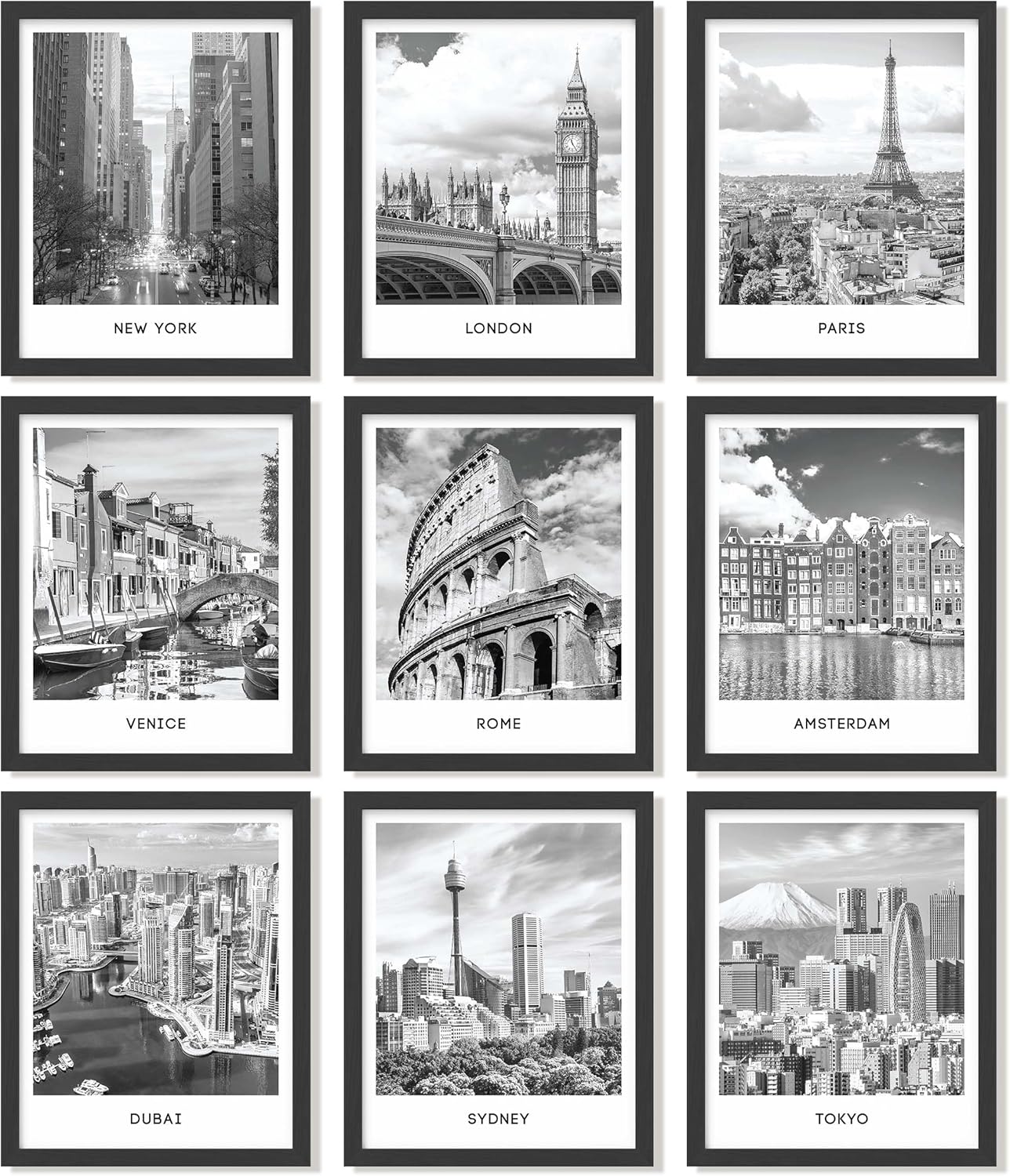
| Black & white photography | Modern, minimalist rooms | Industrial, Architectural Modern | $130–$400 |
| Nautical / travel canvas | Bar zone, basement lounge | Coastal Masculine, Traditional | $100–$300 |
Pro Tip: Match your wall art’s frame finish to at least one other metal in the room — a lamp base, a bar cart, or your credenza’s hardware. It’s the fastest way to make the room feel put-together instead of assembled piece by piece.


Continue Reading: → 31 Most Important Popular Interior Design Styles You Should Know About
Step 02
The Anchor Wall Method: How to Style Man Cave Wall Art Step by Step

Great man cave wall art isn’t about covering every wall — it’s about giving each zone in the room one clear focal point. Designers use a 5-step framework to turn scattered posters and mismatched frames into a wall that actually reads as designed. This is the Anchor Wall Method.
The 5-Step Anchor Wall Method
- Anchor: Choose one large piece per wall zone — above the sofa, above the bar, above the desk — and center it at eye level (57″ from the floor to the piece’s center). This is what the eye lands on first.
- Scale: Size the anchor to the furniture beneath it, not to the empty wall around it. Two-thirds of the furniture’s width is the target.
- Zone: Treat each functional area of the room as its own mini wall project. A TV wall, a bar wall, and a seating wall each get their own anchor — don’t try to make one piece do all the work.
- Layer: Once the anchor is placed, group secondary pieces around it in odd numbers — 3 small prints, never 2 or 4. Odd groupings read as intentional; even ones read as accidental pairs.
- Edit: Leave at least a third of the wall empty. A man cave with every inch covered reads as cluttered no matter how good the individual pieces are.
Designer Strategy: The 2/3 Rule for Man Cave Wall Art
No more than two-thirds of any wall zone should be filled with art. That remaining third of open space is what makes the arrangement look designed instead of overwhelming.
Before: The Common Mistake
- Posters and frames scattered with no hierarchy
- Mismatched frame finishes competing
- Every wall covered edge to edge
- No clear focal point in the room
- Art hung too high or too low for eye level
After: The Designer Edit
- One anchor piece per zone, centered at 57″
- Secondary pieces grouped in odd numbers
- A third of each wall left intentionally empty
- Every functional zone gets its own focal point
- One dominant frame finish carried through the room
Related Reading: → How To Make An Interior Design Mood Board: Step-By-Step Guide · → The Interior Design Rule of Thirds
The Vibe Check
Match Your Man Cave Wall Art to Your Aesthetic
Wall art that clashes with your furniture will never look right, no matter how well you follow the Anchor Wall Method. Your art needs to speak the same design language as the leather, the metal, and the wood already in the room.


🎨
Not sure which style is yours?
Take our free Interior Design Style Quiz and get a personalized look in under 2 minutes.
Take the Free Quiz →Related Reading: → How To Mix Interior Design Styles · → Modern Organic Interior Design: The Ultimate 2026 Guide
The Cheat Sheet
The Designer’s Cheat Sheet: Rules, Ratios & Placement
These are the actual numbers designers use for man cave wall art. Screenshot this section — you won’t need to guess placement again.
The 57-Inch Rule
Center your anchor piece 57″ from the floor — average adult eye level, standing.
The 2/3 Fill Rule
Max two-thirds of any wall zone filled with art. The rest is intentional negative space.
The Odd-Number Rule
Group secondary pieces in 3s, never 2s or 4s. Odd numbers read as curated, not accidental.
The Furniture Ratio
Art above a sofa or bar cart should span roughly two-thirds of that furniture’s width.
The Finish Rule
Max 2 frame finishes per room. One dominant, one accent — never three competing.
The Gap Rule
Leave 2–3″ between pieces in a grouping, 8–12″ between the art and the furniture below it.
🌿
Free Quiz: What’s Your Patio Style?
Take our free Patio Style Quiz and discover your outdoor aesthetic in under 2 minutes.
Take the Free Quiz →Related Reading: → The 15 Golden Rules of Interior Design for a Stunning Home · → Secrets to Mixing Textures at Home Like an Interior Designer
Real-Life Fixes
The 5 Most Common Man Cave Wall Art Problems — Solved

If your walls still feel off after real effort, one of these five problems is usually the culprit.
Problem 1: “I Can’t Drill Into Cinderblock or Rented Walls”
The fix: Use heavy-duty adhesive strips rated for the weight of your piece, or lean large framed art against the wall on a shelf or credenza instead of hanging it. Leaning art is a legitimate designer move, not a workaround — it also makes the piece easy to swap out later.
Problem 2: “My Basement or Garage Ceilings Are Low”
The fix: Skip vertical gallery walls, which draw the eye up and make a low ceiling feel lower. Go horizontal instead — one wide anchor piece or a horizontal row of 3 reads as intentional and actually makes the room feel more spacious.
Problem 3: “I Have Too Many Interests and It Looks Like Clutter”
The fix: Pick one dominant theme per wall zone instead of one dominant theme for the whole room. Sports memorabilia can live on the bar wall while a moody abstract anchors the seating wall — the Anchor Wall Method’s zoning step solves exactly this.
Problem 4: “It Doesn’t Match My Furniture”
The fix: Your art doesn’t need to match — it needs to connect. Pull one tone from your leather, wood, or metal finish into the art’s palette or frame, and the two will read as a set even if the subject matter is completely different.
Problem 5: “It Still Looks Cheap Even Though I Spent Real Money”
The fix: Cheap-looking walls almost always come from scale, not budget — a piece that’s too small for its wall reads as an afterthought no matter the price tag. Go one size up from what feels comfortable; oversized nearly always outperforms undersized.
Related Reading: → 15 Professional Decor Styling Tricks to Transform Your Home Like an Interior Designer
What NOT to Do
Visual Anti-Patterns: Man Cave Wall Art Mistakes to Avoid
✓ Do This
- One anchor piece per wall zone, centered at eye level
- Group secondary pieces in odd numbers
- Leave a third of every wall empty
- Match frame finishes (max 2 per room)
- Size art to two-thirds of the furniture beneath it
- Echo a color or tone from the room’s existing palette
✗ Avoid This
- Covering every inch of wall space
- Mixing 3+ frame finishes
- Hanging art too high (above eye level)
- Even-numbered groupings (2 or 4 pieces)
- Undersized art floating alone on a large wall
- No connection to the room’s existing palette
“The most common mistake in man cave styling isn’t bad taste — it’s trying to fill every wall. Restraint is a design skill. It takes more confidence to leave a wall partly empty than to cover it completely.”
— Interior Design Principle, Rule of Thirds
Shop the Look
Editor’s Product Picks: The Man Cave Wall Art Essentials
These are the specific pieces worth the wall space — chosen for visual impact, scale, and versatility across the styles above.


Ready to Build Your Anchor Wall?
Pick one style, size it to your furniture, and start with a single anchor piece.
Shop the Featured Wall Art →Budget Guide
The Real Cost of Man Cave Wall Art — Budget Breakdown
Here’s how designers actually recommend splitting the spend so your budget doesn’t disappear into secondary pieces before the anchor is covered.
| Budget Tier | Anchor Piece | Secondary Pieces | Frames / Hanging | Total |
|---|---|---|---|---|
| Entry ($150–$300) | $90–$180 | $40–$80 | $20–$40 | ~$250 |
| Mid ($300–$600) | $180–$350 | $80–$150 | $40–$70 | ~$500 |
| Investment ($600–$1,000+) | $350–$600 | $150–$300 | $70–$120 | ~$800 |
Designer Rule: Spend the majority of your budget on the anchor piece, not on filling every wall at once. A room with one great anchor and empty secondary walls looks more finished than a room with five mediocre pieces everywhere.
Room by Room
Man Cave Wall Art by Room: The Complete Placement Guide


“I tell clients: figure out which wall people will actually look at first, then put your best piece there. Everything else in the room should support that one moment, not compete with it.”
— Interior Design Principle, placement strategy
The Full Checklist
What Every Man Cave Wall Needs: The Complete Essentials Checklist
Tier 1: The Non-Negotiables
- One anchor piece per zone — sized to two-thirds of the furniture beneath it, centered at 57″
- A consistent frame finish — one dominant, one accent, never three
- Intentional negative space — at least a third of each wall left open
Tier 2: The Impactful Additions (Choose 2–3)
- A secondary gallery grouping in odd numbers on a supporting wall
- A picture light or adjustable sconce above the anchor piece
- One texture-based accent (a mounted object, a metal sign, a shadow box) to break up flat canvas
Tier 3: What to Keep OFF the Wall
- Too many themes at once: pick one dominant theme per zone, not five competing ones on the same wall
- Mismatched frame colors: gold next to black next to raw wood reads as unplanned, not eclectic
- Undersized art on a large wall: a small frame floating alone on a big blank wall reads worse than nothing at all
Most Popular Posts
Final Word
Your Walls Are Closer Than You Think
Man cave wall art isn’t a talent — it’s a system. You now have it: pick one anchor piece per zone, scale it to the furniture beneath it, match it to your room’s mood, layer secondary pieces in odd numbers, and leave a third of the wall alone.
The gap between the bare wall you have and the one you’ve been picturing usually isn’t taste or budget — it’s one anchor piece and the discipline to stop there. Pick one wall in the room and act on it today. Start with the Anchor Wall Method if you’re working from scratch, or the Real-Life Fixes section if you already have art up that isn’t working yet.
“A well-styled man cave wall isn’t about having more art — it’s about knowing exactly which piece earns the wall.”
Related Reading: → How to Hire an Interior Designer · → Interior Design Photography Hack: Make Your Home Look Better in Photos
Disclosure: This post contains affiliate links. We may earn a small commission at no extra cost to you if you purchase through our links. We only recommend products we genuinely love.
FAQ
Frequently Asked Questions About Man Cave Wall Art
What size wall art should I get for my man cave?
Size your art to roughly two-thirds of the furniture it sits above — a 90″ sectional wants a piece in the 60″–68″ range. On an open wall with no furniture beneath it, aim to cover 60–75% of the visible wall space so the piece doesn’t read as undersized.
How high should I hang art in a man cave?
Center the piece 57 inches from the floor to its middle point — that’s average standing eye level. Above a desk or seated area, drop that to roughly seated eye level so it doesn’t feel like it’s floating too high above the action.
Can I hang man cave wall art without drilling into cinderblock or rented walls?
Yes. Heavy-duty adhesive strips rated for your piece’s weight work on most drywall and masonry, or skip hanging entirely and lean an oversized framed piece against the wall on a credenza or shelf. Leaning art is a legitimate designer move, not just a renter workaround.
How do I choose a wall art theme that isn’t cliché?
Skip literal theme art (beer logos, generic sports posters) in favor of a mood-based style — Modern Noir, Industrial, Coastal Masculine, or Vintage — that reflects your taste without dating the room. Your interests can still show up through smaller accent pieces on a secondary wall.
How many pieces of wall art does a man cave actually need?
One anchor piece per functional zone is the minimum — a room with a seating area, a bar, and a TV wall needs three anchors, not fifteen scattered pieces. Add secondary groupings in odd numbers only after each zone already has its anchor.
What’s the best wall art style for a small man cave?
One oversized anchor piece works better than several small pieces in a tight room — small rooms read as more spacious with fewer, larger focal points rather than a busy collage. A single 30″x40″ canvas will outperform five 8×10 frames in a small space every time.
Should man cave wall art match the rest of the house?
It doesn’t need to match exactly, but it should connect — echo one tone, material, or frame finish already used elsewhere in the home. A man cave that shares nothing visually with the rest of the house tends to read as disconnected rather than intentionally distinct.
CATCH THE LATEST IN HOME DECOR TRENDS:

Steal These 16 Expert-Approved Decorating Secrets

Accessorize a Small Living Room: 7 Genius Styling Secrets

How to Make a Small Room Appear Bigger

How to Make Your Home Look Expensive
GET CAUGHT UP ON ALL THE INSPIRING DECOR TIPS:

Best Fireplace Makeover Ideas

How to Make a Gallery Wall: The Complete Step-by-Step Guide (Even If You’ve Never Hung a Picture)