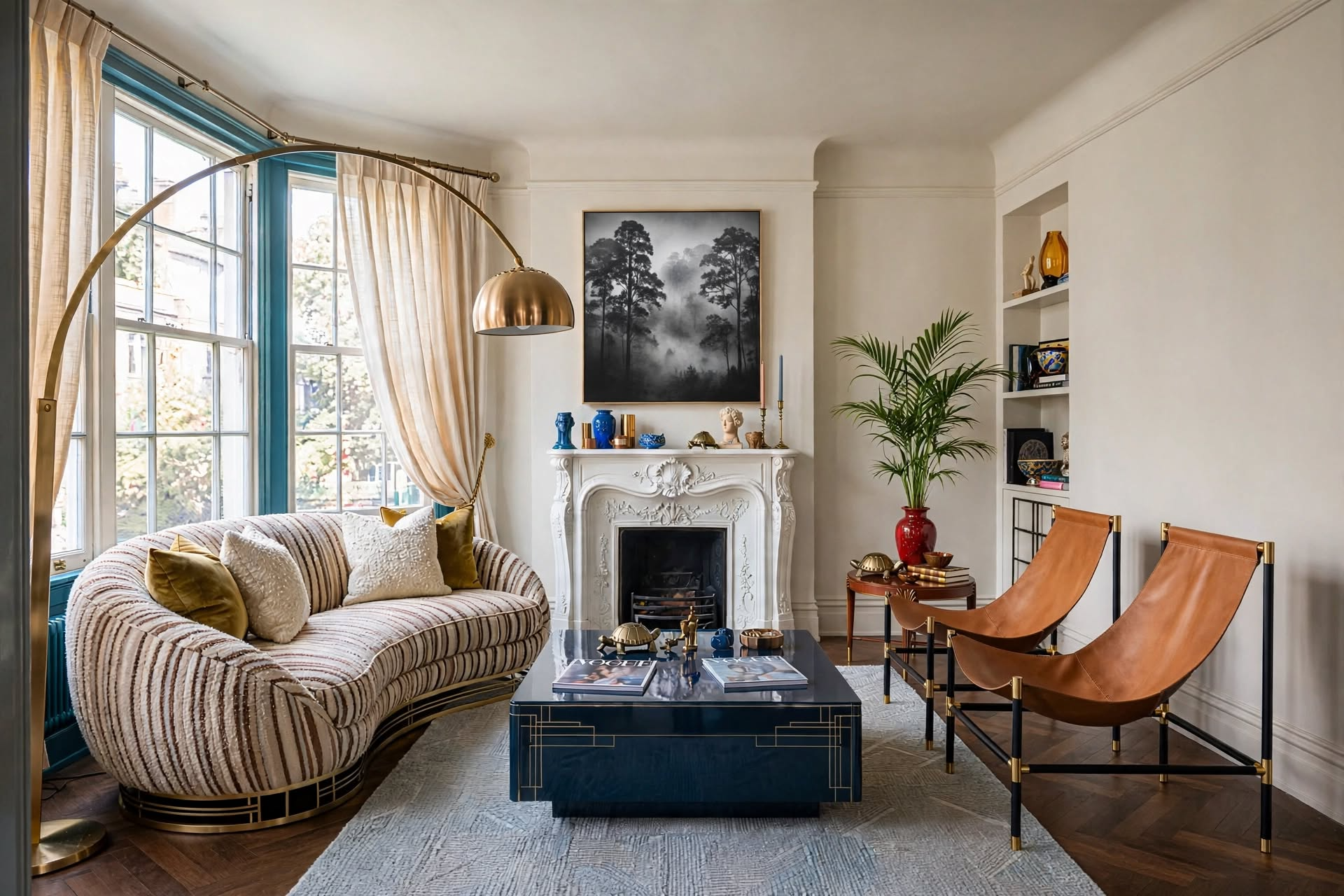
The best bedroom ideas for a teenager come down to three moves: pick a flexible neutral base so personality can rotate in through accessories, size the rug and furniture using real ratios instead of guesswork, and layer three separate light sources instead of relying on one overhead fixture. Get those right and the rest — bedding, art, storage — falls into place fast.
Bedroom ideas for a teenager usually start the same way: a Pinterest board, a burst of inspiration, and then a room that somehow still looks half-finished once the furniture is actually in it. You’ve probably been there. You order the rug, the bed goes in the corner it’s “supposed” to go in, and the whole thing still feels like a dorm room that got lost on the way to a magazine shoot.

That gap isn’t a taste problem. It’s a math problem. Every room that reads as “designed” instead of “decorated” is built on a handful of proportions and layout rules that nobody bothers to spell out — how big the rug actually needs to be, how far apart to hang art, how many light sources a room needs before it stops feeling flat. This guide gives you that math, plus the exact sequence to follow, whether you’re working with a full bedroom, a shared room split down the middle, or a rental where the walls can’t take a single nail.
In This Guide▾
- Step 1: Set the Foundation Before You Buy Anything
- Bedroom Ideas for a Teenager by Style
- Design It With Your Teen, Not For Them
- Step 2: The Layout Formula Behind Every Good Teenage Bedroom
- Step 3: Build a Real Lighting Strategy
- Step 4: Design a Desk Zone That Actually Gets Used
- Step 5: Storage That Works in a Small or Shared Room
- Small Bedroom Ideas for a Teenager
- Shared Bedroom Ideas for a Teenager
- Step 6: What to Put on the Dresser or Console
- Step 7: Decorating Around a TV in a Teen’s Room
- Step 8: Wall Art, Gallery Walls & Personality
- Step 9: Layer the Bedding Like a Designer
- Budget Breakdown: Splurge vs. Save
- Shop the Room by Budget
- Common Mistakes to Avoid
- The Designer’s Cheat Sheet
- FAQ
Step 1: Set the Foundation Before You Buy Anything

Before you shop for a single item, lock in a neutral wall and floor base, a three-color accent palette, and a budget split across furniture, textiles, and decor. This is what lets a teen’s taste evolve every year without you repainting or replacing furniture.
Why this works: Teenagers’ taste moves fast — what feels essential at 13 can feel embarrassing at 16. A neutral shell (walls, rug, bed frame) is the stable structure; the accent colors and accessories are what carry the personality, and those are cheap and easy to swap out.
Start with a base of warm white, soft greige, or a muted clay — something the room’s big-ticket items (bed frame, desk, rug) can sit on top of without fighting for attention. Then let your teen pick two accent colors and one “wildcard” color for smaller pieces like throw pillows or a lamp shade. This is the 60/30/10 rule in action: 60% neutral base, 30% secondary color, 10% bold accent.
If you’re renting or your teen’s taste changes fast, keep paint out of the equation entirely. Removable wallpaper on one wall or a large piece of framed art does the same personality work without the commitment.
For more on building a base palette that won’t feel dated in two years, see our full breakdown of timeless paint colors that never go out of style and our guide to calming paint colors for a serene bedroom.
Bedroom Ideas for a Teenager by Style

Most bedroom ideas for a teenager fall into six workable aesthetics — boho, minimalist, dark academia, gamer/tech, coastal-preppy, and Y2K maximalist. Pick one as the anchor and pull 80% of the room from it, then let one or two accent pieces flex outside it as taste changes.
- ◆Woven textures, macrame, layered rugs
- ◆Warm terracotta or sage accents
- ◆Plants and rattan furniture
- ◆Monochrome or two-tone palette
- ◆Hidden storage, clean lines
- ◆One statement piece, nothing else loud
- ◆Deep greens, browns, and brass
- ◆Vintage-look frames and books as decor
- ◆Warm, low ambient lighting
- ◆LED strip accent lighting
- ◆Blackout curtains for screen glare
- ◆Cable management built into the desk zone
- ◆Crisp white base with navy or seafoam accents
- ◆Stripes, gingham, and natural fiber rugs
- ◆Light, airy window treatments
- ◆Bold color blocking and mixed patterns
- ◆Statement lighting (lava lamp, disco elements)
- ◆Gallery wall of mixed-media personal photos
Whatever style your teen picks, keep it in the swappable layer — bedding, art, accent pillows — and out of the big-ticket furniture. That’s what makes it possible to shift from Y2K at 14 to minimalist at 17 without buying a new bed frame.
Design It With Your Teen, Not For Them

The fastest way to stall a teenage bedroom project is decision paralysis between you and your teen. Fix it by giving them veto power over the style board, being upfront about the total budget from day one, and splitting the room into “non-negotiable” zones (safety, function) versus “flexible” zones (color, art, accessories) they fully control.
The Design Psychology: Teenagers push back on decor decisions that feel imposed, not decor decisions themselves. Giving them real ownership over the flexible zones — even if it’s just accent color and wall art — dramatically cuts the back-and-forth that usually derails these projects.
- Start with a shared mood board. Pull 10–15 images together, then have your teen cut it down to their top 5 — this surfaces their actual taste faster than asking open-ended questions.
- Set the budget number out loud. A teen who knows the real number stops pushing for the $400 chair and starts making trade-offs themselves.
- Split non-negotiables from flexible zones. You decide safety and function (bed placement, lighting for homework). They decide color, art, and accessories — no need to relitigate the whole room.
Step 2: The Layout Formula Behind Every Good Teenage Bedroom

Anchor the bed on the wall opposite or diagonal to the door first, leave 24–30 inches of clearance on at least one side for walking, and size the rug so at least the front two-thirds of the bed sits on top of it. Everything else — desk, dresser, seating — gets placed after those three decisions are locked.
The Design Psychology: A room feels chaotic not because of clutter, but because of unresolved circulation — your eye and your feet don’t know where to go. Anchoring the largest piece first and building clearance around it gives the whole room a visual “spine.”
The Rug Sizing Formula
This is the single most common teenage bedroom mistake: a rug that’s too small and floats in the middle of the room like an afterthought. Use these baselines:
- Twin/Twin XL bed: 5′ x 7′ rug, positioned so the bottom two-thirds of the bed sits on it
- Full/Queen bed: 8′ x 10′ rug, extending at least 18–24 inches past each side of the bed
- Small room (under 100 sq ft): a runner along the exposed side of the bed instead of a full rug, so you’re not fighting for floor space
Furniture Clearance That Actually Matters
Main Walkway
Between bed and dresser or desk — enough to walk through without turning sideways
Closet Access
In front of closet doors so they open fully and clothes stay reachable
Desk Chair Pull-Out
Behind a desk chair so it can slide back without hitting the bed frame
For a deeper dive into proportion rules that apply to any room, our guide on the interior design rule of thirds breaks down the exact math designers use to keep a space balanced.
Step 3: Build a Real Lighting Strategy

Good bedroom ideas for a teenager need three light layers — ambient (overhead or a floor lamp), task (desk lamp), and accent (string lights, a reading lamp, or LED strips) — set on separate switches or plugs so the room can shift from “get ready” bright to “wind down” dim.
The Design Psychology: A single overhead fixture creates flat, shadowless light that makes even a well-decorated room feel like a waiting room. Layered lighting adds depth and lets the room function differently at 3pm homework time versus 11pm scrolling time.
The Three-Layer Lighting Plan
Ambient
A tall floor lamp in the corner opposite the bed does double duty as general light and a styling moment — pick one at least 58–68″ tall so it clears furniture sightlines.
Task
A dedicated desk lamp, positioned on the non-dominant-hand side so the arm doesn’t cast a shadow over homework.
Accent
String lights, an LED strip behind the headboard, or a small table lamp — this is the layer that makes a room feel personal and is the easiest for a teen to control themselves.
Shop Lighting Picks
Problem: one overhead fixture leaves a teen’s room flat and shadowless, with no way to dim it down at night. Solution: a tall floor lamp becomes the room’s ambient layer and doubles as a styling piece in the corner. Product: here are three that were built for exactly that job.

A slim column silhouette that clears furniture sightlines and casts soft, even ambient light — exactly what a corner ambient layer needs to work.
Shop on Wayfair →
The rotating shade lets you point light exactly where the desk or reading nook needs it, without buying a second lamp for task lighting.
Shop on Amazon →
A foot switch means a teen can turn the ambient layer on and off without fumbling for a cord — small detail, big difference in daily use.
Shop on Walmart →Step 4: Design a Desk Zone That Actually Gets Used

Position the desk perpendicular to a window (never facing it directly, to avoid screen glare), leave at least 36 inches of chair clearance behind it, and keep the desktop itself down to three zones — laptop, lamp, and one personal object — so it doesn’t become a dumping ground.
The Design Psychology: A desk a teen actually sits at is one that isn’t visually or physically cramped. Facing a wall in a tight corner reads as punitive; facing a window at an angle reads as a real workspace.
If floor space is tight, a leaning or ladder-style desk against a single wall solves two problems at once: it needs almost no clearance behind it, and the open shelving above doubles as book and decor storage without eating into the closet.
Shop Desk Picks
Problem: a full-size desk in a small room eats the chair clearance you need to actually sit and work at it. Solution: a leaning or ladder-style desk needs almost no floor depth and uses the wall for storage instead. Product: three that solve the space problem without sacrificing surface area.

Open shelving above the desktop replaces a bulky bookshelf, so books and decor get storage without shrinking the room’s walkway.
Shop on Wayfair →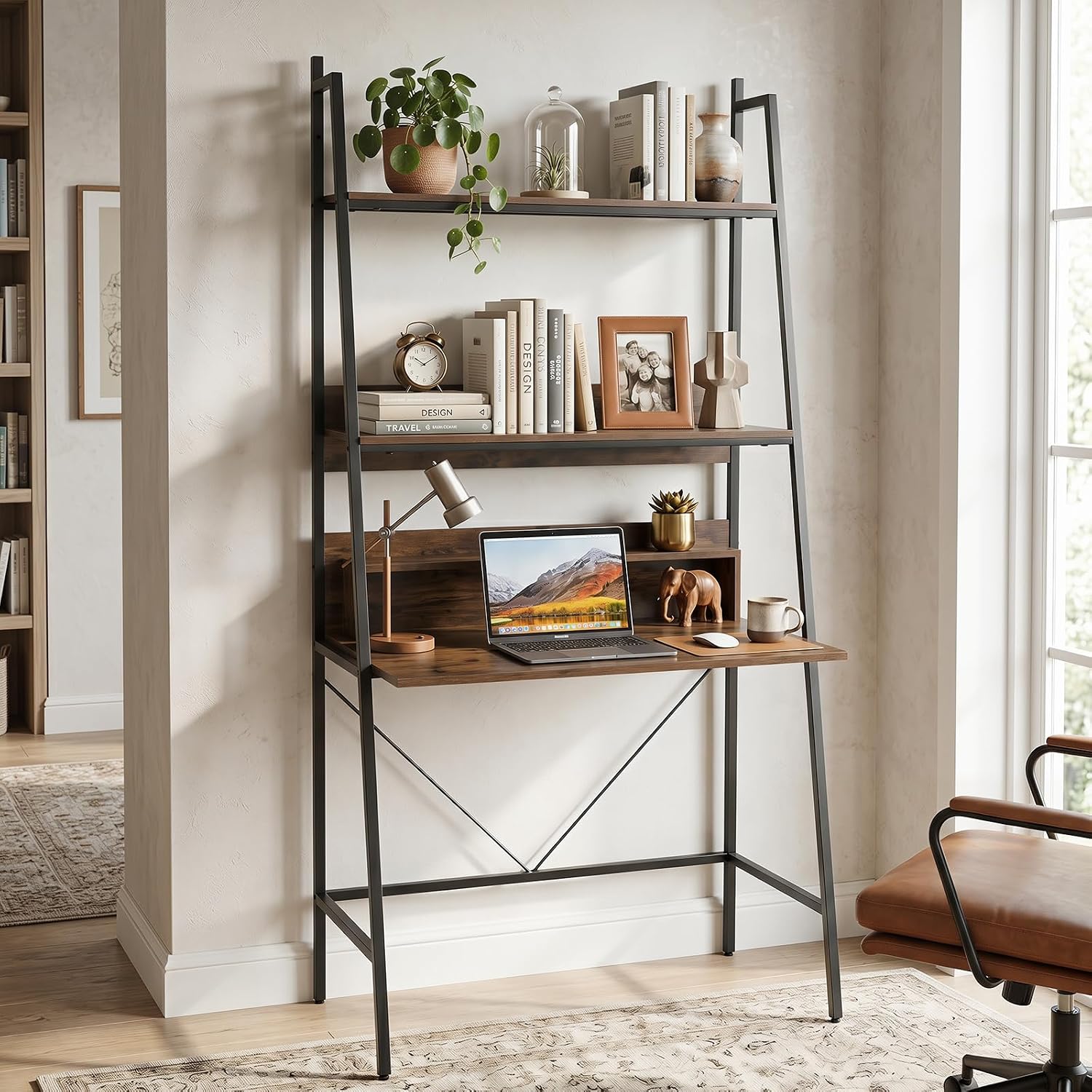
A narrow footprint fits against a single wall, leaving the full 36″ of chair clearance a real workspace needs behind it.
Shop on Amazon →
The built-in bulletin board gives a teen a spot to pin photos and reminders, so the wall above the desk stays organized instead of covered in tape.
Shop on Walmart →For a full breakdown of building a workspace that supports posture and focus, our ergonomic home office guide applies just as well to a teen’s desk corner.
Step 5: Storage That Works in a Small or Shared Room

Prioritize vertical and under-bed storage before you add a single extra piece of furniture — a bed frame with built-in drawers, over-the-door organizers, and stackable bins reclaim floor space that a dresser alone can’t.
The Design Psychology: Clutter is the number one thing that makes a well-styled room look unfinished in photos and in person. Storage that’s built into furniture you already need (like the bed) removes clutter without removing floor space.
Do This
- Choose a bed frame with built-in drawers if the room is under 120 sq ft
- Use closet organizers that double shelf capacity vertically
- Add a slim rolling cart for shared-room “personal zone” storage
Avoid This
- Buying a second dresser before maximizing the closet
- Blocking the closet door swing with furniture
- Open bins on the floor as a “system” — they become clutter within a week
Shop Beds with Built-In Storage
Problem: a small or shared room can’t fit a bed and a full dresser without losing the walkway clearance the room needs. Solution: a platform bed with built-in drawers absorbs the dresser’s job without taking extra floor space. Product: three frames that do double duty.

Built-in drawers absorb clothing storage while the charging station keeps phone cords off the floor — two clutter problems solved in one frame.
Shop on Wayfair →
The padded headboard adds a cushioned reading spot while hidden compartments keep books and chargers off the nightstand.
Shop on Amazon →
Two drawers plus USB ports mean each teen in a shared room gets independent storage and charging without a shared dresser standoff.
Shop on Walmart →Small Bedroom Ideas for a Teenager

For small bedroom ideas for a teenager, prioritize furniture that does two jobs — a loft or bunk bed to free the floor beneath it, a wall-mounted desk instead of a freestanding one, and a large mirror positioned to reflect the window and double the sense of light and depth.
The Design Psychology: Small rooms don’t feel small because of square footage — they feel small because of unresolved floor clutter and low ceilings visually pressing down. Lifting storage and furniture off the floor and up the walls is what actually changes the perception of size.
- Go vertical first. A loft bed with a desk or seating underneath can reclaim 30–40 square feet of usable floor space in a room under 100 sq ft.
- Choose furniture with legs, not solid bases. Sofas, beds, and dressers that show a few inches of floor beneath them make a small room read as more open than flush-to-the-floor pieces.
- Mirror placement matters. Position a full-length or leaning mirror to reflect the window, not a wall — this doubles the perceived natural light instead of just reflecting more wall.
- Skip the coffee-table-sized rug. Undersized rugs make small rooms look smaller. Stick to the 5’x7′ formula from Step 2, even in a tight room.
Step 6: What to Put on the Dresser or Console

Style dresser and console tops in odd-numbered groupings of three to five objects, varying height and texture — one taller item (lamp or vase), one flat item (a tray or books), and one small personal object. Leave at least a third of the surface empty.
The Design Psychology: Surfaces styled with too many same-height objects read as cluttered even when they’re technically tidy. Height variation is what makes a small vignette look intentional instead of accidental.
- The anchor: one taller piece — a lamp, a small mirror, or a framed photo leaned against the wall
- The tray: corrals smaller items (jewelry, a favorite candle) so they read as one grouped object instead of scattered clutter
- The personal touch: one item that’s genuinely “them” — a trophy, a plant, a stack of favorite books
Resist styling the console top for a magazine shot. The goal is a surface a teenager will actually maintain — three grouped objects survive daily use; twelve tiny ones do not.
Step 7: Decorating Around a TV in a Teen’s Room

Mount or place the TV at seated eye level from the bed — roughly 42 inches from the floor to the screen’s center — and treat the wall around it as a gallery, not a blank frame, so the TV doesn’t become the sole focal point when it’s off.
The Design Psychology: A dark rectangle on an otherwise empty wall reads as a “tech corner” rather than part of the room’s design. Surrounding it with a few pieces of art or a floating shelf visually folds it into the rest of the space.
If wall-mounting isn’t possible in a rental, a low console or media stand under the TV keeps the same visual balance while staying fully removable. Flank it with two matching lamps or a pair of small plants to soften the hard edges of the screen.
Want the full breakdown of layout formulas for awkward wall configurations, cord management, and console styling? Read our complete guide on working with a designer on tricky layouts, or browse kids bedroom decor ideas for more room-specific layouts.
Step 8: Wall Art, Gallery Walls & Personality

Hang the center of a single art piece 57 inches from the floor (standard gallery eye level), and for a gallery wall of 3+ pieces, keep 2–3 inches of spacing between frames so the grouping reads as one composition instead of scattered pieces.
The Design Psychology: The 57-inch rule exists because it’s the average eye level for a standing adult — it’s the number museums use, and it’s what makes art feel “placed” rather than randomly hung.
- Above the bed: art should span roughly two-thirds the width of the headboard, centered
- Gallery groupings: lay frames out on the floor first, photograph the layout, then transfer to the wall — it prevents nail holes from trial and error
- Renter-friendly: use adhesive strips rated for the frame’s weight, or lean larger art against the wall instead of hanging it
Shop Wall Art
Problem: a single small piece of art gets lost above a bed and never reads at the right scale. Solution: a 3-piece canvas set fills the two-thirds-of-headboard-width rule automatically, without a gallery wall’s trial and error. Product: three sets sized to do exactly that.

Pre-framed and sized as a set, so the spacing math is already solved — no measuring, no trial nail holes.
Shop on Wayfair →
Lightweight canvas hangs on weight-rated adhesive strips — a renter-friendly way to fill the wall without drilling.
Shop on Amazon →
Framed and ready to hang above a desk, adding personality to the study zone without competing with the bed wall’s art.
Shop on Walmart →Step 9: Layer the Bedding Like a Designer

Build the bed in three layers — fitted sheet and flat sheet, a comforter or duvet folded back a third of the way, and two to three pillows in varied sizes — so the bed reads as styled even when it’s not perfectly made.
The Design Psychology: Layering creates the visual texture that a single flat comforter can’t. It’s also more forgiving day-to-day, since an imperfectly pulled-up comforter still looks intentional when there’s a folded layer underneath.
Shop Bedding
Problem: a single flat comforter looks unstyled no matter how expensive it is. Solution: a coordinated bedding set gives you the layers — sheets, comforter, pillows — in one matched palette instead of piecing it together. Product: three sets built for layering.

Comforter, sheets, and pillows arrive matched, so all three bedding layers coordinate without separate shopping trips.
Shop on Wayfair →
A neutral base pattern that works as the 60% layer in the room’s color formula, so accent pillows can carry the personality.
Shop on Amazon →
A simple stripe pattern reads as gender-neutral, making it an easy match when two teens are sharing a room with different tastes.
Shop on Walmart →Finish the layout with a properly sized rug underneath — revisit the rug sizing formula in Step 2 if you haven’t picked one yet.
Shop Area Rugs
Problem: an undersized rug floats in the middle of the room and makes the whole layout look unfinished. Solution: sizing up to the 5’x7′ or 8’x10′ formula from Step 2 anchors the bed and grounds the whole floor plan. Product: three rugs sized to do it right.

A soft geometric pattern that reads as neutral from across the room, so it works as the base layer under any accent color scheme.
Shop on Wayfair →
Machine-washable construction handles the reality of a teen’s room — spills, shoes, and everything else — without a trip to the dry cleaner.
Shop on Amazon →
A worn-in vintage pattern hides everyday wear better than a solid color, which matters in a room that gets daily foot traffic.
Shop on Walmart →Budget Breakdown: Splurge vs. Save
Splurge on the bed frame and mattress since they get used every night and are the hardest to swap later; save on art, decor, and accent pillows since those are cheap to update as your teen’s taste changes.
| Tier | Total Range | What’s Included |
|---|---|---|
| Budget Refresh | $300–$500 | New bedding, rug, wall art, and accent lighting — same furniture, new look |
| Mid-Range Update | $800–$1,200 | Budget refresh plus a new desk or storage bed frame |
| Full Room Overhaul | $2,000+ | New bed, desk, rug, lighting layers, and full wall styling |
Splurge On
- Bed frame and mattress
- Desk chair (posture matters daily)
- Rug — cheap rugs shed and flatten fast
Save On
- Wall art and frames
- Throw pillows and accent textiles
- String lights and small accessories
Shop the Room by Budget
Every product pick from these bedroom ideas for a teenager, gathered in one place so you can jump straight to a category instead of scrolling back through the guide.
Common Mistakes to Avoid
Even great bedroom ideas for a teenager can fall flat if a few common layout and styling mistakes slip through. Here’s what to double-check before calling the room finished.
Do This
- Buy the rug and bed first, style around them
- Layer three light sources on separate switches
- Leave a third of every surface empty
- Choose a neutral base with swappable accents
Avoid This
- Buying decor before furniture is placed
- Relying on one ceiling light for the whole room
- Styling every surface to capacity
- Painting a color a 13-year-old picks without a mood-board check first
The Designer’s Cheat Sheet
| What | Formula |
|---|---|
| Rug size, twin bed | 5′ x 7′, two-thirds of bed on top |
| Rug size, full/queen bed | 8′ x 10′, 18–24″ past each side |
| Art hanging height | 57″ from floor to center of piece |
| Gallery wall spacing | 2–3″ between frames |
| Walkway clearance | 24″ minimum between furniture |
| Closet door clearance | 30″ minimum in front of doors |
| Desk chair pull-out | 36″ minimum behind the chair |
| TV mount height | Center at ~42″ from floor, seated eye level |
| Color ratio | 60% neutral / 30% secondary / 10% accent |
| Console styling | 3–5 objects, odd numbers, varied height |
| Budget refresh | $300–$500 (bedding, rug, art, lighting) |
| Full room overhaul | $2,000+ (all new furniture + styling) |
- 01Interior Design Style Quiz
- 02Timeless Paint Colors That Never Go Out of Style
- 03Create Your Perfect Ergonomic Home Office: A Complete Guide
- 04Must-Have Accessories for Guys: The Secret to a Stylish Space
- 05Modular Sofas for Small Spaces: Brilliant Solutions for Compact Living
- 06Bathroom Peel and Stick Wallpaper Ideas: 7 Designer Tricks
Frequently Asked Questions
Easy Wins: Bedroom Ideas for a Teenager That Actually Work
None of these bedroom ideas for a teenager require a full renovation or a designer on retainer. Anchor the bed and size the rug correctly, add three layers of light instead of one, leave breathing room on every surface, and let a neutral base carry the room while accent colors do the personality work. Start with Step 1 this weekend — the base palette — and the rest of the room will fall into place faster than you’d expect.
Get the Full Formulas
If you want the full formulas, spacing rules, and layout math from this guide (and every other room in your home) in one place, grab The Designer’s SECRET Cheat Sheet — it’s the shortcut version of everything a designer checks before calling a room finished.
Get the Cheat Sheet →Follow Along @thedecorholic
And if you want more of this in your feed, come find us @thedecorholic on Instagram, Facebook, TikTok, and Pinterest for more room-by-room styling breakdowns like this one.
Ready to Find Your Style?
Take the free style quiz and get a personalized design direction in under a minute.
Take the Style QuizCATCH THE LATEST IN HOME DECOR TRENDS:

Steal These 16 Expert-Approved Decorating Secrets

Accessorize a Small Living Room: 7 Genius Styling Secrets

How to Make a Small Room Appear Bigger

How to Make Your Home Look Expensive
GET CAUGHT UP ON ALL THE INSPIRING DECOR TIPS:

Best Fireplace Makeover Ideas

How to Make a Gallery Wall: The Complete Step-by-Step Guide (Even If You’ve Never Hung a Picture)