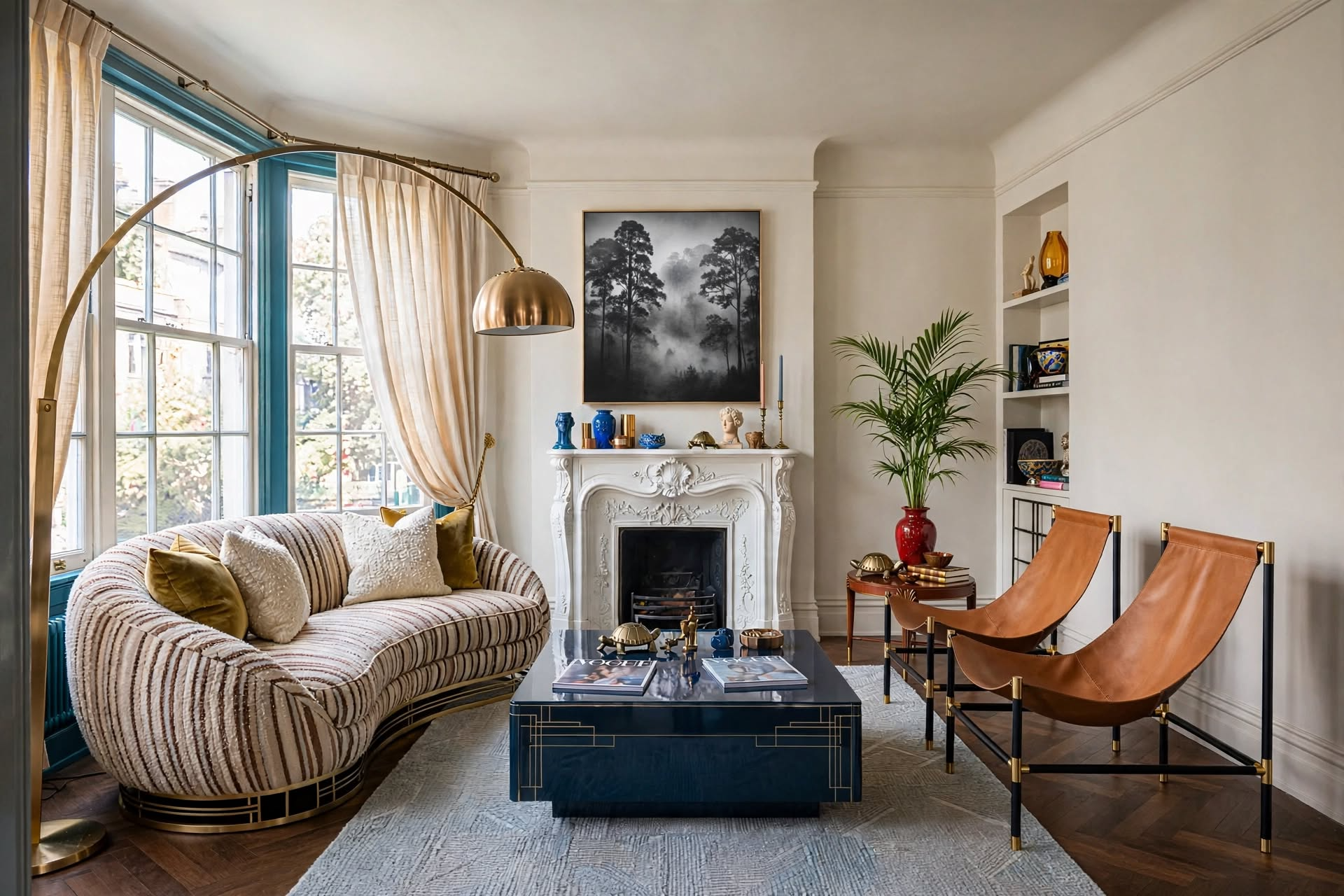
“Still rearranging the same room hoping it’ll click? It won’t — until you know this.”
The Designer’s SECRET Cheat Sheet121 designer-approved rules for every room in your home. The shortcut every well-styled home is built on.
Fireplace Makeover Ideas: Brick, Tile & Stone Fixes That Actually Work
A good fireplace makeover starts with a diagnosis, not a paint swatch. Find out what dates your fireplace: the surround, the mantel’s scale, or the wall around it. Then fix those layers in order. This guide covers paint, brick finishes, tile, mantels, wall treatments and lighting, plus a budget order of operations, renter-safe swaps and the clearance rules most blogs skip.
The best fireplace makeover ideas start with a simple question: what, exactly, looks dated? Most people reach for paint before they answer it. That is how you end up with a freshly painted fireplace that still feels wrong.
A fireplace is the biggest fixed feature in most living rooms. You can’t move it like a sofa, so when it looks tired, everything around it looks tired too.
It is also why people freeze up. Painting brick feels permanent, and plenty of homeowners say they regret it. This guide helps you decide what to change, what to leave alone, and what to do first.
I sort every fireplace with one simple method. Name the problem, fix the layer that hurts the room most, then work outward.
In This Guide
- What kind of fireplace do you have, and what is wrong with it?
- Should you paint a brick fireplace?
- Whitewash, limewash or German smear
- How to update a dated tile surround
- How to make a builder-grade mantel look custom
- Wall treatments that finish a fireplace
- Best fireplace makeover ideas for a small living room
- How to style a mantel and the wall above it
- Lighting that makes a fireplace look expensive
- When to upgrade the fireplace itself
- Fireplace makeover on a budget
- Mistakes to avoid
- FAQ
The 3-Layer Hearth Method
Fix the Face
The surround itself: brick, stone or tile. Change its color, finish or material first, because it is the largest surface you see.
Fix the Frame
The mantel, hearth and proportions. Correct the scale and shape of whatever frames the firebox.
Fix the Focus
The wall, light and styling around it. This is what makes a fireplace look designed, not just repainted.

What Kind of Fireplace Do You Have, and What Is Actually Wrong With It?

Start by naming two things: what your fireplace is made of and how it burns. Material (brick, stone or tile) decides your finish options. Fuel type (wood, gas or electric) decides how much heat the surround sees, which decides what you can safely attach.
Then find your main problem. Most fireplaces have one clear one:
- The Face looks dated. Orange-red brick, a 1980s tile surround, or heavy stone that fights the rest of the room.
- The Frame is wrong. A thin builder-grade mantel, a shelf that sits too high, or trim that doesn’t match anything.
- The Focus is missing. A bare wall above the mantel, no light, or art that is too small for the space.
| Your problem | Best first fix | Layer |
|---|---|---|
| Orange or red brick that clashes | Paint, wash or German smear | Face |
| Old tile you don’t want to demo | Paint it or cover it with heat-rated material | Face |
| Thin, builder-grade mantel | Refinish, thicken or replace it | Frame |
| Flat, empty wall above | Wall treatment, mirror or art | Focus |
| Fireplace disappears in a dim room | Add layered, warm light | Focus |
Should You Paint a Brick Fireplace (and What Color Works Best)?

Painting works if you truly dislike the brick and accept that it is close to permanent. Clean the brick, prime it, then use a masonry or heat-rated paint made for fireplaces. Test on a small area first, because paint soaks into brick and is very hard to remove later.
This is the most debated makeover online, and the debate is real. One painting pro told Bob Vila he would never paint his own brick fireplace, partly because sealing brick under paint limits how well it releases moisture. A roundup of Reddit threads on home regrets found painted brick at the top of the list. Designers quoted by Homes & Gardens also warn that stripping painted brick can be miserable.
The same article includes a designer who loves the result when brick is uneven, dark or clashes with the room. One color can stop the fireplace from competing with everything else. If you’re torn, paint the walls around the brick first and live with that for a week.
How to paint brick, step by step
- Clean. Scrub soot and grime off with a heavy-duty cleaner, rinse, and let the brick dry fully.
- Prime. Use a high-adhesion or masonry primer. Brick is porous and drinks paint.
- Pick the right paint. Choose a masonry or heat-resistant product and follow the label for areas close to the opening.
- Roll and push. Use a thick-nap roller and a stiff brush to work paint into the mortar lines.
- Second coat. Wait for the first coat to dry, then fill any gaps.
Colors that work
- Warm white. Brightens a dark room, but shows soot faster.
- Soft greige. Blends the fireplace into the wall so the room feels calmer.
- Deep charcoal or black. Dramatic, and it hides soot well. Best in rooms with good light.
- Muted green. Adds color without shouting.
Matte and satin finishes hide the rough texture of brick better than gloss, which highlights every bump. If you want a shade that won’t date, start with the picks in this guide to timeless paint colors that never go out of style.
Whitewash, Limewash or German Smear: Which Brick Look Fits Your Room?

If you want the brick to stay visible, choose a wash or German smear instead of solid paint. A wash thins color so brick texture shows through. German smear covers brick in mortar for an old-world look. Test any of them on one brick or an out-of-sight spot first.
German smear works by sponging wet mortar over the brick, then brushing some back off for a rustic finish. It also helps hide uneven brick, according to a Montana lumber and building supply retailer.
| Look | Brick texture | Commitment | Best for |
|---|---|---|---|
| Solid paint | Mostly covered | High, hard to undo | Uneven or dark brick, modern rooms |
| Whitewash | Shows through | Lower, but test first | Soft, light, casual rooms |
| Limewash | Shows through, with a chalky softness | Lower, but test first | Warm, organic, old-world rooms |
| German smear | Partly covered by rough mortar | High, mortar is hard to remove | Cottage, farmhouse and rustic rooms |
A quick way to choose: modern rooms usually want solid paint in one calm color. Farmhouse and cottage rooms suit smear. Warm, layered rooms look best with a wash.
How Do You Update a Dated Tile Fireplace Surround Without Tearing It Out?
You have three realistic routes: paint the existing tile, cover it with new tile or panels that are rated for the heat near the opening, or trim the edges so the old tile blends into the wall. Pick based on how close the tile sits to the firebox.
Painting is the least messy option. One designer chose high-temperature paint on an old ceramic surround because tearing it out was messy and costly. Clean the soot off first with a wire brush and a degreaser, scuff the tile, then apply a product rated for the heat.
Peel-and-stick tile is easy to install and easy to replace. It also shows up on lists of things people regret, so order a sample and look at it in your room’s light first. Keep it away from the area closest to the opening unless the label says it is rated for that heat.
Do
- Use heat-rated materials near the opening
- Test a sample in your room’s light
- Hide raw edges with trim painted to match the mantel
Don’t
- Stick decorative materials right at the firebox edge
- Skip cleaning, because nothing bonds to soot
- Pick a pattern so busy the room has nowhere to rest
How Do You Make a Builder-Grade Mantel Look Custom?

Change the mantel’s shape and finish before you add decor. A thicker beam, a clean floating shelf or a repainted mantel in a wall-matching color changes the whole fireplace faster than accessories do. Just keep anything that can burn at the distance code requires.
Your options, from easiest to most involved:
- Refinish it. Sand and stain a worn wood mantel, or repaint it. Painting it the same color as the wall gives a sleek, modern look.
- Add a box beam. A hollow beam-style cover over a flat mantel adds weight and warmth for little cost.
- Go floating or skip the mantel. A simple shelf or no shelf at all keeps the focus on the surround.
- Buy secondhand. A salvaged mantel can be refinished into something one of a kind.
The clearance rule you shouldn’t skip
For masonry fireplaces, the model building code is clear. A California city handout on masonry fireplace clearances summarizes it this way: no combustible mantel or trim within 6 inches of the opening. Within 12 inches, combustible material can’t project more than 1/8 inch for every 1 inch of distance from the opening. Parts along the sides that stick out more than 1½ inches need extra clearance equal to that projection.
In plain terms, trim 8 inches from the opening can project about 1 inch at most, which is the same math Journal of Light Construction walks through. Parts of a mantel above the opening that project more than 1½ inches generally need to sit at least 12 inches above the opening.
A thin builder-grade shelf, the same dated finish as the brick, and a bare wall above.
A thicker beam-style mantel painted to match the wall, with one large piece of art above.
A heavy, dark wood surround that dominates the room and eats the light.
The same surround painted a soft, tonal color so the fireplace supports the room instead of fighting it.
Which Wall Treatments Make a Fireplace Feel Finished?

A textured wall behind and around the fireplace adds depth and covers a flat drywall look. Shiplap, board and batten, wood slats and smooth plaster all work. Choose based on how much visual weight your room can handle, and keep any wood trim outside the clearance zone.
- Shiplap. Clean horizontal lines. Casual, light and easy to paint.
- Board and batten. More structure and a traditional feel. Great for adding height to a short wall.
- Wood slats. Modern and warm. Best on a wide, plain wall.
- Smooth plaster or a plaster-look finish. Quiet and elegant. Works well when the fireplace itself is the star.
- One paint color for everything. Painting the surround and the wall the same shade is a simple way to get a calm, monochrome look.
Whatever you choose, balance it. If the wall has texture, keep the mantel simple. This guide to mixing textures at home like an interior designer shows how to layer without making the room feel busy.
Take the Interior Design Style Quiz
Choosing between a clean modern fireplace and a cozy rustic one is easier when you know your style. Answer a few quick questions and find out.
Find My StyleWhat Are the Best Fireplace Makeover Ideas for a Small Living Room?

In a small room, the fireplace should feel quieter, not louder. Keep the surround light or tonal, the mantel simple, and the walkway in front of it clear. Pull furniture back from the hearth so the fireplace becomes a backdrop instead of an obstacle.
- Go tonal. Paint the surround and wall the same color so the fireplace recedes and the room reads larger.
- Use a mirror. A mirror above the mantel bounces light and makes the wall feel deeper. Reflective panels can make a fireplace feel larger.
- Keep the mantel clean. Three objects beat ten in a small room.
- Think about seating. A fireplace can’t shine if the sofa blocks it. This guide to the best living room layout for small spaces will help you place furniture around it.
If the room still feels incomplete after the makeover, the problem usually isn’t the fireplace. Read why a small living room feels unfinished and how to fix it.
How Should You Style a Mantel and the Wall Above It?

Balance beats quantity. Pick one large anchor, like a mirror or a big piece of art. Then add a small group of two or three objects on one side and one lighter piece on the other. Vary the heights, and leave open space so each object can be seen. The interior design rule of thirds is a handy guide for where to place each piece.
If a TV goes above the fireplace, treat heat as a design rule. Check your TV maker’s temperature limit, run the fireplace for a while, and test the spot with a thermometer. A deeper mantel helps push heat away from the screen. One home services guide suggests leaving about a foot between the top of the opening and the bottom of the TV, but your manuals win over any rule of thumb.
To keep a TV from looking like it’s floating, painting the wall and surround in one tone helps it blend in, as the same designer found when she painted the area over a client’s mantel.
What Lighting Makes a Fireplace Look Expensive?

Layered, warm light does it. Put sconces or a picture light on the fireplace wall, add a lamp nearby, and use warm bulbs so stone and brick glow instead of going flat. A fireplace looks dim next to bright ceiling lights, so give it its own light.
It’s a point Neighborly makes too: bright modern LEDs can make a fireplace look weak, so a spotlight on it can change the whole room.
- Sconces. One on each side frames the fireplace like a picture.
- Picture light. Highlights art or a mirror above the mantel.
- Plug-in lights. The renter-friendly version, with no wiring needed.
- A nearby lamp. Pulls the eye across the room and warms the corner.
When Is It Worth Upgrading the Fireplace Itself?
Cosmetic fixes can’t solve everything. Think bigger if the firebox is damaged, the fireplace smokes, or you want a completely different style or heat source. A gas or electric insert can change both the look and the upkeep of a wood-burning fireplace.
Before you plan any of that, have a qualified chimney or fireplace professional inspect the firebox and flue. Chimney cleaning is a job for pros, not a weekend project. A good inspection also tells you which cosmetic changes are safe.
Fireplace Makeover on a Budget: Where to Spend First and What to Skip
Spend on the layer that looks most dated, usually the surround, then add light and a simple wall update. Skip big decor purchases until the structure looks right, because accessories can’t hide an outdated face.
The spend-priority order
- Clean it. A soot-covered fireplace looks old even when it isn’t.
- Fix the Face. Paint, wash or smear the surround, or paint old tile.
- Add light. Plug-in sconces cost little and change the mood fast.
- Fix the Frame. Repaint or refinish the mantel before you buy a new one.
- Style last. Shop your own home first. One designer restyled a client’s mantel with items she already owned and bought only plug-in lights.
What to skip
- Tearing out tile you could paint.
- Buying a new mantel before you try paint or a stain.
- Matching sets of mantel decor.
Fireplace Makeover Mistakes to Avoid (and How to Fix Each One)
- Painting before you’ve decided on the final look. Fix: test a patch and live with it for a week before you commit.
- Skipping the cleaning and primer. Fix: scrub off soot and prime, because porous brick and soot both ruin adhesion.
- Using plain wall paint right at the opening. Fix: use a masonry or heat-rated product and read the label.
- Ignoring clearances when you add wood. Fix: measure from the opening and follow your code and manual.
- Mounting a TV or art without testing. Fix: test the heat, and tape a paper cutout to the wall to check height first.
Designer’s Cheat Sheet
Fix Order
Face first, Frame second, Focus third. Fix the layer that looks most dated before anything else.
Brick Look Picker
Solid paint for a modern look. Wash for soft. Smear for rustic. Test on one brick first.
Clearance Rule
Masonry: nothing that can burn within 6 inches of the opening. Within 12 inches, 1/8 inch of projection per inch of distance. Check your manual and local code.
Paint Prep
Clean off soot, prime, then use masonry or heat-rated paint near the opening, per the label.
Light Rule
Give the fireplace its own warm, layered light, so it isn’t competing with the ceiling.
Renter Swaps
Plug-in sconces, mirror or art, faux mantel and a fireplace screen. No painting masonry without permission.
Our Most Popular Posts
Fireplace Makeover FAQ
Yes, but plan on it being close to permanent. Clean the brick, prime it, and use masonry or heat-rated paint for the area near the opening. Painted brick is hard to strip and can trap moisture, so test a small area first or consider a wash or smear.
Clean the soot, paint or wash the surround, and update the lighting. Those three changes usually cost less than replacing tile or adding a mantel. Style the mantel last using things you already own. This keeps the spend on the surfaces people notice first.
Pick a color that works with your wall and furniture, not a trend. Warm white brightens, soft greige blends, charcoal hides soot, and muted green adds calm. Use matte or satin on rough brick. Always test a sample in your room’s light before committing.
Paint the existing tile with a heat-rated product, cover it with new tile or panels rated for the heat near the opening, or hide the edges with trim. Clean off soot first, because nothing bonds well to it. Check each product’s label for heat limits before you buy.
Simplify. Paint or wash dated brick in a tonal color, swap a fussy mantel for a clean beam or floating shelf, and add one large piece of art or a mirror. Fewer objects and one calm color do most of the work.
Often yes, with removable changes. Add plug-in sconces, a large mirror or art leaned or hung per your lease, a freestanding or faux mantel, and a good fireplace screen. Don’t paint masonry or stick anything permanent to the surround without written permission from your landlord.
You Don’t Need a Remodel, You Need a Plan
The best fireplace makeover ideas work because they fix the right layer first. Start with the easiest win: clean the soot, then decide whether the Face, the Frame or the Focus is hurting your room most. One honest diagnosis can save you from a regretted paint job and a wasted weekend.
Pick one layer, make one change, and live with it for a few days. You’ll know what to do next.
Ready to start? Find your fireplace’s first fix.
Diagnose My FireplaceThe Designer’s SECRET Cheat Sheet
If you want the full formulas, spacing rules, and layout math from this guide (and every other room in your home) in one place, grab The Designer’s SECRET Cheat Sheet — it’s the shortcut version of everything a designer checks before calling a room finished.
Follow Along
And if you want more of this in your feed, come find us @thedecorholic on Instagram, Facebook, TikTok, and Pinterest for more room-by-room styling breakdowns like this one.

Juan S.
Juan S. has 20+ years working in the interior design industry, specializing in small space living.
CATCH THE LATEST IN HOME DECOR TRENDS:

Steal These 16 Expert-Approved Decorating Secrets

Accessorize a Small Living Room: 7 Genius Styling Secrets

How to Make a Small Room Appear Bigger

How to Make Your Home Look Expensive
GET CAUGHT UP ON ALL THE INSPIRING DECOR TIPS:

Best Fireplace Makeover Ideas

How to Make a Gallery Wall: The Complete Step-by-Step Guide (Even If You’ve Never Hung a Picture)