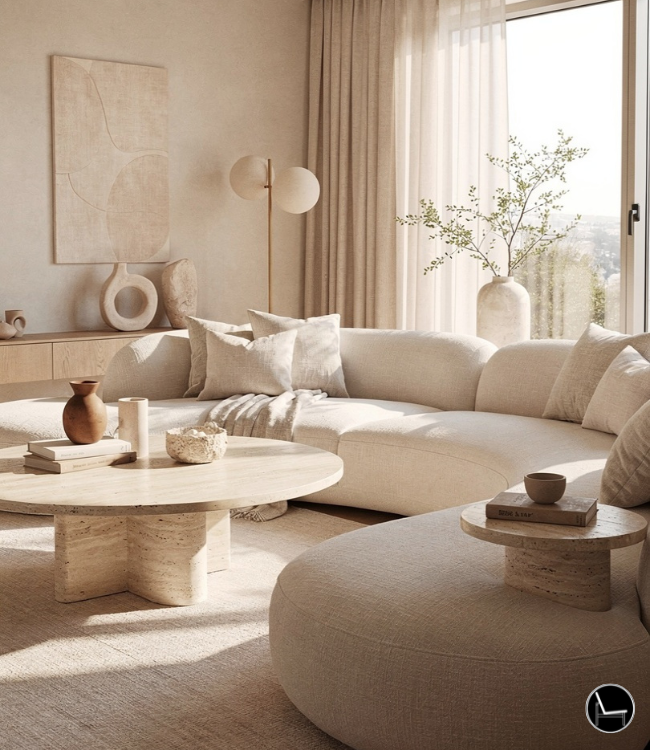

Why Your Small Living Room Feels Unfinished — And Exactly How to Fix It
A small living room feels unfinished when it’s missing scale, layered lighting, and intentional styling — not because it needs more stuff. The fix is a specific sequence: ground the room with the right rug size, anchor furniture to a focal point, layer three light sources, and finish every surface with purposeful objects. This guide walks you through each problem and its exact fix with real designer dimensions.
You did everything right on paper. You picked a sofa that fits. You found a coffee table you love. You even added a plant. So why does your small living room still feel like a waiting room?

Here’s the honest answer: a small living room feels unfinished not because it’s missing more furniture — it’s missing the right relationships between what’s already there. Scale is off. Lighting is flat. Walls are blank. Surfaces are either cluttered or bare. The furniture floats instead of anchoring. These are solvable problems, every single one. This guide gives you the exact designer framework to diagnose what’s wrong and fix it — section by section, step by step.
- The Rug Is Wrong (Or Missing)
- Furniture That Floats
- No Focal Point, No Finish
- The Lighting Strategy Most Rooms Get Wrong
- What to Put on Every Surface
- Unfinished Walls
- The Texture Layer
- The Showroom Effect
- Clutter Kills the Room
- When Your Small Bedroom Feels the Same Way
- What NOT to Do
- The Designer’s Cheat Sheet
- FAQ
- Easy Wins to Start Today
The Rug Is Wrong — Or Missing Entirely
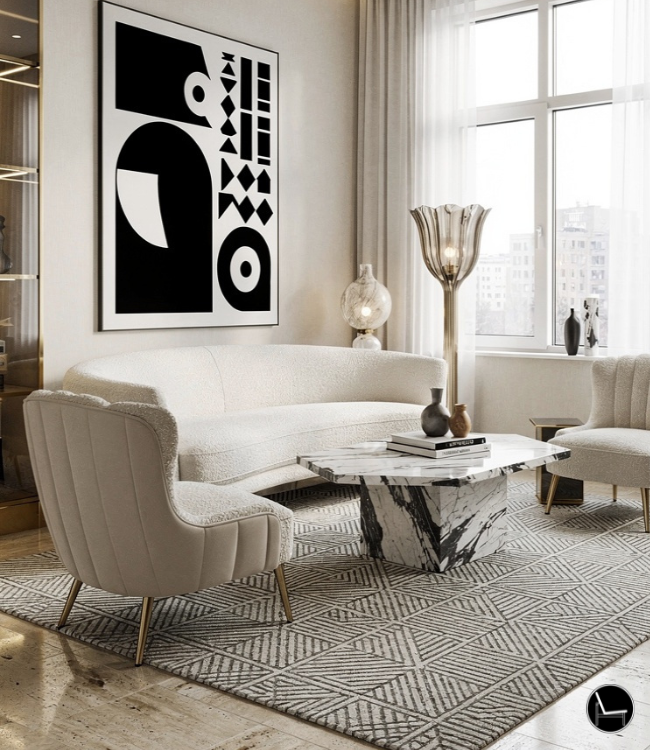
The rug is the single most overlooked reason a small living room feels unfinished. Before you move a single piece of furniture or hang a single piece of art, the floor needs an anchor. Without it, every decorating decision you layer on top will keep feeling “off” — because the foundation isn’t there.
✗ Why It Feels Off
- An undersized rug makes furniture appear to float on bare floor with no defined zone
- The eye finds no “room within a room” — pieces read as isolated, not cohesive
- Without floor texture, the space feels cold and temporary regardless of what’s in it
- A 5×7 rug actually makes a small living room look more unfinished, not less
✓ Here’s How to Fix It
- Go 8×10 minimum — front legs of all seating must touch or sit on the rug
- Leave 12–18 inches of bare floor between rug edge and wall to “frame” the space
- Choose low-pile in a warm neutral or subtle pattern for texture without shrinking the room
- Tape out the size first with painter’s tape — before you buy anything
Tape out your rug size on the floor with painter’s tape before you buy. You’ll immediately see if the size reads right or small. This five-minute test has saved countless people from the most expensive mistake in small living room styling.
Curated Rug Picks to Ground Your Small Living Room
Affiliate links — I only recommend what I’d put in a client’s home. Opens in a new tab.
 Budget Pick
Amazon Budget Area Rug
Solves: The floating-furniture problem on a tight budget. An 8×10 low-pile rug in a warm neutral that instantly grounds the seating zone.
Best for: Renters, first apartments, anyone testing sizing before investing more.
→ Shop on Amazon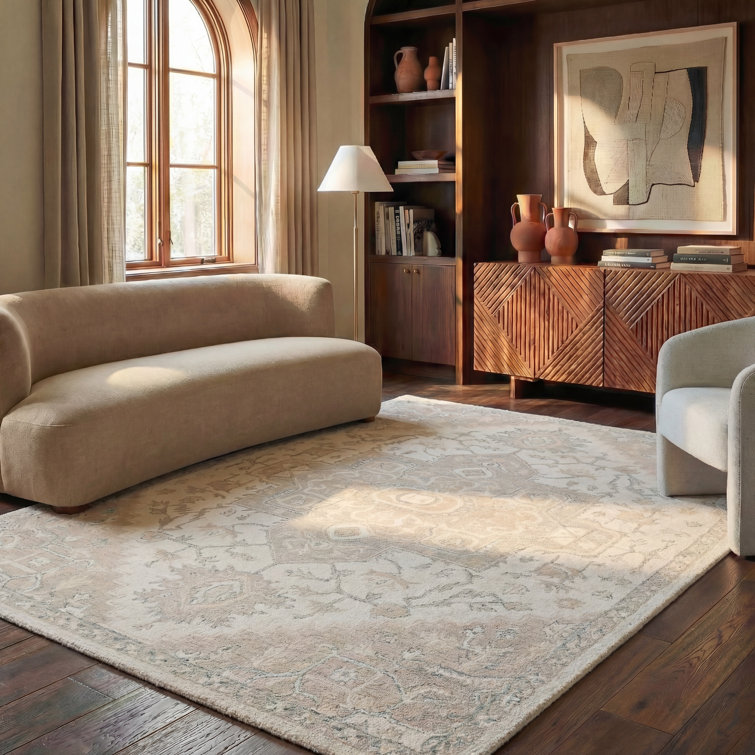 Best Overall
Barden Hand Tufted Oriental Rug
Solves: The need for durability and visual warmth. A hand-tufted mid-range rug with a classic pattern that adds character without dating.
Best for: Small living rooms needing a centerpiece that lasts 5–10 years.
→ Shop on Wayfair Designer Pick
Colliers Hand Woven Wool Rug
Solves: Everything at once. A hand-woven wool rug that becomes the room’s anchor piece — the finishing detail that makes the entire small living room feel intentional.
Best for: Anyone who wants the room to feel finished for a decade. Heirloom quality.
→ Shop on WayfairFurniture That Floats Makes Any Small Living Room Feel Unfinished
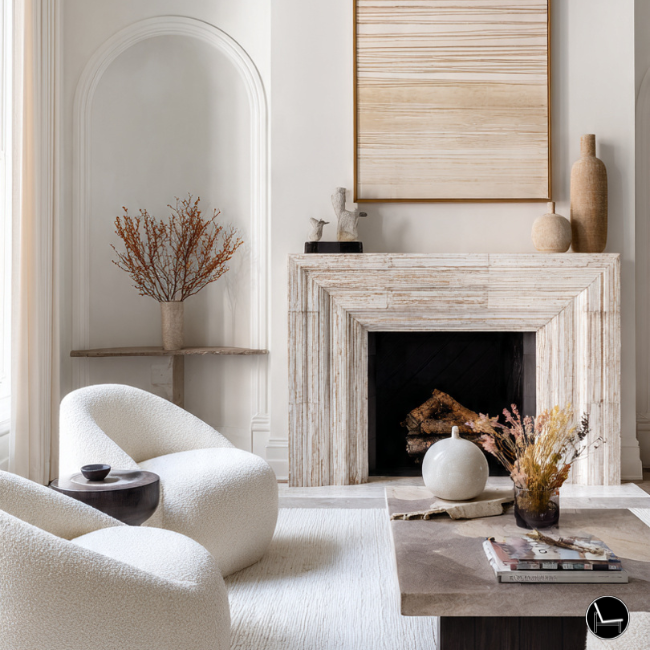
The most universal decorating instinct — push everything to the walls to “open up” the center — is also the most reliably wrong one. When furniture hugs the perimeter of a small living room, each piece becomes an isolated island. There’s no conversation zone, no visual grouping, no sense that the room was arranged with intention. Pulling furniture inward is the single layout move that transforms how a room reads.
✗ Why It Feels Off
- Furniture flat against every wall creates an empty island of floor with no purpose
- Pieces lose their relationship to each other — the room looks like it’s waiting to be arranged
- No defined seating zone means no sense of purpose, comfort, or completion
- The eye wanders the perimeter without landing anywhere satisfying
✓ Here’s How to Fix It
- Pull the sofa 6–12 inches away from the wall — this one move creates an implied conversation zone
- Angle chairs inward toward the sofa, not parallel to the walls
- Keep sofa-to-coffee-table at 14–18 inches — tight enough to feel cohesive
- Maintain 30–36 inch traffic lanes — never sacrifice the walkthrough path for more furniture
- Sofa flat against the back wall
- Chairs pushed to opposite corners
- Coffee table too far from sofa
- Empty island of floor in center
- No defined conversation zone
- Room feels like a waiting area
- Sofa 6–12″ from wall, grouped inward
- Chairs angled inward toward sofa
- Coffee table 14–18″ from sofa edge
- All front legs on the rug
- Clear defined conversation zone
- 30″ traffic lane preserved
Anchor Your Layout: Coffee Table & Side Table Picks
Affiliate links — opens in a new tab.
 Budget Pick
Amazon Coffee Table
Solves: The too-far gap between sofa and center table that breaks visual cohesion. A clean-lined coffee table at the right height (16–18 inches) grounds the seating zone immediately.
Best for: Small living rooms needing a functional, affordable centerpiece that doesn’t dominate limited floor space.
→ Shop on Amazon Best Overall
Caomhan Block Coffee Table
Solves: The need for a statement piece that holds the room together. A solid block-style table with visual weight makes the seating arrangement feel anchored and complete.
Best for: Anyone wanting a design-forward piece that pulls the whole small living room together.
→ Shop on Wayfair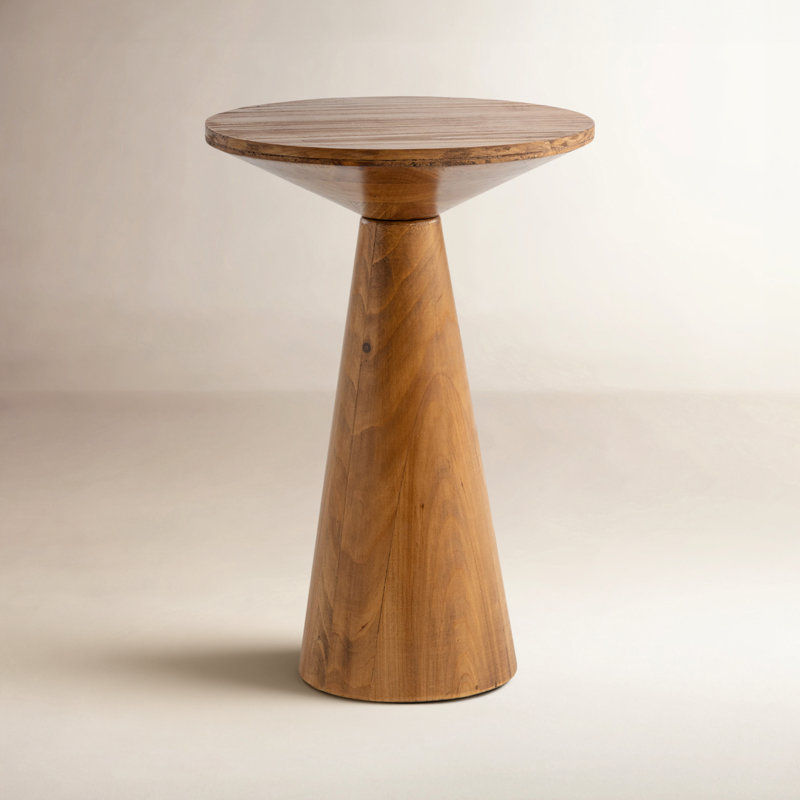 Designer Pick
Bozovich Solid Wood Side Table
Solves: The missing relationship between sofa and the end of the seating zone. A solid wood side table at the right height (same as or slightly lower than sofa arm) completes the grouping and gives you a surface for your lamp.
Best for: Anyone whose small living room has a sofa end without a lamp or surface — that gap always reads as unfinished.
→ Shop on WayfairNo Focal Point, No Finish

Every finished room has one thing in common: a dominant element the eye moves to first. A fireplace, a large piece of art, a dramatic mirror, a styled console. The rest of the room arranges itself in support of that anchor. When a small living room feels unfinished, it’s often because every wall is competing at the same visual weight — and the eye has nowhere to land. You don’t need more furniture. You need one clear destination.
✗ Why It Feels Off
- Without a dominant anchor, the eye wanders across every wall without resting anywhere
- Every surface competes equally — nothing says “this is the room’s center of gravity”
- Art hung at inconsistent or random heights looks accidental, not curated
- A TV on a bare wall with nothing below or around it creates a visual hole in the room
✓ Here’s How to Fix It
- Pick ONE dominant wall and give it a clear anchor: oversized art, a mirror, or a styled console
- Hang all art at exactly 57 inches from floor to the piece’s center — the gallery standard
- Art above furniture: position the bottom edge 6–8 inches above the furniture’s top
- Hang curtain rods within 2–4 inches of the ceiling to create architectural height and drama
“A room without a focal point forces the eye to wander without landing anywhere satisfying. Choose one element per room to do the heavy lifting — everything else supports it.”
Design principle5 Ways to Create a Focal Point in a Small Living Room
- Oversized art: One piece approximately 2/3 the width of your sofa, hung at 57 inches to center. The single fastest fix for a small living room that feels unfinished.
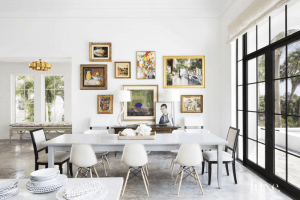
- Gallery wall: A curated grouping covering 60–75% of the wall it’s on. Map the arrangement on the floor before hammering a single nail.
- Large mirror: An oversized arched or round mirror reflects light, doubles perceived space, and anchors the wall — two problems solved at once.
- Styled console: A console table with art or a mirror above it becomes a full focal wall, especially effective facing the main sofa.
- Floor-to-ceiling curtains: Hung 4–6 inches above the window frame and extending 6–12 inches past each side. Creates an architectural moment without a single piece of art.
The Lighting Strategy Most Small Living Rooms Get Wrong
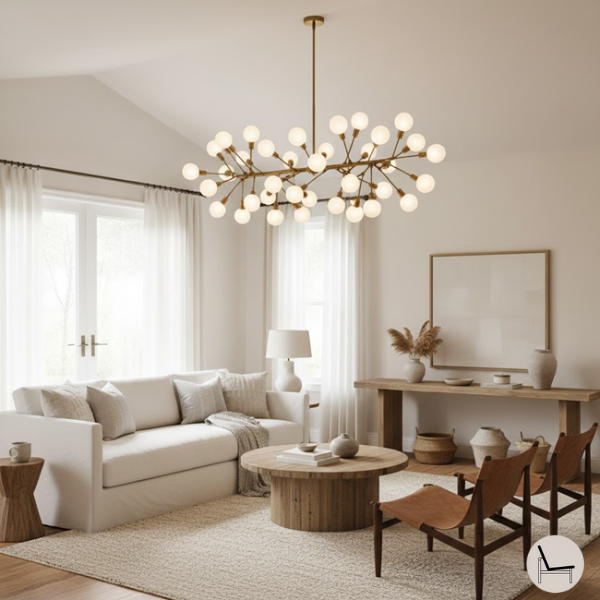
Here’s something that sounds too simple: swapping your lightbulbs to warm white and adding one floor lamp can make a small living room feel more finished than a thousand dollars of new furniture. Lighting is the most underestimated tool in the decorator’s kit, and a single overhead fixture with cool-white bulbs will undermine everything else you’ve done right in a room.
✗ Why It Feels Off
- A single overhead fixture casts flat, downward light that strips depth and warmth from every surface
- Cool-white bulbs (4000K+) make even a beautifully decorated room feel clinical and cold
- No light sources below eye level means no intimacy — the room reads as institutional
- Shadows, depth, and warmth only happen when light comes from multiple angles and heights
✓ Here’s How to Fix It
- Add at least 3 light sources: one overhead, one floor lamp, one table lamp minimum
- Swap all bulbs to 2700K–3000K warm white — costs under $15 and transforms the entire atmosphere
- Position floor lamp shade at eye level when seated: 58–64 inches from floor to shade bottom
- Install a dimmer switch on the overhead — a $15 hardware fix that makes every setting work better
Ambient
Overhead fixture or recessed lights at 2700K–3000K. Add a dimmer for instant atmosphere control. This is your room’s foundation — without it, nothing else works.
Task
A floor lamp beside the sofa or reading chair. Shade bottom at 58–64 inches from floor. Arc floor lamps are ideal for small living rooms — they reach over furniture without using floor space.
Accent
Table lamps on side tables, a small lamp on a console, or sconces. These warm pools of light at lower heights create the visual depth that separates a finished room from an unfinished one.
Curated Lighting Picks for a Small Living Room
Affiliate links — opens in a new tab.
 Budget Pick
Amazon Arc Floor Lamp
Solves: Flat, single-source lighting that makes the small living room feel unfinished. Adds the task layer and creates a warm reading zone without needing a side table.
Best for: Renters with no hardwired fixtures, or anyone whose sofa has no side table space.
→ Shop on Amazon Best Overall
Tanyjah Table Lamp
Solves: Flat lighting at both sofa ends. A table lamp creates visual balance and two warm pools of light at exactly the right height for a finished look.
Best for: Symmetrical sofa layouts where both ends have side tables. Buy two for a polished result.
→ Shop on Wayfair Designer Pick
Elyse Swing Arm Wall Sconce
Solves: The generic overhead-only look. A pair of swing-arm sconces flanking the sofa frees up side table surfaces and gives the room a hotel-grade architectural finish.
Best for: Anyone who’s fixed the rug and furniture and wants the final polish layer that makes the room feel complete.
→ Shop on WayfairWhat to Put on Every Surface — The Exact Formula
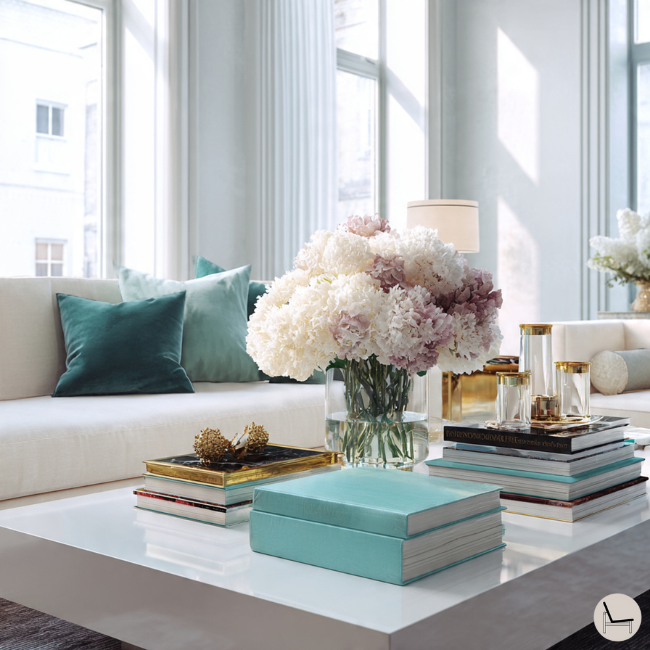
Surfaces are where most small living rooms silently fail. A bare coffee table signals that the room isn’t really lived in yet. An overloaded one signals that no one is in control of the space. The sweet spot is a very specific ratio — and once you understand it, you’ll be able to walk into any room and know exactly what’s wrong in under thirty seconds.
✗ Why It Feels Off
- Completely bare surfaces make the room feel temporary and unfinished
- Over-cluttered surfaces make it feel chaotic — the eye never gets to rest
- Same-height objects everywhere look flat and monotonous with no visual interest
- Random decor without grouping reads as clutter even when there isn’t much of it
✓ Here’s How to Fix It
- Use the Rule of Three: group objects in odd numbers at three different heights
- Maintain a 60/40 ratio — 60% negative space, 40% styled objects on any surface
- Always include one natural element per vignette: a plant, branch, stone, or wood object
- Use a tray on the coffee table to corral 2–3 items into a single intentional grouping
Surface-by-Surface Styling Guide
The coffee table: Use a tray to corral 2–3 small objects. Add one tall element (a candle or small sculpture), one natural element (a plant or branch in a vessel), and one functional item (a coffee table book face-up or a coaster). The tray is non-negotiable — it turns a collection of items into a vignette.
The side table: Three things only — lamp + one small decorative object + one functional item. Anything more becomes clutter. Anything less looks bare. That’s the complete formula.
The console table: Treat it like a mini gallery. One tall item (lamp or tall vase), one medium item (stacked books or a sculpture), one low item (a small plant, tray, or candle), and art or a mirror above it. This visual triangle of varying heights is what trained eyes read as polished and finished.
If your TV console feels unfinished, apply the same surface formula: a lamp on each outer end and a tray or grouped objects in the center. The lamp does double duty — it styles the surface AND adds the accent lighting layer your small living room is missing.
TV Console & Storage: Curated Picks
Affiliate links — opens in a new tab.
 Budget Pick
Amazon TV Console / Media Stand
Solves: A floating TV that makes the small living room look unfinished. A clean media console grounds the screen and creates a styled surface to layer lighting and accessories on top.
Best for: Anyone whose TV is wall-mounted with nothing below it — that bare-wall look is one of the fastest ways to make a room feel incomplete.
→ Shop on Amazon Best Overall
Cartney TV Stand with Storage
Solves: Both the styling and clutter problem at once. Closed-door storage hides equipment while the top surface becomes a designed moment in your small living room.
Best for: Families or anyone with cable boxes, game consoles, or AV equipment that needs to disappear cleanly.
→ Shop on Wayfair Designer Pick
Valetta Floating Display Shelves
Solves: The need for display space without sacrificing floor space. Floating shelves add vertical layering and turn a bare wall into a styled, finished focal zone — critical in a small living room.
Best for: Anyone wanting a built-in feel that maximizes vertical space and creates the layered, editorial look that makes a small room feel designed.
→ Shop on WayfairNot Sure What Style Your Living Room Is?
Take the free 2-minute style quiz and get a personalized design direction — no guessing required.
Take the Free Style Quiz →Unfinished Walls: Blank Space That Kills the Room
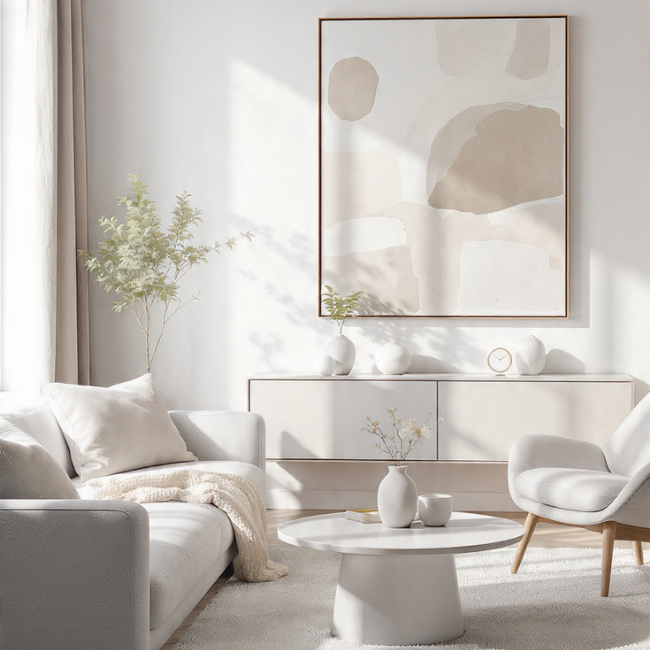
Blank walls are one of the most reliable signs that a small living room feels unfinished. It’s not just aesthetic — bare walls signal to the brain that the room is still in progress, like moving in with the intention to decorate “eventually.” Wall art doesn’t need to be expensive or gallery-worthy. It needs to be intentional, properly scaled, and hung at the right height. Those three rules change everything.
✗ Why It Feels Off
- Blank walls signal “not done yet” to every person who enters the room
- Art that’s too small looks like a postage stamp — worse than nothing at all
- Art hung at the wrong height (too high or too low) breaks the visual flow of the room
- A wall with 4–5 tiny unrelated frames scattered across it looks chaotic, not curated
✓ Here’s How to Fix It
- Aim for art that’s 2/3 the width of the furniture below it — scale is everything
- Hang the center of the art at exactly 57 inches from the floor — always
- One large statement piece beats a scattered collection of small ones every time
- Gallery walls work when mapped on the floor first, spaced 2–3 inches between frames
Wall Art: Curated Picks
Affiliate links — opens in a new tab.
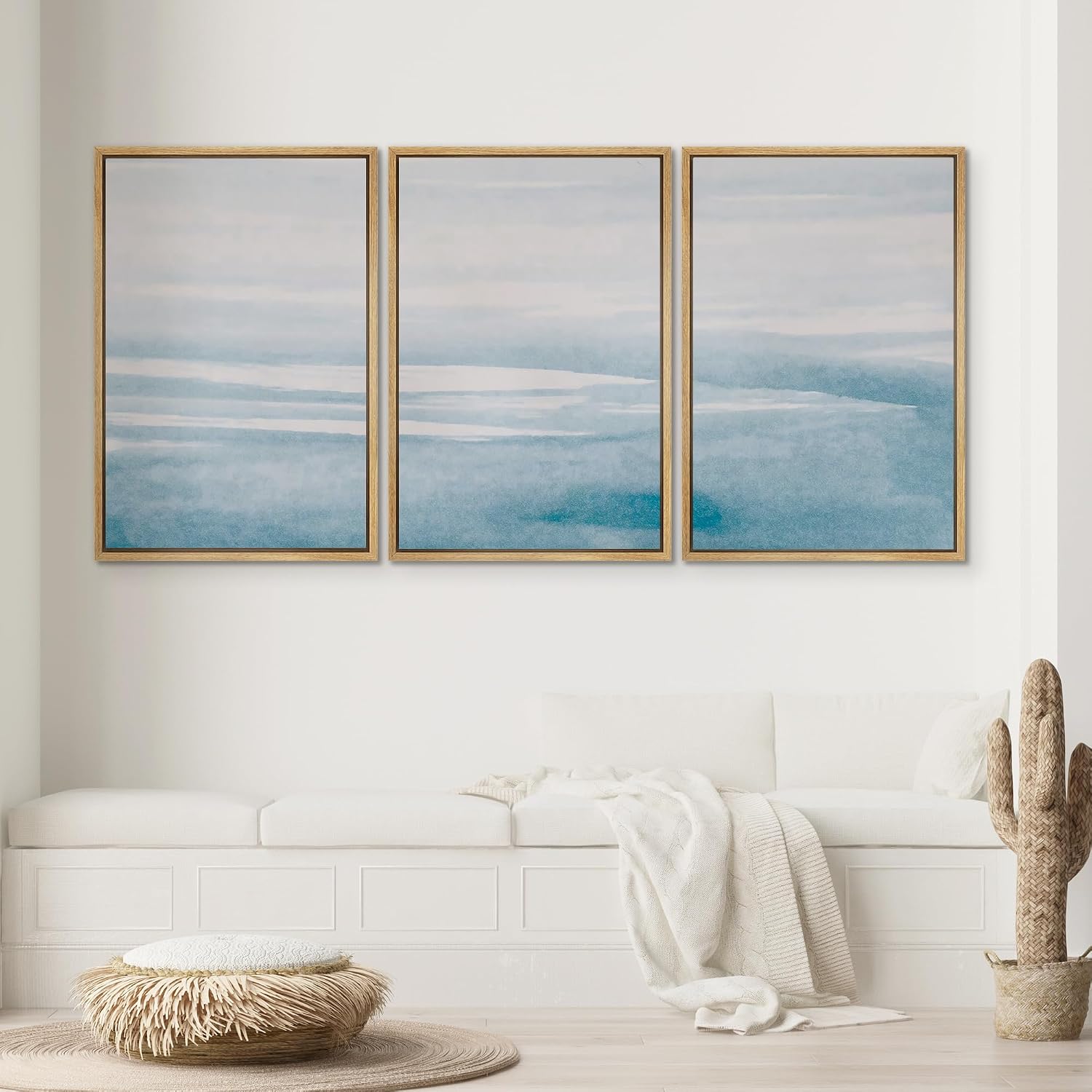 Budget Pick
Amazon Large Canvas Wall Art
Solves: An empty anchor wall that makes the small living room feel unfinished. A large-format canvas in a neutral palette creates instant focus at the right scale without a gallery price tag.
Best for: Renters or those still developing their personal style. Lightweight, ships flat, hangs with Command strips.
→ Shop on Amazon Best Overall
Moody Landscape Extra Large Canvas
Solves: The need for real visual scale on a statement wall. This oversized framed giclee print commands attention and grounds the entire small living room around it.
Best for: Anyone ready to commit to a true focal wall. The moody neutral palette works in modern, organic, and transitional interiors.
→ Shop on WayfairThe Texture Layer: The Organic Finish That Completes a Room
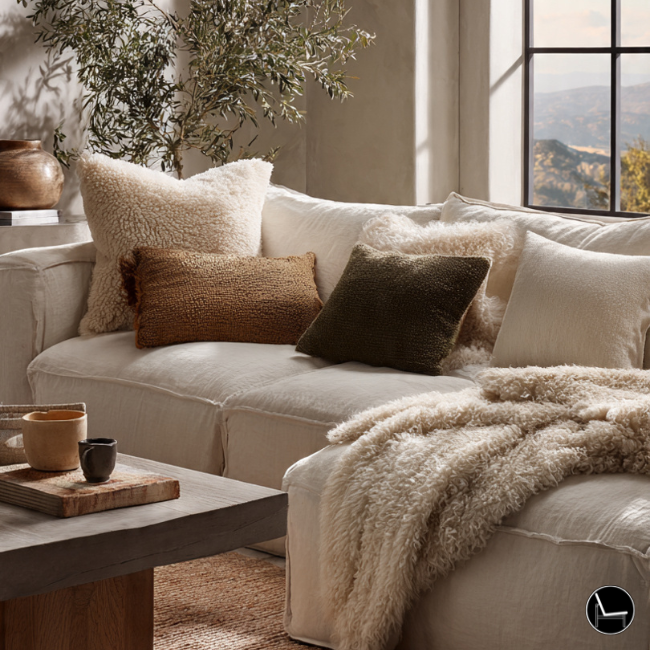
You can have the right rug, the right furniture layout, and the right lighting — and a small living room can still feel flat and unfinished if every surface is the same material and finish. Texture is the invisible layer that makes a room feel rich, warm, and complete. It’s the reason a room with a linen sofa and a wood coffee table and a bouclé throw reads as finished, while a room with a smooth leather sofa and a glass coffee table and no soft elements reads as cold — even if both are identically arranged.
✗ Why It Feels Off
- All hard, smooth, or shiny surfaces in one room feel cold and one-dimensional
- No soft textiles — no throw, no cushion variations, no linen — makes the room feel sterile
- Same finish on every piece (all matte, all glossy, all metal) removes visual depth
- Without organic materials (wood grain, rattan, stone, ceramic), the room looks synthetic and soulless
✓ Here’s How to Fix It
- Contrast hard surfaces (wood, leather, stone) with soft, textured elements (bouclé, linen, matte ceramics)
- Add a throw blanket with visible texture — a chunky knit or linen weave over the sofa arm
- Mix at least 3 different materials per surface vignette: e.g., wood + ceramic + linen
- Bring in at least one organic natural element per room: a plant, a rattan basket, a wood object
The easiest texture addition in any small living room: drape a throw blanket over one sofa arm and add two differently textured throw pillows. This single five-minute move — costing under $50 — adds the layered warmth that separates a magazine room from an unfinished one.
The Showroom Effect: When Everything Looks Too Perfect to Feel Finished

There’s a counterintuitive reason many small living rooms feel unfinished: they’re too perfect. Everything matches. The sofa, rug, throw pillows, and curtains are all from the same collection. It looks like a floor display — technically correct, visually sterile, and completely lacking the personal, organic quality that makes a space feel like someone actually lives there. The showroom effect is real, and it makes a room feel just as unfinished as a bare one.
✗ Why It Feels Off
- Everything matching from one collection looks staged, not designed
- No vintage, handmade, or organic pieces means no soul — just catalog pages
- Rooms that are “too clean” lack the personal identity that makes them memorable
- Perfectly matched color palettes can feel sterile without contrast or unexpected elements
✓ Here’s How to Fix It
- Add one piece that doesn’t “match” — a vintage find, a handmade ceramic, an inherited object
- Mix at least two different furniture “eras” or design periods — modern + vintage always works
- Introduce one unexpected color or material that wasn’t in your original plan
- Add personal objects: a book you’ve actually read, a plant you tend, an object from travel
“The best rooms have something in them that couldn’t be bought — a memory, an imperfection, a one-of-a-kind piece. That’s what makes a room feel finished rather than furnished.”
Design principleClutter: When More Decor Makes the Room Feel Less Finished
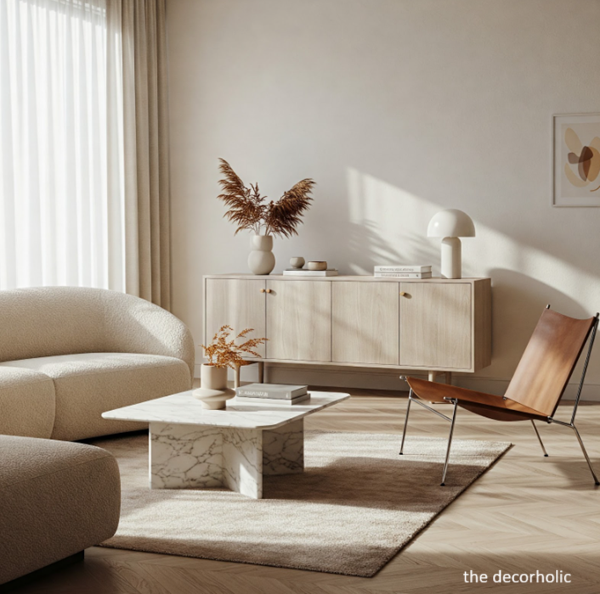
More is not more in a small living room. One of the most common reasons a small living room feels unfinished is actually the opposite of what you’d expect: it has too much in it. Too many small decorative objects. Too many throw pillows. Too many pieces of furniture competing for the same limited floor space. When a room is cluttered, the eye can’t land anywhere — and a room where the eye can’t rest is a room that will always feel incomplete, no matter how beautiful each individual piece is.
✗ Why It Feels Off
- Too many small objects creates visual noise that exhausts the eye instead of directing it
- Multiple furniture pieces competing for floor space makes the room feel smaller and more chaotic
- Over-decorated surfaces signal a lack of curation — and curation is what makes rooms feel designed
- Clutter communicates that the room is still “in progress” even when it’s fully furnished
✓ Here’s How to Fix It
- Edit ruthlessly: remove everything from every surface, then add back only what earns its place
- Keep the 60/40 rule — 60% of any surface should be empty space
- One statement piece beats five small ones every time — choose it and commit
- If a piece doesn’t add beauty, function, or meaning, it has no job in the room
The fastest editing test: stand in the doorway of your small living room and photograph it. You will immediately see exactly what’s creating visual noise. The camera doesn’t lie — it shows you the room the way a first-time guest sees it, without the emotional attachment to each individual piece.
When Your Small Bedroom Feels the Same Way
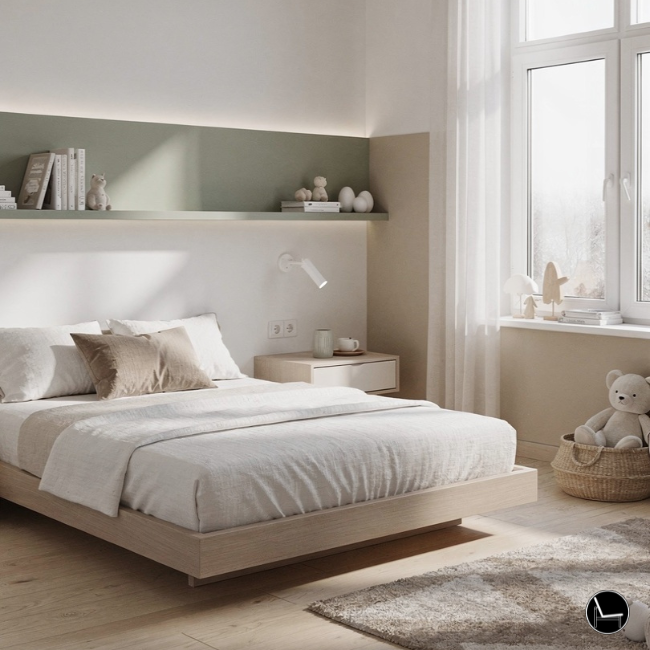
The same forces that make a small living room feel unfinished apply directly to the bedroom — and often for the same reasons. A headboard that’s too narrow for the bed. Nightstands that don’t match or sit at the wrong height. Bedding that’s under-layered. A single overhead light doing all the work. The bedroom checklist below covers every zone so you can fix it systematically, the same way we’ve handled the living room throughout this guide.
✗ Why It Feels Off
- A headboard too narrow for the mattress makes the bed zone look unanchored
- Mismatched or missing nightstands break the symmetry a bedroom requires to feel complete
- Flat, under-layered bedding with no dimension looks like a hotel on move-in day
- Overhead-only lighting strips warmth and makes the bedroom feel functional, not restful
✓ Here’s How to Fix It
- Headboard: 2/3 to 3/4 the mattress width minimum — it should feel like an architectural feature
- Nightstand top should align with the mattress top, ±2 inches
- Layer bedding: duvet + Euro shams + standard pillows + 1 accent pillow + a throw at the foot
- Add a rug — 8×10 under a queen bed, extending at least 18–24 inches past each side
Bedroom-Specific Checklists
- ◆ Headboard: 2/3–3/4 of mattress width
- ◆ Art above headboard: 4–6″ clearance
- ◆ Bedding: duvet + shams + throw
- ◆ Throw blanket draped at foot of bed
- ◆ Top aligns with mattress top ±2″
- ◆ Lamp shade bottom at mattress height
- ◆ One tray + one small plant or candle
- ◆ One book — face-up, not a stack
- ◆ Never overhead-only
- ◆ 2 bedside lamps = balance + task light
- ◆ 2700K warm white bulbs only
- ◆ Dimmer switch if possible
- ◆ 8×10 rug minimum for a queen bed
- ◆ Extends 18–24″ past each side
- ◆ Low-pile for under-bed cleaning
- ◆ Contrasts with floor material
What NOT to Do: The Habits That Keep Small Living Rooms Unfinished
Every rule in this guide has a common violation. Below are the most costly mistakes — the ones that keep a small living room feeling perpetually unfinished no matter how much time and money goes into it — and the direct fix for each one.
✓ Do This
- Use an 8×10 rug or larger
- Pull furniture 6–12″ from walls
- Hang art at exactly 57″ to center
- Use 3 light sources minimum
- Use 2700K–3000K warm bulbs
- Style surfaces with the Rule of Three
- Mix textures and materials intentionally
- Add one personal, non-matching piece
- Edit ruthlessly — leave 60% negative space
- Use one dominant focal point per room
✗ Don’t Do This
- Buy a 5×7 rug to “open up” space
- Push all furniture against the walls
- Hang art wherever feels convenient
- Rely on a single overhead fixture
- Use cool-white (4000K+) bulbs
- Leave surfaces bare or overloaded
- Match everything from one collection
- Scatter 10 tiny unrelated decorations
- Add more furniture to fix emptiness
- Spread decor evenly on every wall
The Designer’s Cheat Sheet for a Finished Small Living Room
This is the complete design math for a small living room that feels finished. Screenshot it, bookmark it, or print it and tape it to the wall — use it every time you’re about to buy a piece or rearrange a room.
Frequently Asked Questions About Why a Small Living Room Feels Unfinished
Start Here: Easy Wins to Make Your Small Living Room Feel Finished Today
Here’s the truth about a small living room that feels unfinished: it’s almost never a money problem or a space problem. It’s a sequencing problem. You’ve been adding things in the wrong order, or skipping the foundational steps that make everything else work. The good news is that the most impactful fixes are also the least expensive ones.
Work through this priority sequence — each step makes the next one easier, and you’ll feel the room shift at every stage:
Fix the rug (or add one)
The single highest-impact change. If it’s too small, swap it. No rug at all? Get an 8×10 in a warm neutral this week.
Pull furniture away from walls
Just 6–12 inches. You’ll feel the difference immediately. This costs nothing and takes ten minutes.
Swap your lightbulbs to 2700K warm white
Replace any bulb over 3000K. Under $15 total. Alone, this shifts the entire atmosphere of your small living room.
Create one focal point on your most prominent wall
Large art, a mirror, or a styled console with something above it. Everything else supports this choice.
Style your surfaces with the Rule of Three
One tall, one medium, one low item per surface. 60% negative space. Group in odd numbers. Add one natural element. Done.
Add one layer of texture
A throw blanket with visible texture draped over one sofa arm. Two differently textured throw pillows. A plant. Immediately warmer and more finished.
A small living room that feels unfinished is always fixable. You don’t need a bigger space, a bigger budget, or more stuff. You need the right relationships between what’s already there — and now you have the exact formula to create them.
“Want the complete step-by-step decorating system — dimensions, cheat sheets, and designer formulas — all in one place?”
Get The Designer’s Cheat Sheet →CATCH THE LATEST IN HOME DECOR TRENDS:
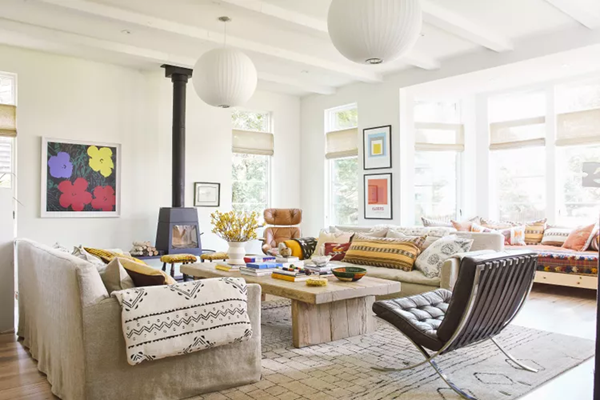
Steal These 16 Expert-Approved Decorating Secrets
Accessorize a Small Living Room: 7 Genius Styling Secrets
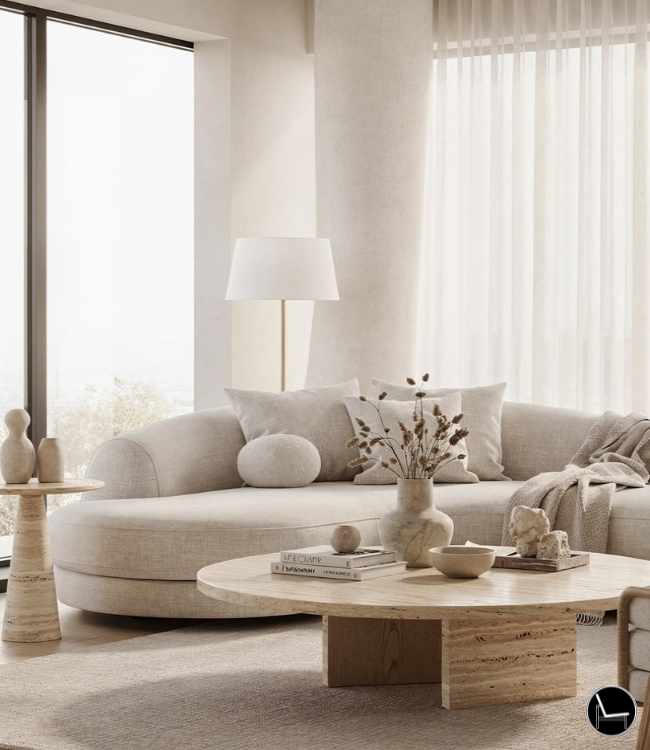
How to Make a Small Room Appear Bigger
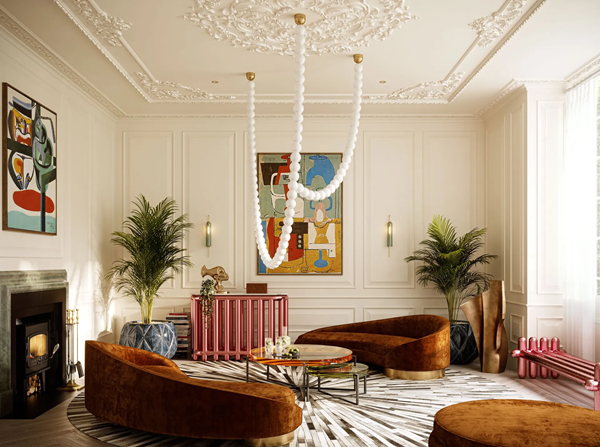
How to Make Your Home Look Expensive
GET CAUGHT UP ON ALL THE INSPIRING DECOR TIPS:
18 Fresh Decorating Ideas To Update Your Fireplace
How to Make a Gallery Wall: The Complete Step-by-Step Guide (Even If You’ve Never Hung a Picture)
