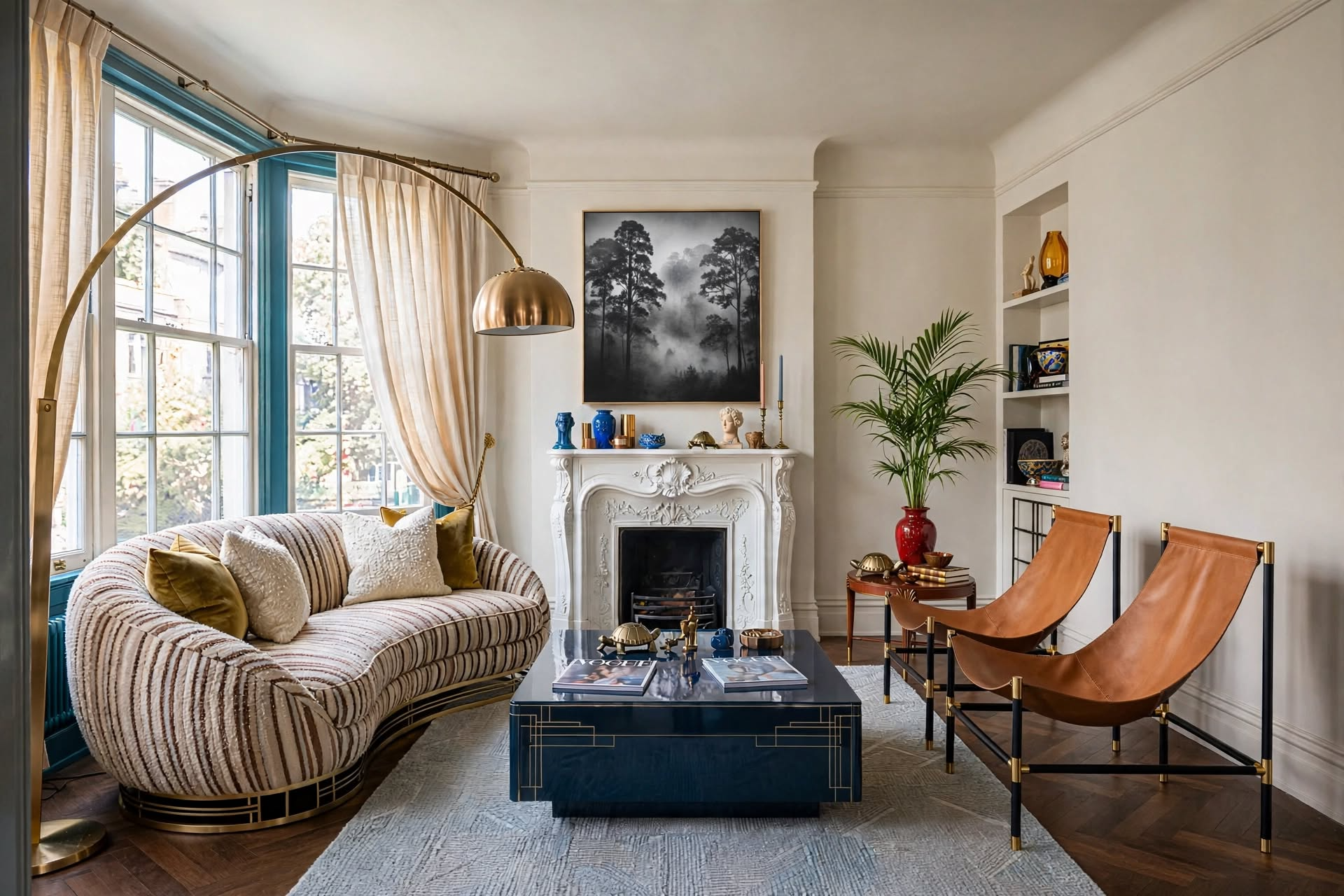
Editor’s Note: Updated for December 2025 with current furniture trends, new measurement guidelines, and expert insights on curved furniture, sustainable materials, and multifunctional design solutions.
TL;DR Summary: Choosing living room furniture requires balancing measurements, style, and function. Start by measuring your space and determining your primary use (entertaining, relaxing, or multi-purpose). Select a sofa that fits proportionally (leaving 30-36″ walkways), add complementary seating at similar heights (within 4″ of each other), and choose a coffee table at least half your sofa’s length. Layer with storage solutions, proper lighting at eye level, and arrange furniture to create clear zones with easy traffic flow. In 2025, prioritize curved silhouettes, sustainable materials, and modular pieces that adapt to your lifestyle.
Choosing furniture for your living room in 2026 isn’t just about finding pieces that look good—it’s about creating a space that works as hard as you do. Whether you’re binge-watching your favorite series, hosting game nights, or stealing quiet moments with a book, your living room needs to flex with your lifestyle while reflecting your personal style.

Living room design has evolved dramatically, definitely no more matching furniture sets and rigid, boxy layouts. Today’s approach blends organic shapes with sustainable materials, prioritizes comfort alongside aesthetics, and embraces furniture that actually earns its square footage through multiple functions.
This comprehensive guide walks you through every decision—from measuring your space accurately to selecting the perfect sofa, from understanding the science behind furniture placement to mastering the art of mixing styles. By the end, you’ll have a living room that not only looks professionally designed but genuinely enhances how you live every single day.
- Quick Reference: Essential Living Room Furniture Measurements
- Step 1. Assess Your Living Room Space Like a Designer
- Step 2: Define Your Style and Functional Needs
- Step 3: Select the Perfect Sofa (Your Room’s Foundation)
- Step 4: Layer in Complementary Seating
- Step 5: Smart Storage Solutions (The Secret to Uncluttered Living)
- Step 6: Tables That Work (Function Meets Form)
- Step 7: Master the Art of Lighting Layers
- Step 8: Rug Placement Rules (Ground Your Design)
- Step 9: Arrange for Flow and Function
- How to Mix Furniture Styles Without Creating Chaos
- Matching Your Sofa to Your Room
- Best Sofa Shapes for Different Room Types
- Step-by-Step Furniture Purchasing Order
- Final Thoughts: Your Living Room, Your Way
- How to Choose the Right Furniture for Your Living Room (FAQs)
- FAQ 1: Can I mix different furniture styles in my living room?
- FAQ 2: How do I measure my living room space accurately?
- FAQ 3: What are some space-saving furniture options for small living rooms?
- FAQ 4: Should I prioritize comfort or style when choosing living room furniture?
- FAQ 5: How can I incorporate personal touches into my living room design?
- FAQ 6: What are some online resources for finding inspiration and ideas for living room furniture?
Quick Reference: Essential Living Room Furniture Measurements
| Element | Ideal Measurement | Why It Matters |
|---|---|---|
| Walkway between furniture | 30-36 inches (minimum 18-24″) | Prevents overcrowding and bruised shins |
| Seating distance | 3.5-10 feet apart | Comfortable conversation without shouting |
| Sofa from wall | 3-5 inches pulled out | Creates breathing room, less cramped feel |
| Coffee table length | At least 50% of sofa length | Proportional scale, cohesive look |
| Coffee table height | Within 4″ of sofa seat cushion | Easy reach, visual harmony |
| Coffee table distance | 16-18 inches from sofa | Accessible without getting up |
| Front furniture legs on rug | All front legs (minimum) | Grounds the space, professional look |
| Floor lamp height | Bottom of shade at eye level seated | Prevents harsh glare in eyes |
Step 1. Assess Your Living Room Space Like a Designer

Before spending a single dollar, you need to understand your canvas. The biggest furniture-buying mistake isn’t choosing the wrong style—it’s choosing the wrong size.
Measure Everything (Yes, Everything)
Grab a tape measure and document these critical dimensions:
- Overall room dimensions: Length, width, and ceiling height
- Architectural features: Window locations, door swing paths, fireplace dimensions
- Existing elements: Built-ins, radiators, electrical outlets, and cable connections
- Traffic patterns: Primary walkways people use to move through the space
💡 Pro Tip: Create a simple floor plan using free apps like RoomSketcher or even graph paper (1 square = 1 foot). This prevents the costly mistake of buying furniture that doesn’t fit through doorways or blocks natural pathways.
Identify Your Room’s Personality
Ask yourself these design-clarifying questions:
- What’s the natural focal point? (Fireplace, stunning window view, architectural feature)
- How much natural light enters at different times of day?
- What’s the room’s current vibe—cozy and intimate or open and airy?
- Are there awkward architectural challenges? (Odd corners, low ceilings, unusual door placements)
Understanding these elements helps you work with your space instead of fighting against it.
Also: How to Reduce Visual Clutter in Your Home in 5 Easy Steps
Step 2: Define Your Style and Functional Needs

Your living room should tell your story, not replicate a furniture showroom. In 2026, the most compelling spaces blend personal expression with practical functionality.
Discover Your Design Direction
The top style trends dominating 2025 living rooms include:
Organic Modernism: Clean lines meet natural materials like mixed metals paired with warm woods, creating spaces that feel both sophisticated and grounded.
Curved Comfort: Rounded sofas, sculptural chairs, and coffee tables with organic shapes soften spaces while promoting better traffic flow—a perfect antidote to years of sharp angles.
Sustainable Sophistication: Reclaimed wood, bamboo, and recycled metals aren’t just eco-conscious choices; they’re design statements that add texture and authenticity.
Neo-Traditional: The formal living room is making a comeback, with spaces designed for conversation and entertaining rather than TV-watching. Think bar carts, multiple seating vignettes, and fireplaces as focal points.
Map Your Functional Requirements
Be brutally honest about how you’ll actually use this space:
- Entertainment central: Need TV mounting options, gaming storage, and ample seating for movie nights?
- Conversation hub: Prioritize face-to-face seating arrangements, adequate side tables for drinks, and ambient lighting?
- Multi-purpose zone: Require storage for work-from-home setup, kid-friendly surfaces, and flexible furniture that adapts?
- Formal showcase: Want sophisticated pieces that impress guests while maintaining livability?
Your answers directly inform every furniture decision moving forward.
💡 Pro Tip: Create a priority list ranking your top three must-haves (like “comfortable seating for 6 people” or “easy-clean surfaces for young kids”). When choosing between beautiful and practical, this list becomes your tiebreaker.
You’ll Also Like: How to Choose and Style a Mid Century Wall Unit That Transforms Your Living Space
Step 3: Select the Perfect Sofa (Your Room’s Foundation)

Your sofa anchors everything—get this right, and the rest flows naturally. Plan to spend 50-60% of your furniture budget here since you’ll use it daily for years.
Size and Scale Fundamentals
The right-sized sofa maximizes comfort without overwhelming your space:
- Small rooms (under 200 sq ft): 72-84 inch sofas or apartment-scale sectionals
- Medium rooms (200-300 sq ft): 84-96 inch sofas or L-shaped sectionals
- Large rooms (over 300 sq ft): 96+ inch sofas, U-shaped sectionals, or two separate sofas
Critical measurement rule: Leave 30-36 inches of walkway space around all sides. If that’s impossible, aim for a minimum of 18-24 inches to avoid that suffocating, furniture-showroom feeling.
💡 Pro Tip: Pull your sofa 3-5 inches away from the wall if possible. This counterintuitive trick actually makes rooms feel less cramped by creating visual breathing room.
Material Matters for Your Lifestyle
Choose upholstery that matches your reality, not your aspirations:
Performance Fabrics: Crypton, Sunbrella, or microfiber—ideal for families with kids or pets. Stain-resistant, durable, and surprisingly stylish in 2025 with textured weaves and rich colors.
Natural Textiles: Linen and cotton offer breathability and a relaxed, lived-in aesthetic. Require more maintenance but age beautifully with proper care.
Leather: Full-grain leather develops character over time; top-grain offers durability at a lower price point. Both clean easily and work particularly well in formal or modern spaces.
Velvet and Boucle: These textured fabrics dominate today’s trends, adding luxe depth while remaining more durable than their delicate appearance suggests.
Shape Selection Strategy
Match your sofa silhouette to your room’s layout and your functional needs:
- Sectional: Best for larger rooms or open floor plans; maximizes seating and creates natural conversation zones
- L-Shaped: Perfect for corner placement, efficiently uses awkward spaces
- Standard Three-Seater: Versatile classic that works in most room sizes, easier to move and reconfigure
- Curved/Kidney-Shaped: 2026’s trending option—promotes traffic flow, softens angular rooms, and creates intimate conversation areas
- Chesterfield or English Roll Arm: Timeless silhouettes gaining traction with unexpected upholstery choices like deep jewel tones or textured boucle
Also: How to Decorate Blank Walls for Renters
Step 4: Layer in Complementary Seating

A sofa alone doesn’t make a complete living room—you need diverse seating options that accommodate different activities and conversation styles.
The Mix-and-Match Formula
Follow this professional designer approach:
If you have two sofas: Choose one with exposed legs (lightweight visual base) and one solid or skirted (grounded, heavier base). This contrast creates visual balance.
If you have one sofa: Add 2-4 accent chairs with different weights and styles. Pair a substantial upholstered chair with a lighter wooden or metal-frame option.
Height Harmony Rule
Keep all seating within 4 inches of the same seat height. When someone sits significantly higher or lower than others, conversations feel awkward and unnatural. Standard seat heights range from 17-19 inches—measure before buying.
Strategic Placement for Function
- Directly facing sofa: Best for formal conversation, creates natural eye contact
- Perpendicular to sofa: Encourages casual interaction while accommodating different activities (reading, watching TV)
- Angled in corners: Maximizes space usage while maintaining flow, works well for reading nooks or accent seating
💡 Pro Tip: Swivel chairs are having a major moment in 2026—they provide flexibility for TV viewing and conversation without rearranging furniture, making them ideal for multi-purpose spaces.
Also: Designer’s Tips to Decorate Your Rental Without Making Permanent Changes
Step 5: Smart Storage Solutions (The Secret to Uncluttered Living)

Visible clutter undermines even the most beautiful furniture selections. Build storage into your design from day one, not as an afterthought.
Entertainment Storage
Media Consoles with Purpose: Choose TV stands with closed cabinets (hiding electronics, remotes, cables) and open shelving (displaying curated objects). The ideal width extends slightly beyond your TV’s edges for visual balance.
Cable Management: Look for units with built-in wire management—grommet holes, rear cutouts, or cable channels. Nothing kills a room’s vibe faster than tangled cords.
Coffee Table Storage Layers
Maximize your coffee table’s utility with:
- Drawers: Hide remotes, coasters, magazines
- Lower shelves: Display coffee table books, baskets with throw blankets
- Lift-top mechanisms: Create hidden storage while providing laptop or dining surfaces
Vertical Storage Opportunities
Bookcases and Shelving: The 12-inch minimum depth rule accommodates standard books; go 15 inches deep for oversized art books or display pieces. Mix closed cabinets at the bottom (concealing clutter) with open shelving above (displaying personality).
Console Tables: Place behind sofas (at sofa height or a few inches shorter) for lamps, photos, and everyday items you need within reach.
💡 Pro Tip: Choose furniture that serves double-duty. Ottoman with storage inside? Bench with hidden compartments? Side tables with drawers? These multifunctional pieces define smart 2025 design.
Step 6: Tables That Work (Function Meets Form)

Tables might seem like supporting players, but they directly impact your room’s usability and visual flow.
Coffee Table Commandments
Follow these non-negotiable rules:
Size: At least 50% of your sofa’s length (a 90-inch sofa needs a minimum 45-inch coffee table)
Height: Within 4 inches of your sofa’s seat cushion height—typically 16-20 inches
Distance: Place 16-18 inches from sofa edge (close enough to reach your drink without standing, far enough to walk around comfortably)
Shape Strategy:
- Round or oval: Best for small or tight spaces, promotes traffic flow, safer for homes with small children
- Square: Works when seating creates a natural square zone, offers substantial surface area
- Rectangular: Most versatile, works with standard sofa arrangements, provides ample surface space
Side Table Science
- Height: Within 2-3 inches of your sofa’s arm height for easy reach
- Depth: Never deeper than your sofa—it looks awkward and blocks walkways
- Quantity: One per seating area minimum; two flanking a sofa if space allows
Console Tables Behind Sofas
When floating furniture away from walls, add a sofa console table:
- Height: Same as sofa back or a few inches shorter
- Width: Leave 6 inches of space on either end of sofa
- Use: Display lamps, family photos, decorative objects, and everyday essentials
Also: 15 Easy Ways to Update Your Interior in Just One Day
Step 7: Master the Art of Lighting Layers

Lighting sets your room’s mood and functionality—it deserves the same attention as furniture selection.
The Three-Layer Approach
Ambient Lighting (Overall Illumination):
- Ceiling fixtures sized appropriately: multiply ceiling height by 2.5-3 to get ideal width in inches (10-foot ceiling = 25-30 inch fixture)
- Recessed lighting on dimmers for flexible control
- Minimum 7 feet clearance from floor to fixture bottom (add 3 inches per foot for ceilings over 8 feet)
Task Lighting (Functional Activities):
- Floor lamps: Position so bottom of shade hits eye level when seated (typically 68 inches tall)
- Table lamps: Bottom of shade at eye level when seated, preventing harsh glare
- Reading lights: Adjustable arms directing light exactly where needed
Accent Lighting (Visual Interest):
- Wall sconces: Hang 60-72 inches from floor, leaving 3-6 inches between sconces and adjacent artwork
- Picture lights: Highlight artwork or architectural features
- LED strips: Under shelving or behind TV for modern ambient glow
💡 Pro Tip: Use warm-toned LED bulbs (2700-3000K) in living spaces for a cozy, inviting atmosphere. Save bright white bulbs for task-oriented rooms like home offices.
Don’t Miss: Statement Light Fixture: The Designer’s 5-Step Framework for Choosing the Perfect One
Step 8: Rug Placement Rules (Ground Your Design)

The right rug pulls everything together; the wrong rug makes expensive furniture look cheap.
Size Matters Most
The Golden Rule: At minimum, all front legs of your sofas and chairs should rest on the rug. Ideally, all furniture legs sit on the rug for a fully grounded, cohesive look.
Size Guide by Room Dimensions:
- Small rooms (under 200 sq ft): 5’x8′ or 6’x9′
- Medium rooms (200-300 sq ft): 8’x10′ or 9’x12′
- Large rooms (over 300 sq ft): 9’x12′, 10’x14′, or larger
Border Space Rule: Leave 10-18 inches between rug edge and walls in smaller rooms; 18-24 inches in larger rooms. Your rug isn’t wall-to-wall carpet—give it breathing room.
Material Selection
- Wool: Durable, naturally stain-resistant, feels luxurious—best investment for high-traffic living rooms
- Jute/Sisal: Sustainable, textured, budget-friendly—works in casual, organic modern spaces
- Synthetic (polypropylene): Easy to clean, fade-resistant, pet-friendly—practical for families
- Layered Rugs: Place a smaller patterned rug over a larger natural fiber rug for added texture and visual interest (very 2025)
Also: How to Choose and Arrange an Area Rug in Your Home
Step 9: Arrange for Flow and Function

Even the most beautiful furniture fails if arranged poorly. Strategic placement transforms how your space feels and functions.
Create Defined Zones
Divide larger spaces into purposeful areas:
- Primary seating zone: Sofa, chairs, coffee table arranged for conversation and TV viewing
- Reading nook: Single chair, side table, lamp, small bookshelf in a corner
- Entertainment zone: Media console, gaming storage, comfortable viewing distance (7 feet from TV to sofa)
Traffic Flow Fundamentals
- Main pathways: Maintain 36 inches minimum width for comfortable passage
- Secondary paths: 24-30 inches between furniture pieces
- Avoid blocking: Keep doorways, windows, and architectural features accessible
Conversation-Friendly Layouts
The U-Shape: Two sofas perpendicular to each other with chairs opposite—creates intimate conversation zone around coffee table
The L-Shape: Sectional or sofa with chairs perpendicular—efficient for smaller spaces
The Facing Arrangement: Sofa facing loveseat or chairs—formal, conversation-focused setup
The Float: Pull furniture away from walls, creating pathways behind—makes rooms feel larger despite using less wall space
Focal Point Strategy
Arrange seating around your room’s natural focal point:
- Fireplace: Traditional choice—arrange furniture in a semi-circle facing it
- Window view: Orient seating to capture natural light and views
- TV: Position sofa 7 feet away for optimal viewing (adjust based on screen size)
- Architectural feature: Built-ins, dramatic windows, or striking artwork
💡 Pro Tip: Place a bench or pair of ottomans in front of your fireplace or a few inches in front of your coffee table. This layered seating adds visual interest, provides flexible seating, and makes your space feel professionally designed.
You’ll Also Like: Calming Paint Colors: The Complete Guide to Creating Your Serene Home Sanctuary
How to Mix Furniture Styles Without Creating Chaos

The most interesting living rooms in 2025 embrace eclectic mixing—but there’s a method to the madness.
The 60-30-10 Rule
- 60% Dominant Style: Your primary aesthetic (modern, traditional, coastal)
- 30% Secondary Style: Complementary aesthetic adding contrast (vintage, industrial, glam)
- 10% Accent Style: Unexpected elements creating personality (bohemian touches, global accents)
Unifying Elements
Mix different furniture styles successfully by maintaining consistency in:
- Color Palette: Stick to 3-4 coordinating colors even when mixing eras and styles
- Material: Repeat wood tones, metals, or textures throughout to create visual connections
- Scale: Keep furniture proportions balanced—don’t pair a delicate mid-century chair with an oversized contemporary sectional
- Repetition: Echo shapes or patterns in different pieces (if your sofa has curved arms, add a round coffee table or curved chair)
What Actually Works Together
Modern + Traditional: Sleek leather sofa with tufted vintage chairs and brass accents
Industrial + Organic: Metal coffee table with live-edge wood console and linen upholstery
Coastal + Mid-Century: Clean-lined teak furniture with natural fiber rugs and blue accents
Glam + Minimalist: Statement velvet sofa in jewel tone with simple, sculptural side tables
Also: 7 Ways to Create a Beautiful Color Palette For Your Home
Matching Your Sofa to Your Room

Your sofa should enhance your room’s existing personality, not fight against it.
Style Matching Guide
Modern/Contemporary Rooms: Low-profile sofas with clean lines, exposed legs, minimal detailing—think sleek leather or performance fabric in neutral tones
Traditional Rooms: English roll arms, turned legs, classic silhouettes—consider linen, velvet, or leather in warm neutrals or rich colors
Transitional Rooms: Bridge modern and traditional with track arms, simple silhouettes, mid-height backs—versatile fabric choices work
Eclectic/Bohemian Rooms: Colorful patterns, global textiles, or statement shapes like curved sofas—mix textures and eras confidently
Color Coordination Strategies
Neutral Sofa, Bold Accents: Safe approach—invest in quality neutral sofa (gray, beige, navy), add personality through pillows, throws, artwork
Bold Sofa, Neutral Surroundings: Make a statement—jewel-toned or richly textured sofa becomes the room’s focal point against calm walls and floors
Monochromatic Layers: Sophisticated approach—vary shades of one color family throughout furniture and decor for depth without visual chaos
Complementary Contrast: For confident designers—pair warm and cool tones (rust sofa with blue-gray walls) or light and dark values for drama
Also: A Pro Guide To Best Interior Paint Finishes For Walls
Best Sofa Shapes for Different Room Types

The right sofa shape optimizes your specific space’s potential.
By Room Size and Layout
Sectional Sofa (L or U-shaped):
- Best for: Large living rooms (300+ sq ft), open floor plans, basements, great rooms
- Benefits: Maximum seating, defines spaces in open layouts, creates cozy zones
- Challenge: Difficult to move, requires commitment to layout
Standard Sofa (3-seater, 80-90 inches):
- Best for: Medium rooms (200-300 sq ft), traditional layouts, rental spaces
- Benefits: Versatile, easy to pair with other furniture, moveable
- Challenge: Limited seating capacity
Loveseat or Apartment Sofa (under 72 inches):
- Best for: Small living rooms (under 200 sq ft), studios, reading nooks
- Benefits: Fits tight spaces, leaves room for additional seating types
- Challenge: Limited lounging space
Curved or Kidney-Shaped Sofa:
- Best for: Rooms with multiple entry points, conversation-focused spaces, modern aesthetics
- Benefits: Promotes traffic flow, softens angular architecture, creates intimate seating zones
- Challenge: Harder to arrange with other furniture, typically pricier
Chaise Sofa or Sofa with Chaise:
- Best for: Narrow rooms, TV-focused spaces, households with loungers
- Benefits: Provides full-recline comfort, efficient use of corners
- Challenge: Directional piece (left or right chaise), less versatile for rearranging
💡 Pro Tip: In 2025, modular sectionals are trending because they adapt as your needs change—reconfigure sections for different layouts, separate for moves, or expand with additional pieces over time.
Also: How To Choose The Right Mood When Decorating My Home
Step-by-Step Furniture Purchasing Order

Buy strategically to avoid costly mistakes and ensure everything works together.
The Designer’s Sequence
- Measure and Map: Document room dimensions, create floor plan (even rough sketch)
- Select Color Scheme: Choose 3-4 coordinating colors based on existing fixed elements (flooring, built-ins, architectural features)
- Choose Sofa First: This largest investment dictates scale, style, and color for everything else
- Add Complementary Seating: Chairs that coordinate with sofa while adding visual interest and diverse seating heights
- Select Coffee Table: Based on sofa length and surrounding seating arrangement
- Add Side Tables: Chosen for height compatibility with sofa arms and seating areas
- Choose Storage Furniture: Media consoles, bookcases, cabinets based on functional needs
- Layer Rugs: Select based on furniture arrangement and room size
- Install Lighting: Overhead fixtures, floor lamps, table lamps creating three-layer lighting
- Add Window Treatments: Curtains, blinds, or shades enhancing privacy and light control
- Personalize with Accessories: Pillows, throws, artwork, plants, decorative objects reflecting your personality
💡 Pro Tip: Take photos of your space at each stage. This helps you see proportions and identify what’s missing more objectively than standing in the room.
Most Popular Post:
10 Surprising Benefits of Printable Wall Art
How to Choose The Right TV Size to Decorate Your Living Room
The ultimate Smart Home Design Guide: Automate your life
Tips for Home Decorating on a Budget: Where to Splurge and Save
10 Best Couch Colors That Make a Room Look Bigger
Final Thoughts: Your Living Room, Your Way
Choosing the right furniture for your living room isn’t about following rigid rules or copying magazine spreads. It’s about understanding the principles of proportion, function, and flow—then adapting them to reflect who you are and how you actually live.
In 2026, the most compelling living rooms balance organic comfort with intentional design, sustainable choices with personal style, and practical function with aesthetic joy. Your space should invite you in, support your daily activities, and tell your story through thoughtful furniture selections and purposeful arrangements.
Start with the fundamentals covered in this guide—measure carefully, choose your sofa wisely, layer complementary pieces strategically. But don’t be afraid to break rules that don’t serve your needs. Your living room should make you happy every time you walk in. That’s the only rule that truly matters.
Ready to transform your space? Take measurements, bookmark inspiring examples, and start with one foundational piece—your perfect sofa—then build from there. Your dream living room is waiting.
How to Choose the Right Furniture for Your Living Room (FAQs)
FAQ 1: Can I mix different furniture styles in my living room?
Yes, mixing different furniture styles can add visual interest and create an eclectic and personalized look. However, ensure that there’s some cohesive element tying the different styles together, such as color palette or texture.
FAQ 2: How do I measure my living room space accurately?
To measure your living room, use a tape measure and note down the length and width of the room. Consider any alcoves, corners, or architectural features that may affect furniture placement.
FAQ 3: What are some space-saving furniture options for small living rooms?
For small living rooms, consider space-saving furniture options such as sectional sofas, nesting tables, or ottomans with storage. These pieces can serve multiple functions while optimizing space.
FAQ 4: Should I prioritize comfort or style when choosing living room furniture?
Ideally, you should aim for a balance between comfort and style. Look for furniture that offers both aesthetic appeal and ergonomic support to ensure a comfortable living experience.
FAQ 5: How can I incorporate personal touches into my living room design?
To incorporate personal touches, consider adding artwork, family photographs, or sentimental objects. These elements can infuse your living room with character and make it feel more like home.
FAQ 6: What are some online resources for finding inspiration and ideas for living room furniture?
Online platforms such as Pinterest, Houzz, and interior design blogs can provide a wealth of inspiration and ideas for living room furniture. Explore these platforms to discover various styles, layouts, and furniture arrangements.
CATCH THE LATEST IN HOME DECOR TRENDS:

Steal These 16 Expert-Approved Decorating Secrets

Accessorize a Small Living Room: 7 Genius Styling Secrets

How to Make a Small Room Appear Bigger

How to Make Your Home Look Expensive
GET CAUGHT UP ON ALL THE INSPIRING DECOR TIPS:

Best Fireplace Makeover Ideas

How to Make a Gallery Wall: The Complete Step-by-Step Guide (Even If You’ve Never Hung a Picture)