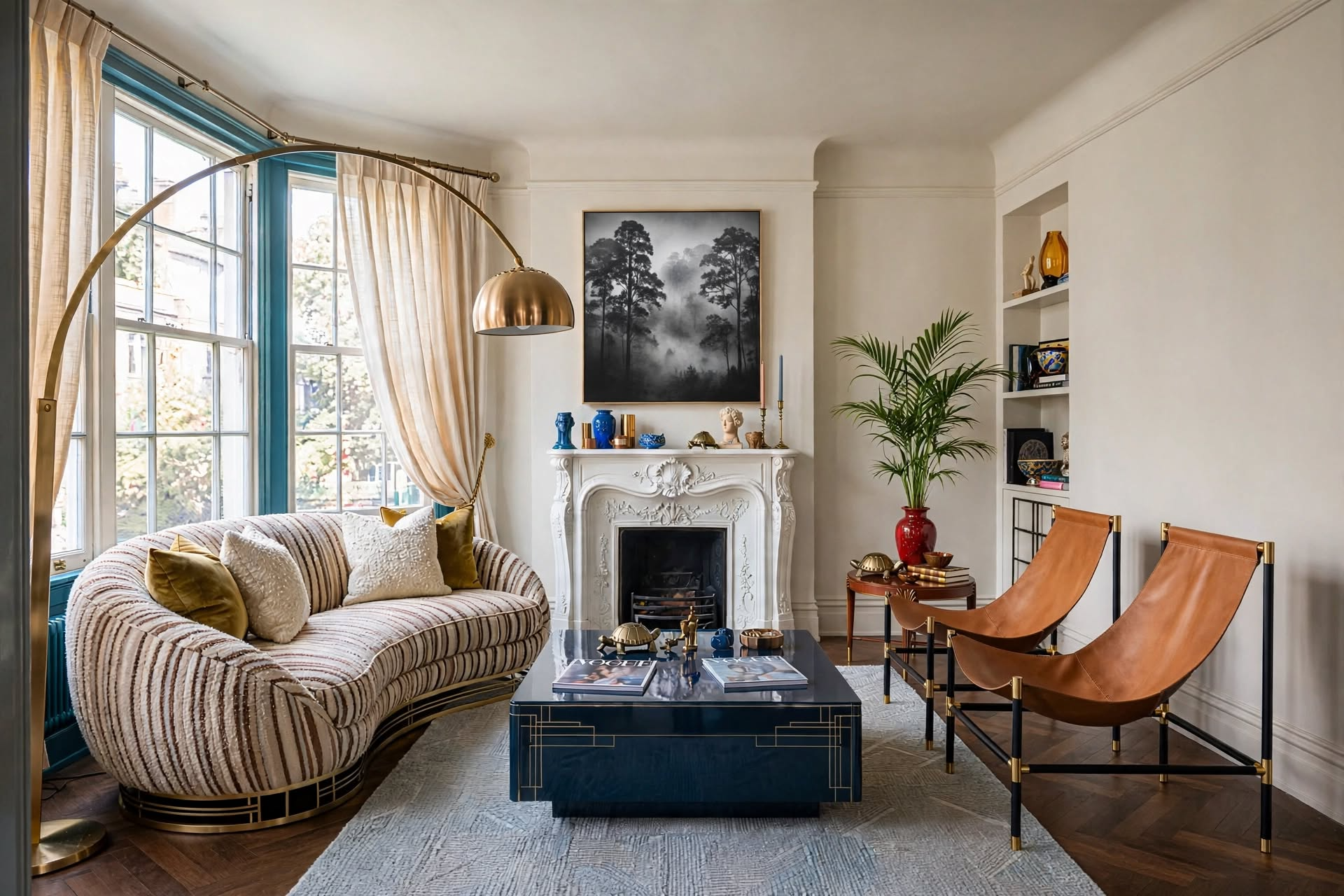
The 10 Designer Secrets to Stunning Interior Design for Apartments
Interior design for apartments requires smart space planning, intentional furniture scale, layered lighting, and a cohesive color story — even in the smallest rental. This step-by-step guide covers every room, every budget, and every layout challenge so your apartment feels like a curated home, not a temporary stop.
Why Most Apartment Interiors Feel “Off” (And How to Fix Yours)
You’ve scrolled Pinterest at midnight, bookmarked 200 photos on Instagram, and still can’t figure out why your apartment just doesn’t feel right. Interior design for apartments is one of the most searched decorating topics online — and also one of the most frustrating, because most advice assumes you own the place, have a generous budget, and can knock down walls.

Here’s what Reddit and real apartmen owners/renteres keep saying: “I wish there were more examples of actually normal apartments.” “Every tutorial assumes an open floor plan and natural light.” “My landlord won’t let me paint.” Sound familiar? The frustration is real — and it’s exactly why this guide exists.
The truth is, the principles that make a house beautiful work just as powerfully in a 600-square-foot rental. You just have to apply them with more intention. By the end of this guide, you’ll have a clear, step-by-step plan to transform your apartment — no paint required, no contractor needed, no five-figure budget necessary.
Related Reading How to Hire an Interior Designer →The 10-Step Apartment Design Process
Step 1: Define Your Apartment’s Design Style (Before Buying Anything)

Commit to a design style before purchasing a single piece of furniture. Apartments look “off” not because of bad individual items, but because of mismatched aesthetics. Choose a primary style and one complementary style, then use them as a filter for every purchase decision.
This is the step everyone skips, and it’s exactly why apartments end up looking like a “collection of stuff” rather than a designed space. The living room trend from 2019, the dining chairs you impulse-bought in 2021, the rug you found on sale last spring — they’re all competing with each other.
Professional interior designers begin every project with a concept. For you, that concept starts with identifying your style. Are you drawn to the warmth of modern organic spaces? The clean lines of Scandinavian minimalism? The layered richness of maximalist eclectic? Once you know, every future purchase becomes a yes or no — not a “maybe.”
Your Apartment Aesthetic — 4 Starting Points
Create a mood board using Pinterest, Houzz, or a physical collage. Save 30–50 images that genuinely excite you, then look for patterns — colors, materials, furniture shapes, mood. That pattern is your style. Two complementary styles (like modern + organic) always look more sophisticated than one style applied rigidly.
Step 2: Master Apartment Layout and Furniture Placement

Furniture placement — not furniture quality — is what makes a room feel designed. In apartments, the most common mistake is pushing all furniture against walls, which creates a “waiting room” effect and destroys intimacy. Float your sofa, define zones, and always plan your layout on paper before moving a single piece.
Ask any interior designer what one change they’d make in 90% of apartments, and they’ll say the same thing: pull the sofa away from the wall. It feels counterintuitive — don’t we want maximum floor space? — but floating furniture creates conversation zones, defines the space, and makes rooms feel intentionally arranged rather than hastily stuffed.
-
✗
All furniture pushed against walls Fix: Float your sofa 6–12 inches from the wall. Place a narrow console table behind it to anchor the space.
-
✗
Rug that’s too small Fix: At minimum, front two legs of all seating on the rug. For most living rooms, start at 8×10 or 9×12.
-
✗
No defined zones in open-plan layout Fix: Use rugs and pendant lights to anchor each zone — living, dining, work — so the space feels structured, not chaotic.
-
✗
Blocking natural light with furniture Fix: Keep a clear path from windows. Light is your most valuable design resource in any apartment.
“The biggest layout mistake I see in apartments is treating every wall like it needs furniture against it. Floating furniture toward the center, even just slightly, creates rooms that feel intentional — like someone actually thought about how the space would be used, not just filled.” — Emily Henderson, Interior Designer & Author of StyledRelated Reading The Interior Design Rule of Thirds — Balance in Every Room →
Step 3: Build a Cohesive Apartment Color Palette

Use the 60-30-10 rule — 60% dominant neutral, 30% secondary tone, 10% accent color — applied through textiles, art, and accessories rather than paint (since most rentals don’t allow it). A cohesive color flow across all rooms makes an apartment feel larger and more intentional.
Color is the invisible thread that ties an apartment together. Walk through a beautifully decorated apartment and you’ll notice that you can glimpse colors from one room that echo in the next. This is intentional — it’s called a color flow — and it’s what makes an apartment feel like a home designed by a single mind.
Step 4: Choosing the Right Furniture for Your Apartment

Apartment furniture must be proportional to the space, multi-functional wherever possible, and correctly scaled. The most common mistake is buying furniture that’s either too large (overwhelming) or too small (cheap and disconnected). Use the table below to choose the right piece for every room and budget.
| Furniture Type | Small Space Friendly | Multi-Function | Style Range | Budget Range |
|---|---|---|---|---|
| Sectional Sofa | ⚠ Use with caution | ✓ With chaise storage | Modern, Casual | $800–$4,000+ |
| Loveseat / Apt Sofa | ✓ Best option | ✓ Some with storage | All Styles | $400–$2,000 |
| Lift-Top Coffee Table | ✓ Round = safest | ✓ Dining + storage | Modern, Transitional | $150–$800 |
| Extendable Dining Table | ✓ Space-efficient | ✓ Seats 2–8 | Scandi, Mid-Mod | $300–$1,500 |
| Tall Bookcase | ✓ Uses vertical space | ✓ Storage + display | All Styles | $100–$2,000 |
| Swivel Accent Chair | ✓ Flexible placement | — Single function | Modern, Eclectic | $200–$1,200 |
Our Picks — Living Room Sofas
You need a sofa that looks designer, fits through a standard apartment doorway, and doesn’t swallow your entire living room. These two deliver.


Step 5: The Coffee Table — The Room’s Most Hardworking Piece

In an apartment, a coffee table must earn its square footage. A lift-top or storage coffee table is always the smarter choice, providing dining surface, desk space, and hidden storage in a piece that also anchors the living room visually.
The coffee table is quietly one of the most important pieces in an apartment. It’s where you eat dinner when you don’t feel like sitting at a table. It’s where you work when you don’t have a proper office. It’s the central visual anchor of your living room — and when it’s wrong, the whole room looks wrong.
Our Picks — Coffee Tables


Step 6: Apartment Lighting — The Single Biggest Design Upgrade

The overhead light that came with your apartment is killing your vibe. Good apartment lighting uses three layers — ambient, task, and accent — and almost never relies on a ceiling fixture alone. A $150 floor lamp will transform your living room more than $1,500 of new furniture.
This is the advice that interior designers give to every client, every time: never rely on one light source. And yet, 90% of apartments are lit with a single overhead fixture that casts flat, unflattering light on everything. Lighting is mood — and a well-lit apartment at 8pm should feel like a completely different world.
The ideal bulb color temperature for apartment living areas. Warm white (2700–3000K) makes rooms feel cozy and skin glow. Cool white (4000K+) is for kitchens and offices only.
- Single overhead ceiling fixture
- Harsh, flat 4000K+ bulbs
- No shadows, no warmth
- Full exposure, no atmosphere
- Looks like a waiting room
- Dimmed ambient + floor lamp
- Warm 2700K throughout
- Depth, shadow, intimacy
- Each zone has its own light
- Looks like a designed home
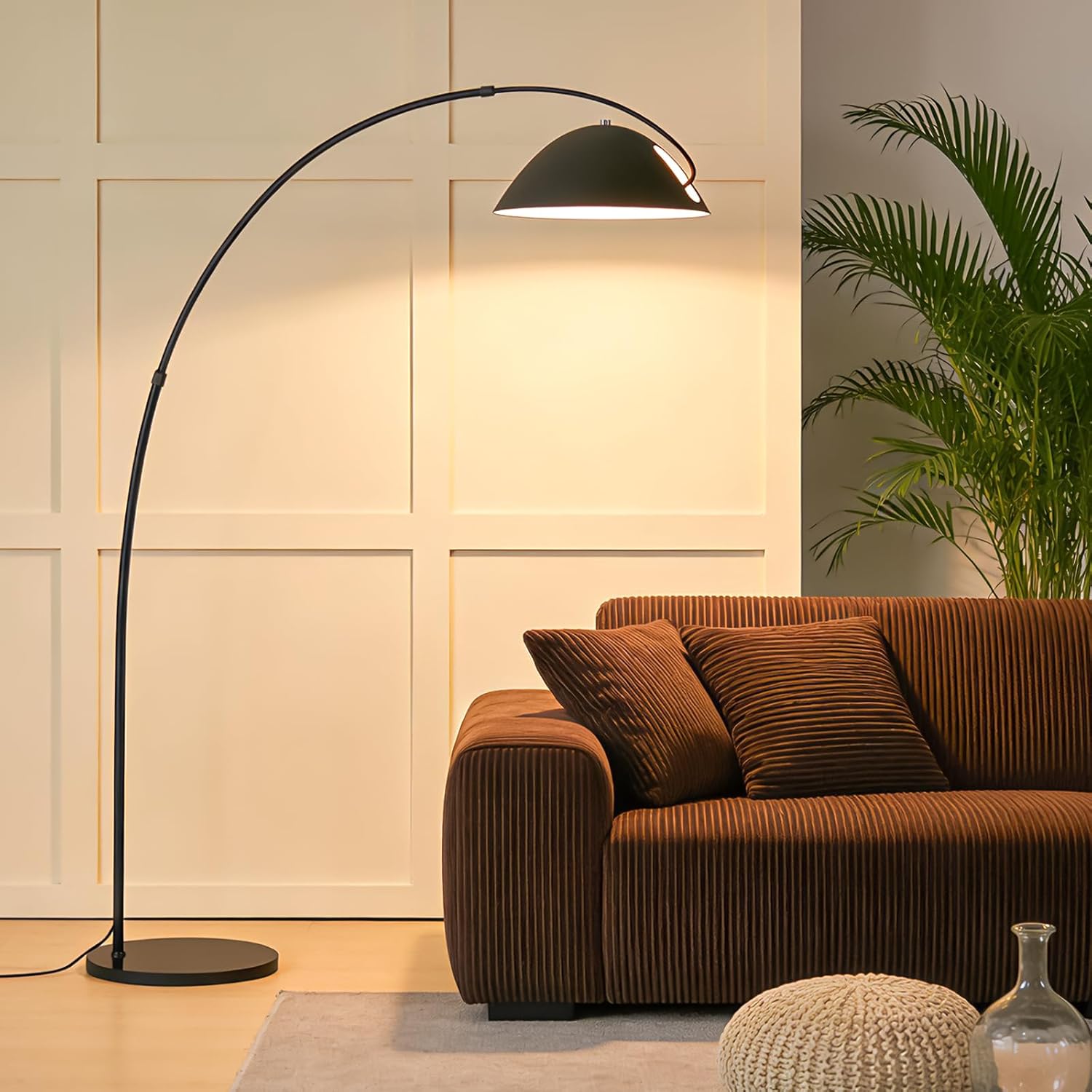
Our Picks — Floor Lamps

Step 7: Vertical Storage — Use Your Walls, Not Your Floor

Apartments run out of floor space fast. The solution is going vertical — tall bookshelves, wall-mounted shelves, and over-door organizers reclaim cubic feet you aren’t using. A well-styled bookcase also solves the storage and decoration problem simultaneously, making it the smartest single purchase in any apartment.
A beautifully styled bookcase — with books, plants, objects, and art arranged with intention — is the apartment equivalent of a built-in wall unit. It goes vertical, it stores, and it decorates. That’s three problems solved with one piece.
Our Picks — Bookshelves


Step 8: Apartment Dining — Big Impact in Small Footprints

Most apartments don’t have a dedicated dining room — just a corner. The smartest approach is a round table (eliminates sharp corner collisions, fits more people per square foot) with chairs that tuck fully under when not in use. Add a pendant light overhead to define the zone and make it intentional.
Our Picks — Dining Sets


Step 9: The Accent Chair — Your Apartment’s Personality Piece

Every well-designed apartment needs at least one unexpected piece — something that surprises, that has personality, that doesn’t match everything else perfectly. In most apartments, the accent chair is that piece. It’s what makes guests say “I love your apartment” when what they really mean is “I love that chair.”
Our Picks — Accent Chairs


Step 10: Texture and Layers — How Apartments Get That “Magazine Look”

What separates a magazine-worthy apartment from a “nice enough” one is almost always texture. Layer at least four different tactile surfaces in each room — something smooth, something soft, something rough, something reflective — and the space gains depth, warmth, and visual complexity that no single piece of furniture can provide alone.
A room can have perfect furniture, great lighting, and a solid color palette, and still look flat and lifeless. The missing ingredient is almost always texture. Think: linen sofa against a rough-hewn wood coffee table, next to a smooth ceramic lamp, on top of a chunky jute rug. Your eye moves through those surfaces and finds interest at every stop.
Bonus: Rental-Specific Design Tricks (No Permission Required)
Renting doesn’t mean you’re stuck with a soulless white box. Removable wallpaper, Command hook galleries, peel-and-stick tile, and strategic textiles let you transform any rental apartment dramatically — without touching a single wall permanently.
-
✓
Removable Peel-and-Stick Wallpaper Modern peel-and-stick quality is indistinguishable from real wallpaper. An accent wall in a bedroom or bathroom transforms the character of your entire apartment.
-
✓
Command Hook Gallery Walls Hang heavy frames (up to 16 lbs per hook) completely reversibly. Use consistent frames and a deliberate arrangement — not a random collection — for a finished look.
-
✓
Ceiling-Height Curtains Hang curtains from floor to ceiling even if your window is mid-height. The visual trick makes ceilings feel taller and windows larger — two things every apartment needs.
Your Apartment Is Ready to Be Designed
You don’t need a bigger space, a bigger budget, or a landlord who lets you renovate. Apply these 10 steps with intention — one room at a time. Start with your style identity, anchor each room with one statement piece, layer in lighting and texture, and let the apartment reveal itself.
Your room can feel completely different with one intentional piece. Choose the one that creates the mood you want — then start there.
Discover Your Design Style →Interior Design For Apartments-Frequently Asked Questions
The best interior design styles for small apartments are Scandinavian minimalism, modern organic, and Japandi — all of which prioritize open space, natural materials, and functional furniture. These styles avoid visual clutter while still feeling warm and designed. That said, any style works in a small apartment when applied with restraint: fewer pieces, better pieces, and intentional negative space.
To make an apartment look more expensive: hang curtains floor-to-ceiling, use a large rug that grounds all furniture, add layered lighting with at least two sources, replace builder-grade light fixtures with plug-in pendants, style bookshelves with intent, and declutter aggressively. These changes cost little but create enormous visual impact because they’re the details that signal a designed space.
Yes — removable peel-and-stick wallpaper, Command strip gallery walls, furniture-based zone definition, and textile-heavy decorating allow complete visual transformation without any permanent changes. Modern peel-and-stick products are high quality, leave no residue, and are renter-legal in virtually all leases. Focus your budget on large textiles (rugs, curtains), lighting, and freestanding furniture for maximum renter-safe impact.
In most apartment living rooms, an 8×10 or 9×12 rug is the minimum. At least the front two legs of all seating should rest on the rug. A rug that’s too small — hovering under just the coffee table — is one of the most common and damaging design mistakes in apartments. When in doubt, size up: a too-large rug is rarely a problem, while a too-small rug makes the entire room feel disconnected.
Create cohesion in open-plan apartments by using a single flowing color palette across all zones, defining separate areas with rugs and lighting, and repeating one material (wood, brass, linen) throughout. Each zone — living, dining, work — should feel distinct but use colors and materials that reference the others. A unified rug tone and consistent curtain treatment throughout ties everything together.
CATCH THE LATEST IN HOME DECOR TRENDS:

Steal These 16 Expert-Approved Decorating Secrets

Accessorize a Small Living Room: 7 Genius Styling Secrets

How to Make a Small Room Appear Bigger

How to Make Your Home Look Expensive
GET CAUGHT UP ON ALL THE INSPIRING DECOR TIPS:

18 Fresh Decorating Ideas To Update Your Fireplace

How to Make a Gallery Wall: The Complete Step-by-Step Guide (Even If You’ve Never Hung a Picture)