TL;DR Summary: Choosing the right coffee table depends on three critical factors: size (½ to ⅔ your sofa’s length), height (1-2 inches below seat cushions), and clearance (18 inches from seating). Match the shape to your sofa configuration—rectangular for standard sofas, square for sectionals, round for small spaces or families with kids. Your lifestyle dictates material: wood for warmth and durability, glass for openness, marble for luxury. This guide provides exact measurements, budget tiers, and solutions for every living room challenge.
The Coffee Table Dilemma You’re Probably Facing Right Now
You’ve spent weeks finding the perfect sofa. Your living room is almost complete. Then, when it’s time to choose a coffee table, everything falls apart.
One table looks too small in the showroom. Another seems perfect online but the reviews mention “awkward height.” Your friend’s designer says you must follow the two-thirds rule, but half the Pinterest photos you’ve saved break that rule entirely. Meanwhile, you’re eating dinner hunched over a temporary ottoman, and your beautiful new sofa looks unfinished and lonely.
Here’s what nobody tells you: To choose a coffee table isn’t about following rigid rules—it’s about understanding which rules matter for YOUR specific space, sofa, and lifestyle. The difference between a living room that feels professionally designed and one that feels “off” often comes down to getting three measurements right.
By the end of this guide, you’ll know exactly how to choose a coffee table that makes your living room function beautifully while looking intentionally designed—without hiring an interior designer or second-guessing every decision.
I. What Is a Coffee Table? (And Why Your Living Room Actually Needs One)
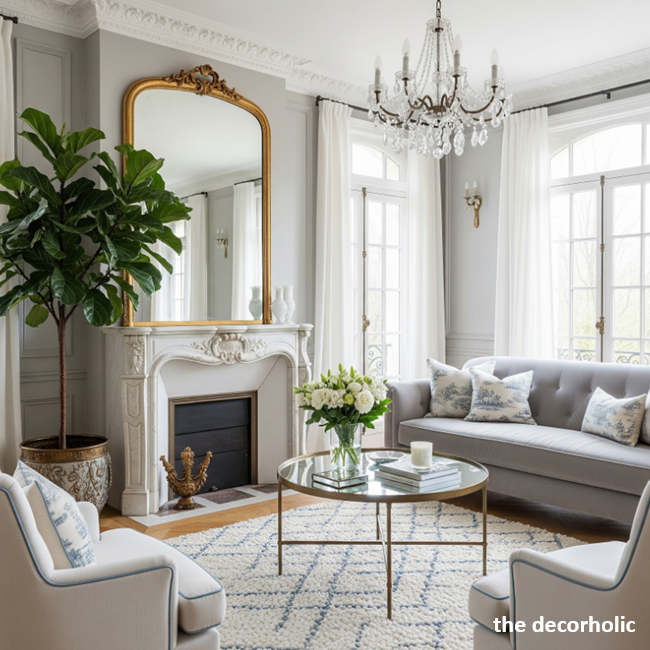
A coffee table is the hardest-working furniture piece in your living room—it’s the functional anchor that transforms a collection of seating into a cohesive, livable space where daily life actually happens.
Let’s address the question you might be secretly asking: “Do I really need a coffee table, or is this just another thing designers insist on?”
Here’s the truth: A coffee table isn’t decorative filler. It’s the central hub of your living room ecosystem.
A. The Coffee Table Defined
A coffee table is a low-profile table (typically 16-18 inches tall) positioned in front of or adjacent to seating furniture. Unlike dining tables or desks, coffee tables are specifically designed for relaxed, seated-height access—you reach it comfortably from your sofa without standing up.
Think of it as the command center of your living space: remote controls, drinks, snacks, laptops, books, and those spontaneous game nights all need a landing spot. Without that central surface, your living room becomes a collection of furniture that doesn’t quite work together.
B. The Five Critical Functions Your Coffee Table Serves
Function #1: The Everyday Workhorse
Your coffee table holds the stuff of daily life. Morning coffee mug. TV remote (or five remotes, if we’re being honest). Work laptop during those “I need a change of scenery” afternoons. Takeout containers on busy weeknights. It’s the difference between comfortable living and constantly searching for somewhere to set things down.
Function #2: The Visual Anchor
Without a coffee table, your sofa looks orphaned and the room feels incomplete—even if you can’t pinpoint why. The table creates a visual “weight” that grounds your seating arrangement and tells your eye where the room’s center is. Remove it, and the space feels unfinished, like a sentence without punctuation.
Function #3: The Entertainment Hub
Game nights. Cocktail parties. Kids’ craft projects. Casual meals while binge-watching. Your coffee table transforms from simple furniture into the stage where life’s spontaneous moments unfold. It’s where people naturally gather, lean in, and connect.
Function #4: The Style Statement
Here’s where function meets beauty: Your coffee table is prime real estate for expressing your design personality. Styled with carefully curated books, a sculptural bowl, fresh flowers, or treasured objects, it becomes the visual story of who you are. It’s often the first thing guests’ eyes land on when they enter your living room.
Function #5: The Space Definer
In open-plan homes, a coffee table helps define your living zone. It creates an invisible boundary that says “this is the relaxation area” separate from dining or kitchen spaces. Without it, large rooms can feel undefined and purposeless.
C. But Do You REALLY Need One? (The Honest Answer)
You need a coffee table (or functional equivalent) if:
- ✅ You regularly sit on your sofa and need somewhere to set drinks, remotes, phones
- ✅ You entertain guests or have family game nights
- ✅ You eat casual meals in front of the TV
- ✅ Your living room feels visually incomplete despite having a sofa and other furniture
- ✅ You’re tired of leaning awkwardly to reach side tables or balancing items on sofa arms
You might skip it (or use an alternative) if:
- ⚠️ You have a very small space where a coffee table blocks essential walkways (consider a narrow console behind the sofa instead)
- ⚠️ You have very young toddlers and prioritize open floor space for play (temporarily—you’ll want one later)
- ⚠️ You prefer using side tables exclusively and truly don’t need central surface space
- ⚠️ You already use an ottoman with a tray that serves the same function
“I’ve worked with clients who insist they don’t need a coffee table, and we’ve successfully designed around it. But 80% of them end up calling me within six months asking for recommendations because they realize something’s missing. The coffee table isn’t just furniture—it’s the punctuation mark that completes your living room’s sentence.” — Orlando Soria, interior designer and author
D. Coffee Table Alternatives (For Those Who Need Flexibility)
If a traditional coffee table doesn’t fit your lifestyle or space right now, consider these functional equivalents:
Ottoman with Tray: Provides soft surface (kid-friendly), footrest functionality, often includes storage, and a large tray on top creates stable surface for drinks and remotes.
Nesting Tables: Two or three tables that stack together—expand when entertaining, contract for daily use. Perfect for small spaces or multi-functional rooms.
Poufs or Floor Cushions: Ultra-casual option for bohemian or floor-seating-based spaces. Add a large wooden tray on top when you need a stable surface.
C-Shaped Side Tables: Slide under sofa arms, can be moved as needed. Works if you have robust side table coverage and don’t need central surface area.
E. The Bottom Line
A coffee table isn’t just another furniture piece to check off your list—it’s the functional and visual heart of your living room. It’s where morning rituals happen, where family gathers, where your design story gets told.
The question isn’t really “Do I need a coffee table?” It’s “How to choose a coffee table that will make my life easier and my space more beautiful?”
Let’s figure that out together.
💡 Pro Tip: Still not convinced you need one? Try living without a coffee table for two weeks. Notice how many times you search for somewhere to set your coffee mug, reach awkwardly for the remote, or wish you had a central surface during game night. That’s your answer.
You’ll Also Like: The Ultimate Sofa Buying Guide: How to Choose the Perfect Couch in 2026
II. The Golden Rules: Coffee Table Size & Proportion Fundamentals

The perfect coffee table creates visual balance while serving your daily needs—here’s the exact formula that interior designers use to nail proportions every single time.
Let’s cut through the confusion with the measurements that actually matter:
The Length Rule (The Two-Thirds Principle) Your coffee table should measure one-half to two-thirds the length of your sofa. This isn’t arbitrary—it’s about creating visual anchoring without overwhelming the space.
- 80-inch sofa → Choose a coffee table 40-53 inches long
- 90-inch sofa → Choose a coffee table 45-60 inches long
- Sectional (95+ inches) → Measure just the main seating portion, not the chaise (typically 60-70 inches) → Coffee table 40-47 inches long
Going smaller makes your investment sofa look disproportionately large. Going bigger creates a visual barrier that chops your room in half.
The Width Guideline Most coffee tables range from 18 to 24 inches deep. Narrower tables (16-18 inches) work better in compact spaces or when you need easy walking paths. Wider tables (24-30 inches) suit large sectionals and create more surface area for styling or entertaining.
The Critical 18-Inch Clearance Buffer Maintain 18 inches minimum between your coffee table edge and the sofa front. This is the magic number that allows you to:
- Set down a drink without awkward reaching
- Walk past comfortably without turning sideways
- Cross your legs while seated
- Lean forward for a meal without hunching
Less than 14 inches feels cramped. More than 24 inches creates a disconnect where the table stops feeling like part of the seating zone.
💡 Pro Tip: Before buying, use painter’s tape to mark your ideal coffee table footprint on the floor. Live with it for 48 hours. Walk your normal paths, sit on the sofa with friends, test placing items on the “table.” This reveals whether your measurements work in reality, not just on paper.
You’ll Also Like: How to Decorate Your Side Table for Style and Function
II. How to Choose a Coffee Table Shape (And Why It Actually Matters)
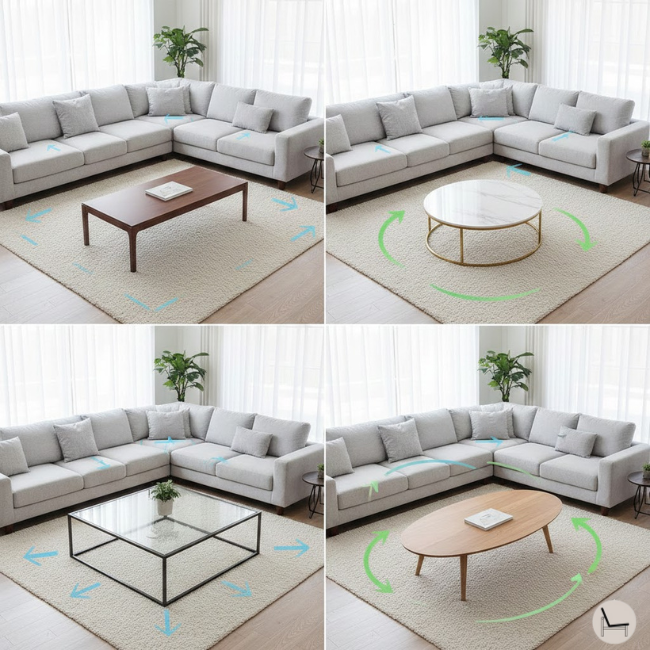
Shape determines traffic flow, safety, and visual weight—here’s how to match your table geometry to your sofa configuration and lifestyle for a room that both looks and functions beautifully.
A. Rectangular Coffee Tables: The Living Room Workhorse
Best for: Standard sofas (75-90 inches), rooms with clear walkways, households that entertain regularly
Rectangular tables are your classic choice because they create strong visual alignment with most furniture. That parallel-lines effect between sofa and table gives rooms an ordered, intentional look.
Measurements to consider:
- Small rectangular: 36-42″ L × 18-20″ W (apartments, loveseats)
- Medium rectangular: 42-54″ L × 22-24″ W (standard sofas)
- Large rectangular: 54-60″ L × 24-30″ W (oversized sofas, L-shaped layouts)
Key advantages: Maximum surface area for styling, natural zones for remotes/books/drinks, pairs beautifully with rectangular rugs and sofas, easier to find matching side tables.
Watch out for: Sharp corners in high-traffic areas, can feel visually heavy in small rooms, harder to access from sectional ends.
B. Round Coffee Tables: The Space-Softener
Best for: Small living rooms, homes with young children, sectionals with chaises, rooms needing better traffic flow
Round tables eliminate harsh angles, making them safer for households with toddlers and more forgiving in tight spaces. The curved edges also create visual softness that balances angular furniture.
Measurements to consider:
- Small round: 30-36″ diameter (small sofas, apartment layouts)
- Medium round: 36-42″ diameter (standard sofas, balanced look)
- Large round: 42-48″ diameter (large sectionals, statement pieces)
Key advantages: No sharp corners (toddler-friendly), easier to walk around from any angle, visually interesting contrast to rectangular furniture, creates conversational intimacy.
Watch out for: Less surface area than rectangular equivalents, harder to style symmetrically, can look too small paired with long sofas, limits legroom when seated directly in front.
“Round tables work magic in rooms where you’ve created a conversational U-shape with furniture. The curves echo the gathering arrangement and make accessing the table feel natural from any seat. For families, I install them 95% of the time—avoiding ER visits for corner-related head wounds is worth any styling compromise.” — Sarah Sherman Samuel, interior designer and author
C. Square Coffee Tables: The Sectional Solution
Best for: L-shaped sectionals, large open-plan spaces, symmetry-lovers, rooms needing defined zones
Square tables fits perfectly into the L-nook created by sectionals, providing easy access from multiple seating positions. They anchor large rooms without creating visual barriers.
Measurements to consider:
- Small square: 30-36″ × 30-36″ (compact sectionals)
- Medium square: 36-42″ × 36-42″ (standard sectionals)
- Large square: 42-48″ × 42-48″ (oversized sectionals, spacious rooms)
Key advantages: Generous surface area for cocktails and game nights, natural fit for sectional configurations, creates strong visual anchoring, easier to divide into styled “zones.”
Watch out for: Requires more floor space than rectangular, can block sightlines in smaller rooms, corners still pose safety concerns with kids.
D. Oval Coffee Tables: The Compromise Champion
Best for: Families with children, narrow living rooms, softening modern spaces, vintage/traditional aesthetics
Think of oval as “rectangular with training wheels”—you get the length and surface area benefits while eliminating sharp corners. They’re particularly brilliant in narrower rooms where you need length but can’t sacrifice walkway comfort.
Key advantages: Safer for kids than rectangular, softer visual presence, elongated shape provides ample surface area, pairs well with curved sofas or sectionals.
Watch out for: Harder to find than other shapes (limited selection), can look dated if you choose the wrong style, typically more expensive than rectangular equivalents.
💡 Pro Tip: If you can’t decide between rectangular and round, measure whether you can comfortably walk behind your sofa when a rectangular table is in place. If yes, go rectangular for maximum function. If no (and you use that path daily), choose round to improve traffic flow.
Shape Selection Cheat Sheet:
| Your Sofa Configuration | Best Table Shape | Why It Works |
| Standard 78-90″ sofa | Rectangular or Oval | Matches linear form, maximizes surface area |
| L-shaped sectional | Square or Round | Fits into nook, accessible from all seats |
| Sectional with chaise | Round or Oval | No corners to navigate around the chaise |
| Loveseat or small sofa | Round or Small Rectangular | Proper scale, improves flow in tight spaces |
| Two sofas facing each other | Rectangular | Creates strong axis between seating |
| Curved or conversation sofa | Round or Oval | Echoes curves, encourages intimacy |
In Case You Missed It: How To Decorate With Coffee Table Books
III. Coffee Table Height: The Most Overlooked Design Element
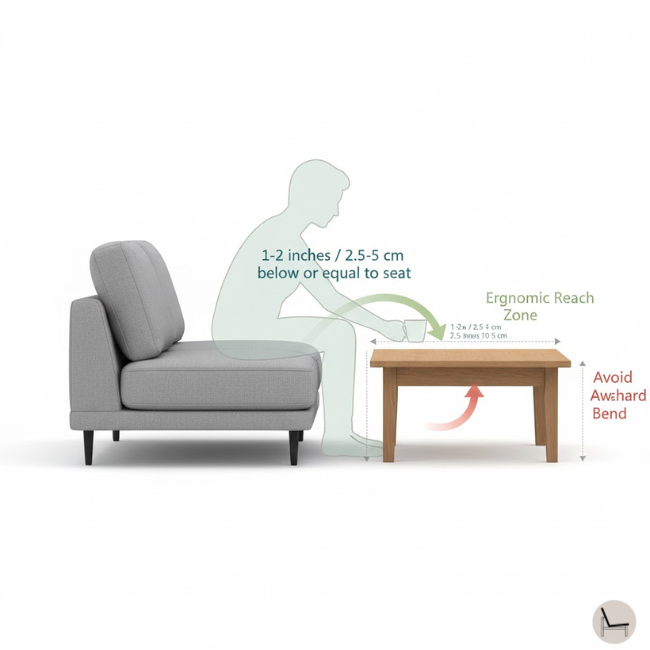
Get the height wrong by even 2 inches and you’ll spend years hunching over meals or awkwardly reaching for drinks—here’s the exact measurement that makes your coffee table effortlessly functional.
Coffee table height might seem like a minor detail, but it’s the difference between comfortable daily use and constant frustration. Here’s why it matters and how to nail it.
A. The Standard Height Range (And Why It Exists)
Most coffee tables measure 16-18 inches tall. This range aligns with standard sofa seat heights (17-19 inches) to create comfortable reach from a seated position. But “standard” isn’t universal—your specific sofa dictates your ideal table height.
The Perfect Height Formula: Your coffee table should sit 1-2 inches below your sofa’s seat cushion height.
Here’s how to measure correctly:
- Sit on your sofa in your normal position
- Measure from the floor to the TOP of the seat cushion (not the frame)
- Subtract 1-2 inches
- That’s your target coffee table height
Real-world examples:
- Low-profile modern sofa (16-inch seat) → Choose 14-15 inch coffee table
- Standard sofa (18-inch seat) → Choose 16-17 inch coffee table
- Deep, plush sofa (20-inch seat) → Choose 18-19 inch coffee table
- Tight-back or high sofa (21-inch seat) → Choose 19-20 inch coffee table (consider ottoman instead)
💡 Pro Tip: If you’re between two height options, err on the lower side for a modern aesthetic and easier styling (layered books/trays look better on lower surfaces). Choose the taller option if you frequently eat meals or work on your laptop from the sofa.
B. When to Break the Height Rule
Go Lower (12-15 inches):
- Ultra-modern, minimalist aesthetic
- Floor-seating or low-profile furniture throughout
- Showcasing an investment rug (low table doesn’t hide it)
- Need to maintain sightlines across an open-plan space
Go Higher (19-22 inches):
- Sofa-dining situations (small apartments without formal dining areas)
- Lift-top coffee tables that raise to meal height
- Matching counter-height stools or chairs around the table
- Accessibility needs (easier to reach from seated position)
The Clearance Test: Once you’ve identified your target height, confirm that you can still comfortably:
- Set down a wine glass without awkward reaching (elbow should be at ~90° angle)
- See the TV over the table without straining
- Cross your legs while seated with toes cleared
- Slide forward for meals without your knees hitting the table top
Popular Post To Read: Coffee Table Centerpiece: Elevate Your Living Room Style
IV. Material Selection Guide: Matching Function to Your Lifestyle
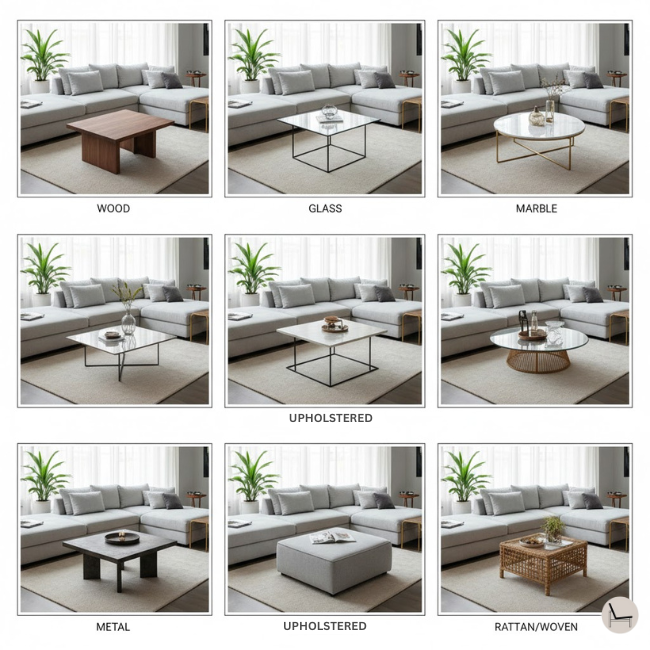
The “perfect” coffee table material doesn’t exist—but the perfect material FOR YOUR LIFE does. Here’s how to choose based on what actually happens in your living room.
A. Wood Coffee Tables: The Warm, Durable Classic
Best for: Families with kids, pet owners, traditional/farmhouse/mid-century styles, anyone prioritizing durability
Wood brings instant warmth and texture. It ages gracefully (scratches and dings often add character), withstands daily abuse better than most materials, and works across virtually every design style from rustic farmhouse to Scandinavian minimalism.
Wood types and characteristics:
- Oak/Walnut (hardwoods): Most durable, beautiful grain patterns, higher price point ($400-$1,200+), resist scratches well
- Mango/Acacia: Mid-range durability, eco-friendly, rich color variation, moderate price ($300-$700)
- Pine/Poplar: Budget-friendly ($150-$400), softer (dents more easily), ideal for casual spaces, easy to refinish
Maintenance reality: Wipe spills immediately (especially wine/coffee), use coasters religiously, dust weekly, condition with wood polish 2-3 times per year. Expect patina development—embrace it as character, not damage.
Style match: Works universally but especially stunning in farmhouse, mid-century modern, Scandinavian, traditional, and rustic spaces.
B. Glass Coffee Tables: The Space Expander
Best for: Small spaces, modern/contemporary aesthetics, showcasing beautiful rugs, child-free homes (or brave parents)
Glass creates visual airiness that makes small living rooms feel larger. It also showcases whatever’s underneath—perfect if you’ve invested in a statement rug. The transparency prevents visual clutter in compact spaces.
Considerations:
- Tempered glass: Safety-rated (shatters into pebbles, not shards), handle weight and impact well
- Thickness matters: 10mm+ for durability; avoid thin glass tops that feel cheap
- Frame style: Metal frames (brass, chrome, black) define the overall aesthetic; thinner frames feel more modern
Maintenance reality: Fingerprints and smudges are constant (wipe with glass cleaner every 2-3 days), not ideal for homes with young kids or rambunctious pets, felt pads under items prevent scratching.
Style match: Modern, contemporary, minimalist, Scandinavian, glam/Hollywood Regency (especially with brass or gold frames).
Hard truth: If the phrase “constant fingerprints” makes you twitch, skip glass. It requires the highest maintenance of any coffee table material.
C. Marble Coffee Tables: The Luxury Statement
Best for: Formal living rooms, luxury aesthetics, empty-nesters, design-forward spaces
Marble instantly elevates a room’s sophistication. Each piece is unique due to natural veining, creating a one-of-a-kind investment piece. It’s heavy (stability), cool to touch (functional in warm climates), and timeless (never goes out of style).
Considerations:
- Real marble vs. marble-look: Genuine marble costs significantly more ($800-$2,500+) but authentic; faux marble/resin alternatives ($200-$600) offer the look at lower price/maintenance
- Color matters: White/Carrara is classic but shows stains; black or gray marble is more forgiving
- Sealing: Requires professional sealing every 6-12 months to prevent staining
Maintenance reality: Use coasters ALWAYS (wine, coffee, and citrus will etch the surface permanently), wipe spills within seconds, no harsh chemicals (pH-neutral cleaners only), expect some etching over time as part of the marble’s story.
Style match: Modern luxury, art deco, glam, contemporary, transitional (pairs beautifully with brass or black metal bases).
D. Metal Coffee Tables: The Industrial Edge
Best for: Industrial, modern farmhouse, eclectic styles, durability-focused households, pet owners
Metal provides excellent durability with minimal maintenance. It adds textural contrast against soft furnishings and works especially well in spaces mixing materials (wood sofas + metal table + fabric accents).
Finish options:
- Matte black: On-trend, hides fingerprints well, pairs with everything
- Brass/Gold: Warm, luxe, currently very popular in modern spaces
- Chrome/Stainless steel: Sleek, clinical, more challenging to style but stunning when done right
- Bronze/Oil-rubbed bronze: Traditional feel, develops beautiful patina over time
Maintenance reality: Simplest material to maintain—dust weekly, wipe with damp cloth as needed, some metals (brass, bronze) develop patina over time (can be polished if you prefer shiny).
Style match: Industrial, modern farmhouse, mid-century modern, eclectic, contemporary.
E. Upholstered Ottoman Coffee Tables: The Multitasker
Best for: Families with young kids, foot-rest lovers, casual living spaces, dual-purpose furniture needs
Technically not traditional coffee tables, but ottoman-style tables provide soft surfaces (no sharp corners), extra seating during parties, footrest functionality, and often hidden storage. Add a large tray on top for stability when holding drinks/remotes.
Considerations:
- Fabric choice: Performance fabrics (stain-resistant) essential for high-traffic homes
- Height: Typically taller (18-20 inches) to function as seating
- Storage: Lift-top ottomans hide blankets, toys, remotes
Maintenance reality: Vacuum regularly, spot-clean spills immediately with appropriate fabric cleaner, rotate trays to prevent compression marks.
Style match: Transitional, family-friendly contemporary, casual traditional.
💡 Pro Tip: Live with pets or toddlers? Skip marble and glass entirely. Choose stained or dark-finished wood (hides scratches), matte black metal (hides fingerprints), or performance-fabric ottomans. Your future self will thank you.
F. Material Selection Decision Matrix:
| Your Lifestyle | Best Material | Why It Works |
| Young kids/pets | Wood (medium-dark stain) or Upholstered Ottoman | Durable, forgiving of scratches, soft edges |
| Frequent entertainers | Wood or Marble | Stable for cocktails, elegant presentation |
| Small space | Glass or Light Wood | Visual transparency, doesn’t crowd the room |
| Low maintenance | Metal or Wood | Wipe-and-go cleaning, no special care needed |
| Luxury aesthetic | Marble or Brass/Gold Metal | Instantly elevates sophistication level |
| Budget-conscious | Wood (softwood) or Laminate | Affordable while still looking intentional |
You’ll Also Like: Table Runners: A Complete Guide to Styles, Sizes, and Decorating
V. Coffee Table Styles: Matching Your Aesthetic (Without Overthinking It)
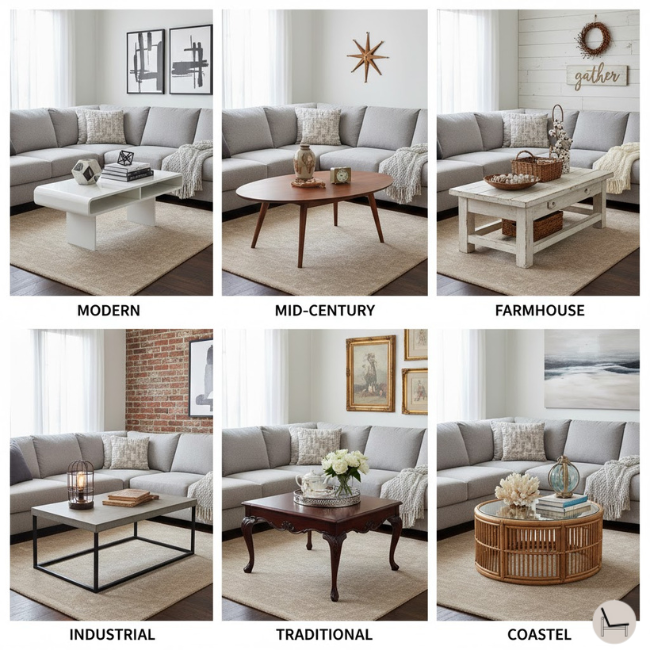
Your coffee table should complement your existing furniture, not match it perfectly—here’s how to choose a style that elevates your space through intentional contrast.
A. Modern/Contemporary Coffee Tables
Characteristics: Clean lines, minimal ornamentation, geometric shapes, mixed materials (glass + metal, marble + brass), low profiles
Works with: Modern sofas, minimalist decor, open-plan lofts, monochromatic color schemes
Materials: Tempered glass, polished metal (chrome, brass, black), white or black marble, lacquered wood
Price range: $300-$1,500
Key styling tip: Let the table be the room’s sculptural element. Keep styling minimal (one stack of books, small sculptural object).
B. Mid-Century Modern Coffee Tables
Characteristics: Tapered wooden legs, organic shapes, walnut/teak finishes, lower heights (14-16 inches), often includes small storage drawers
Works with: Mid-century sofas (obviously), Scandinavian furniture, eclectic mixes, vintage-modern combinations
Materials: Walnut, teak, oak with natural finish, sometimes combined with brass or metal accents
Price range: $400-$1,200 (vintage originals: $800-$3,000+)
Key styling tip: Embrace asymmetry. Style with vintage finds, stacked art books, and a small plant.
“Mid-century coffee tables are having a moment because they bridge modern and traditional. That versatility makes them safe investments—they’ll look current in any decade and work across multiple moves and sofa changes.” — Emily Henderson, stylist and designer
C. Farmhouse/Rustic Coffee Tables
Characteristics: Chunky wood construction, distressed finishes, X-frame or trestle bases, often includes lower shelf, visible wood grain
Works with: Farmhouse sofas, slipcovered furniture, shiplap walls, neutral color palettes, cozy/casual spaces
Materials: Reclaimed wood, pine, distressed oak, sometimes paired with black metal accents
Price range: $250-$800
Key styling tip: Layer textures—woven baskets underneath, linen table runner, ceramic vases, vintage books.
D. Industrial Coffee Tables
Characteristics: Raw materials, metal frames (often with visible welds/rivets), wood tops (often reclaimed), utilitarian aesthetic, chunky proportions
Works with: Exposed brick, leather sofas, metal shelving, loft spaces, masculine aesthetics
Materials: Steel/iron frames, reclaimed wood tops, sometimes wheels/casters
Price range: $300-$900
Key styling tip: Less is more. One bold sculptural piece (like a large geode or vintage object) makes more impact than cluttered styling.
E. Traditional/Classic Coffee Tables
Characteristics: Ornate details, turned legs, rich wood finishes (cherry, mahogany), often includes intricate carving, higher profiles
Works with: Traditional sofas, formal living rooms, classic decor, antique furniture
Materials: Solid hardwoods (cherry, mahogany, oak), sometimes marble or granite tops
Price range: $500-$2,000+
Key styling tip: Symmetry is your friend. Matching lamps, balanced accessories, classic coffee table books.
F. Coastal/Beachy Coffee Tables
Characteristics: Light woods or white-washed finishes, woven materials (rattan, wicker), weathered look, relaxed vibe
Works with: White or blue sofas, casual spaces, beach houses, airy aesthetics
Materials: Whitewashed wood, rattan, wicker, driftwood, sometimes paired with glass
Price range: $200-$700
Key styling tip: Keep it breezy—light-colored accessories, natural textures, bowls of shells or coral.
💡 Pro Tip: When in doubt, choose a coffee table that contrasts your sofa rather than matches it. Wood table + fabric sofa? Perfect. Glass table + leather sofa? Beautiful. Matching wood on wood or fabric on fabric rarely creates visual interest.
You’ll Also Like: 15 Must-Have Accessories For Styling A Coffee Table
VI. Special Situations: Sectionals, Small Spaces & Unusual Layouts
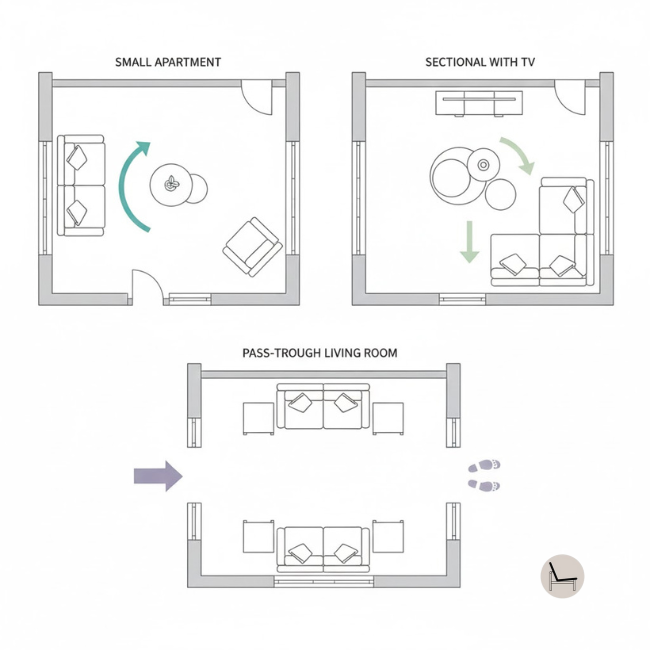
Standard rules break down when your living room isn’t standard—here’s how to solve coffee table challenges in difficult spaces.
A. Sectional Coffee Table Solutions
Sectionals create L-shapes or U-shapes that complicate coffee table selection. The key is measuring the OPEN space the sectional creates, not the total sofa length.
L-shaped sectional with chaise (most common):
- Measure: Just the straight portion (usually 65-80 inches), ignore the chaise
- Best shapes: Square (36-42 inches) or round (38-44 inches) to fit the L-nook without blocking the chaise
- Avoid: Long rectangular tables that extend into the chaise pathway
Large U-shaped or wrap-around sectional:
- Option 1: One large square or round table centered in the U (48-54 inches)
- Option 2: Two smaller nesting tables that can be separated for flexibility
- Watch out for: Tables so large that the far seats can’t reach comfortably
Sectional with ottoman (modular system):
- Consider: Skipping a coffee table entirely and using the ottoman module with a tray on top
- Or: A small side table (C-shape or nesting) that slides under the sectional arm
💡 Pro Tip: Sectional shopping? Bring a photo of your exact sectional configuration (bird’s-eye view measuring the L-shape) to the furniture store. Place painter’s tape on the showroom floor to mock up your layout before committing.
B. Small Space Coffee Table Hacks
Tiny living rooms require creative thinking. Follow these 3 Strategies:
1: Go Smaller and Lighter
- Choose round or oval (easier to navigate around)
- Glass or acrylic (visually disappears)
- Nesting tables (tuck away when not needed)
- Target 30-36 inch diameter instead of standard 40-48 inches
2: Multi-Function Pieces
- Lift-top coffee tables (dining surface when needed)
- Storage ottomans with tray tops
- C-tables that slide under sofa arm (remove when entertaining)
3: Rethink Placement
- Float the table slightly forward (creates walkway behind sofa)
- Use two small side tables instead of one central coffee table
- Console table behind sofa instead of coffee table in front
What NOT to do:
- ❌ Skipping a coffee table entirely (makes sofa feel unanchored)
- ❌ Choosing oversized table hoping it will “balance” a small room (creates clutter)
- ❌ Dark, heavy materials that visually shrink the space
C. Awkward Layout Solutions
Challenge: Off-center TV placement
Solution: Float your sofa to face the TV properly, then use an asymmetrical table placement (slightly closer to one side) or two smaller tables instead of one central table.
Challenge: Living room is a pass-through space (walkway to kitchen/hall)
Solution: Keep your table 20-24 inches away from the sofa (instead of standard 18 inches) to widen the walkway. Choose round or oval to eliminate corner snags.
Challenge: Fireplace AND TV competing for focal point
Solution: Arrange seating in an L-shape between both focal points. Use a square or round table that anchors the L without blocking views to either side.
Challenge: Apartment with one blank wall and windows on other three sides
Solution: Anchor sofa on the blank wall, choose a glass or acrylic coffee table to maintain light flow from windows.
You’ll Also Like: 5 Best Ways To Style A Coffee Table Like a Pro

VII. Budget Breakdown: What to Spend (And Where to Splurge vs. Save)
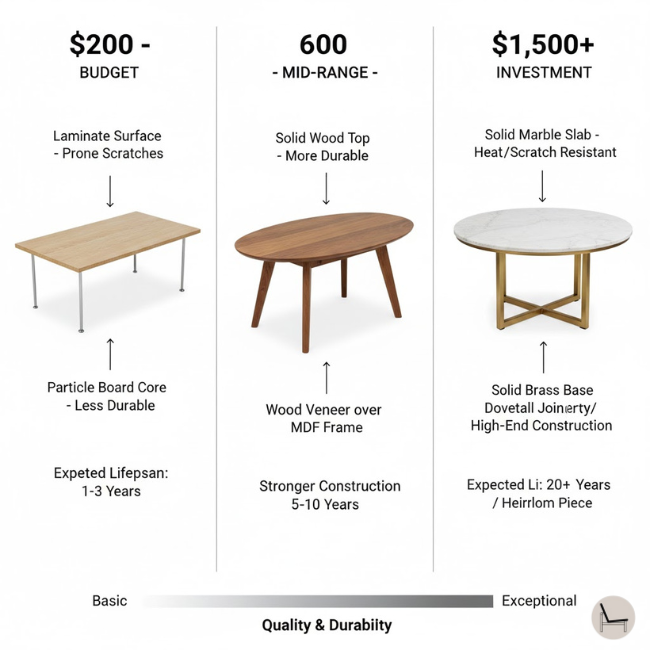
Coffee tables range from $100 to $5,000+—here’s how to identify quality at every price point and where your money actually makes a difference.
The truth about coffee table pricing is critical. When you choose a coffee table, you’re not just paying for materials. You’re paying for construction quality, finish durability, and design innovation. Here’s what to expect at each tier and where smart shoppers find value.
A. Budget Tier: $150-$350 (The IKEA Zone)
What you get: Particle board or laminate construction, simple designs, mass-produced styles, decent from a distance but shows wear within 2-3 years
Best picks at this tier:
- IKEA LACK ($50-$80): The ultimate temporary solution—lightweight, basic, does the job
- Target Project 62 ($150-$250): Better materials than IKEA, on-trend styles, decent durability for the price
- Wayfair basics ($180-$300): Wide selection, mixed reviews, read carefully and check weight capacity
Where this tier works: Rental apartments, first homes, temporary staging, kids’ playrooms, guest spaces
Where to save: Simple rectangular or round designs age better than trendy shapes. Darker finishes hide wear better than white or light wood.
Where to splurge elsewhere: If you’re in this tier, invest in a quality area rug instead—it will transform your space more than upgrading to a mid-tier table.
💡 Pro Tip: At this price point, buy from retailers with generous return policies (Target, Amazon, Wayfair). Quality control is inconsistent, so inspect your table immediately upon delivery.
B. Mid-Tier: $400-$900 (The Sweet Spot)
What you get: Solid wood or quality veneers, better joinery, thoughtful design details, should last 7-10 years with care, wider style selection
Best picks at this tier:
- Article ($400-$800): Solid walnut/oak, mid-century aesthetic, excellent quality-to-price ratio, free shipping
- West Elm ($450-$850): On-trend designs, decent construction, frequent sales (wait for 20-30% off)
- Crate & Barrel ($500-$900): Classic styles, reliable quality, good return policy, safe investment
Where this tier works: Long-term homes, quality-conscious buyers, “forever furniture” mindset, blending with heirloom pieces
Where to save: Skip exotic wood species (teak, rosewood) and opt for domestic hardwoods (oak, walnut, maple)—same durability, lower price. Avoid marble-top tables at this tier (quality isn’t high enough to justify the material).
Where to splurge: Invest here if you have a great sofa and intend to stay in your home 5+ years. The durability jump from budget to mid-tier is dramatic.
C. High-Tier: $1,000-$2,500+ (The Investment Zone)
What you get: Premium materials (solid exotic hardwoods, genuine marble, designer metals), heirloom-quality construction, unique designs, often from established furniture brands, lasts 20+ years
Best picks at this tier:
- Room & Board ($1,100-$2,000): American-made, customizable options, lifetime warranty on some pieces
- Design Within Reach ($1,200-$3,500): Iconic designer pieces (Noguchi, Saarinen), investment furniture
- RH (Restoration Hardware) ($1,500-$4,000): Statement luxury, heavy materials, bold designs
Where this tier works: Design enthusiasts, completed homes, high-end furniture collections, investment mindset
Where to save: Designer name recognition adds 40-60% to cost. Look for similar designs from mid-tier brands if you love the aesthetic but not the price.
Where to splurge: Genuine marble or exotic wood tables, iconic design classics (Noguchi table holds value), pieces you’ll pass down to your kids.
Real talk about expensive coffee tables: A $2,000 coffee table makes sense if your sofa cost $3,000+ and you’re designing a forever space. It doesn’t make sense as your first “nice” furniture piece or in a rental.
D. The Used/Vintage Wild Card: $50-$1,000
What you get: Unpredictable quality, one-of-a-kind finds, genuine mid-century pieces, requires patience and luck
Where to look: Facebook Marketplace, Craigslist, estate sales, Chairish (online vintage marketplace), vintage furniture stores
What to inspect:
- ✅ Solid wood construction (knock on it—should sound solid, not hollow)
- ✅ Stable joints (wobble test—should be rock solid)
- ✅ Surface condition (scratches and dings can be refinished, but deep gouges or water damage are red flags)
- ✅ Level surface (bring a small level to check)
💡 Pro Tip: Genuine mid-century coffee tables ($400-$1,200 used) from brands like Lane, Bassett, or Drexel often match the quality of $1,500+ new pieces. Look for maker’s marks on the underside.
Budget Allocation Strategy:
If your total living room furniture budget is $5,000:
- Sofa: $2,000-$2,500 (40-50%)—where you spend most time
- Coffee table: $500-$800 (10-16%)—daily workhorse
- Side tables (set of 2): $300-$500 (6-10%)
- Area rug: $400-$700 (8-14%)—anchors everything
- Accessories/lighting: $800-$1,200 (16-24%)—finishing touches
If your budget is $2,000 total:
- Sofa: $800-$1,000 (40-50%)—buy quality here
- Coffee table: $250-$400 (12-20%)—Mid-tier if possible
- Essentials (side tables, lamps, rug): $600-$950 (30-48%)
The 10-Year Cost Analysis:
Budget table ($200) replaced every 3 years = $600-$700 over 10 years
Mid-tier table ($600) lasts 10 years = $600 over 10 years
High-tier table ($1,500) lasts 20+ years = $750 over 10 years (but better quality experience)
The real winner: Mid-tier provides the best value unless you’re building an heirloom collection.
Most Popular Post:
Interior Design Style Quiz
Timeless Paint Colors That Never Go Out of Style
Create Your Perfect Ergonomic Home Office: A Complete Guide
Must-Have Accessories for Guys: The Secret to a Stylish Space
Modular Sofas for Small Spaces: Brilliant Solutions for Compact Living
Conclusion: Your Living Room Deserves a Coffee Table That Works
You’re now equipped with the exact measurements, material knowledge, and style strategies that interior designers use to choose coffee tables that transform living rooms from “adequate” to “did you hire someone?”
Here’s your 5-step action plan:
1: Measure your sofa’s seat cushion height and length. Calculate your target coffee table size: ½ to ⅔ sofa length, 1-2 inches below seat height, 18 inches away from sofa edge.
2: Choose your shape based on your sofa configuration: Rectangular for standard sofas, square or round for sectionals, round or oval for small spaces or young families.
3: Select material based on your lifestyle: Wood for durability and warmth, glass for small spaces, marble for luxury, metal for industrial edge, upholstered ottomans for family-friendly function.
4: Set your budget: $250-$400 for temporary/rental solutions, $500-$900 for long-term investment, $1,000+ for heirloom-quality pieces.
5: Before buying, use painter’s tape to mark the table’s footprint on your floor. Live with it for 48 hours. If it passes the real-life test, you’ve found your perfect match.
Your coffee table isn’t just furniture—it’s where life happens. Morning coffee. Spontaneous game nights. Working from home when you need a change of scenery. Propping up feet after long days. That one surface where everyone naturally gathers.
Choose a coffee table that makes all of those moments function smoothly and look intentional. Your living room will finally feel complete, and you’ll wonder why you ever second-guessed yourself.
Ready to transform your space? Share your coffee table success (or horror stories) in the comments below. What’s your biggest remaining question about choosing the perfect table for YOUR home?
VIII. Frequently Asked Questions About Choosing a Coffee Table
Can my coffee table be higher than my sofa?
No—your coffee table should be 1-2 inches BELOW your sofa seat cushions. Higher tables force awkward reaching and look disproportionate. Exception: lift-top coffee tables that temporarily raise to meal height.
What if I can’t find the exact measurements I need?
Prioritize getting the height right (most important for function), then focus on length within the ½ to ⅔ range. Being 3-4 inches outside the ideal length won’t ruin your room, but wrong height creates daily frustration.
Should my coffee table match my TV stand or side tables?
Matching is optional and often looks too coordinated (catalog-perfect but impersonal). Instead, aim for complementary styles—same era (mid-century), similar finishes (all warm wood tones), or coordinating metals (all brass or all black). Perfect matching can feel sterile.
Round or rectangular for a small living room?
Round wins in small spaces for two reasons: easier to navigate around (no corners), and visually lighter footprint. Choose 30-36 inches diameter and consider glass or light wood to maintain airiness.
How do I style a coffee table without making it look cluttered?
Follow the “Rule of Threes”: three zones or groupings maximum. For example: stack of books + small plant + decorative object. Leave 40-50% of the surface empty for function (setting down drinks, remotes). Use trays to corral small items.
Can I use a bench or ottoman instead of a traditional coffee table?
Absolutely. Upholstered ottomans (with a large tray on top) work beautifully, especially in family-friendly homes. Benches can function as coffee tables if they’re low enough (16-18 inches) and stable enough to hold drinks safely.
What’s the deal with nesting coffee tables?
Nesting tables (one smaller table tucked under a larger table) provide flexibility—expand for entertaining, contract for daily use. They’re perfect for small spaces or multi-functional rooms. Choose sets where the smaller table is at least 60% the size of the larger table (too small looks unbalanced).
My living room is long and narrow. What coffee table shape works best?
Oval or rectangular, but keep it narrow (18-20 inches deep instead of 24 inches). This maintains walkway clearance while providing enough surface area. Avoid square tables—they’ll emphasize the narrow proportions.
How much should I spend if I’m in a rental?
$250-$500 sweet spot—durable enough to move with you through multiple homes, affordable enough that you won’t mourn leaving it behind if your next place demands different dimensions. Prioritize sturdy construction over trendy design.
Can I DIY a coffee table to save money?
Yes, if you have moderate woodworking skills. Hairpin legs ($30-$60) + a wood slab ($50-$150) creates a trendy table for $80-$210. Ikea hack: LACK side tables ($20 each) stacked with a wood top creates mid-century vibes for under $100. Pinterest and YouTube are goldmines for tutorials.
What if my partner and I disagree on style?
Find the overlap in your Venn diagram: If one likes modern and one likes rustic, explore industrial (bridges both). If one wants wood and one wants glass, consider wood with glass inserts. Mixed-material tables often satisfy both preferences. Alternatively, let the disagreeing party choose the next major furniture piece.
Do I need a coffee table if I have side tables?
Technically no, but your room will feel incomplete. Coffee tables provide a visual anchor and central gathering point that side tables can’t replicate. If you truly don’t want one, replace it with a large ottoman or cluster of poufs to maintain that centered focal point.
Subscribe To the Newsletter!
Subscribe now for an endless feed of inspirational women’s cave decor ideas, pampering rituals, and more tips for curating your ultimate escape. Let’s start making your cozy refuge a reality – you so deserve this!
CATCH THE LATEST IN HOME DECOR TRENDS:
Steal These 16 Expert-Approved Decorating Secrets

How To Accessorize Your Living Room
Small Space? 10 Ways To Make A Room Appear Bigger
Make Your space Look Expensive
GET CAUGHT UP ON ALL THE INSPIRING DECOR TIPS:
18 Fresh Decorating Ideas To Update Your Fireplace
How to Make a Gallery Wall: The Complete Step-by-Step Guide (Even If You’ve Never Hung a Picture)


