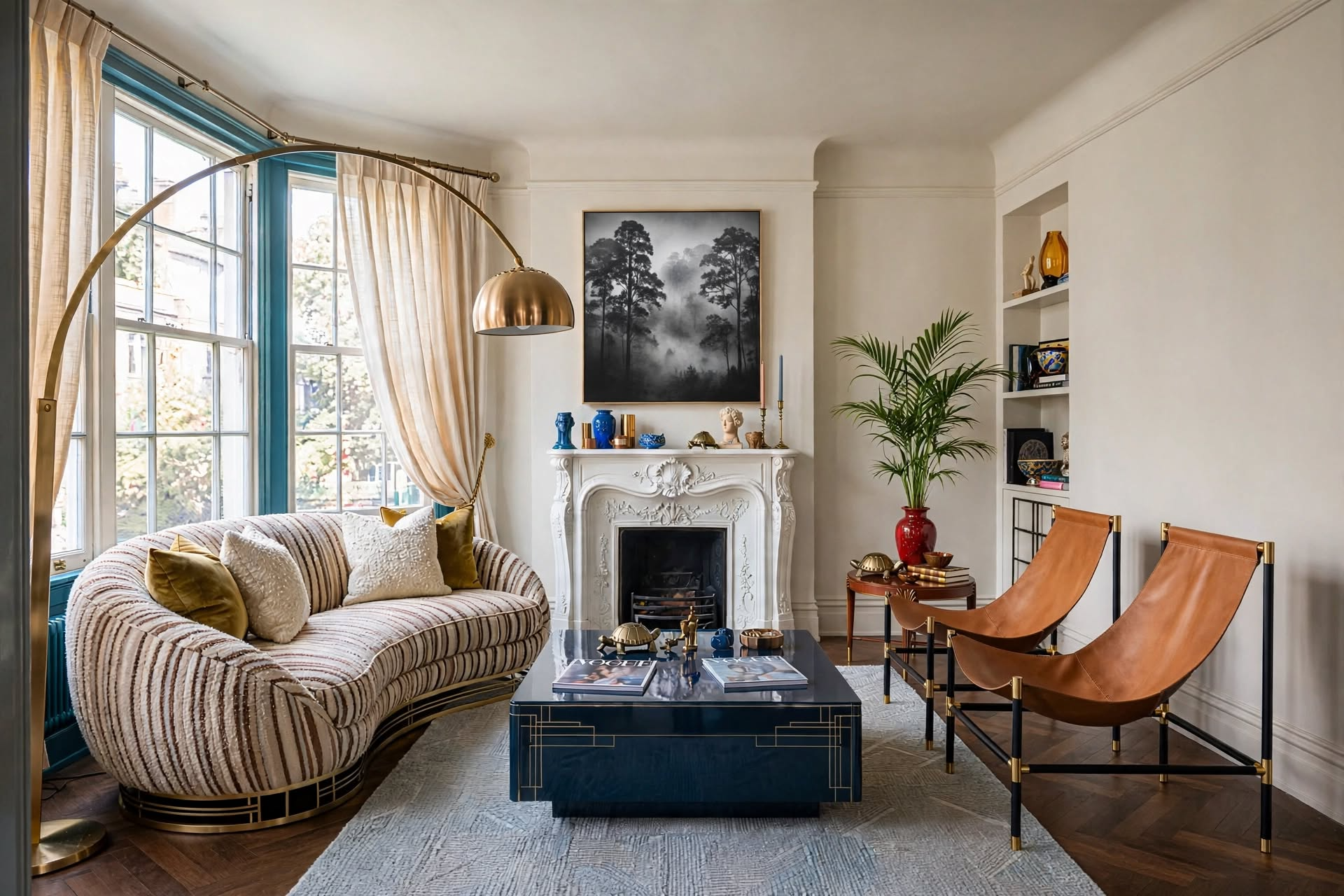
The 7-Step No-Fail Method to Hire an Interior Designer — and Finally Get the Home You Deserve
Stop wasting weekends on Pinterest boards that lead nowhere. This is the designer’s blueprint for finding, vetting, and hiring the right professional—without overpaying or second-guessing yourself.
To hire an interior designer, define your project scope and budget first, then search platforms like Houzz and ASID to find candidates whose portfolio matches your aesthetic. Interview at least three designers, ask for references, and review their contract carefully before signing. The right designer will save you money, time, and costly renovation mistakes.
To hire an interior designer starts with one uncomfortable truth: most people do it wrong—and they pay for it. Not just with money, but with months of stress, furniture that doesn’t fit, and a finished room that looks like nobody actually lives there.
You’ve felt it, haven’t you? You spend hours scrolling design inspiration, your cart fills up, your credit card takes the hit—and the room still feels off. There’s no flow, no warmth, no story. Just expensive stuff scattered in an expensive space.

The problem isn’t your taste. It’s that good design isn’t about picking pretty things. It’s a technical discipline with rules, proportions, spatial logic, and a process. And that process starts with one crucial decision: choosing the right professional to guide you through it.
This guide gives you the exact framework that top designers use to onboard clients—now flipped to help you onboard them. By the end, you’ll know precisely how to hire an interior designer who fits your budget, your timeline, and your vision, without getting burned.
Why Hiring an Interior Designer Is the Smartest Investment You’ll Make in Your Home

To hire an interior designer isn’t a luxury—it’s a risk-management tool. A skilled designer prevents the expensive mistakes that haunt DIY renovations: the sofa that’s 6 inches too wide, the tile that looked perfect as a 4×4 sample and overwhelming at 400 square feet, the paint color that turns green in evening light.
Interior design is the single renovation investment with proven ROI. Studies from the American Society of Interior Designers (ASID) show that professionally designed spaces can increase a home’s resale value by up to 12.5%. But the real return isn’t financial—it’s the daily quality of life in a space that works exactly the way you need it to.
“A good designer doesn’t spend your money—they protect it. They’re the only professional on a project whose entire job is to see the whole picture before a single dollar is spent.”
— Nate Berkus, Interior Designer & Author, as quoted in Architectural DigestStep 1 — Define Your Project Scope Before You Contact Anyone
Before you search and hire an interior designer, you need to know what you’re asking them to do. A vague brief—”I want my living room to look better”—wastes everyone’s time and leads to mismatched proposals. Designers price projects based on scope, and without a defined scope, you’re flying blind.
Know the difference: decorator vs. designer vs. architect
These titles are often confused, and using the wrong professional for the wrong job is one of the most expensive mistakes homeowners make.
Define what you actually need
Work through these questions before your first outreach:
- Which rooms are you tackling—one room, a floor, the whole house?
- Is there structural work involved (walls, plumbing, electrical)?
- What’s your hard budget—the number you cannot exceed, not your wishful-thinking number?
- What’s your timeline? Renovations take 4–18 months. Don’t hire for a 6-week miracle.
- What level of involvement do you want? Some clients want to be consulted on every detail; others want a designer to handle everything.
Create a “non-negotiables” list before you call anyone. These are the three to five things that must happen—a reading nook, a dining table for eight, a home office that doesn’t look like a home office. Designers respect clients who know their own priorities.
Step 2 — Where to Find Qualified Interior Designers (Beyond a Google Search)
The best designers are rarely the ones at the top of a Google search. They’re fully booked from referrals, they don’t run ads, and their work speaks loud enough that they never need to. Knowing where to look is half the battle.
The five best places to find your designer
- ASID Referral Directory (asid.org) — The American Society of Interior Designers lists credentialed professionals by location and specialty. A safe starting point for verified talent.
- Houzz Pro — Filter by location, style, and budget range. Read client reviews and see verified project photos directly on the platform.
- Instagram / Pinterest — Search style-specific hashtags like #modernfarmhousedesigner or #nycinteriordesign. You’re seeing their real, unfiltered work—not staged portfolio shots.
- Warm referrals — Ask friends, neighbors, or your real estate agent whose home you admire. Word-of-mouth hires are overwhelmingly more successful than cold searches.
- Online platforms (Decorilla, Modsy, Havenly) — For remote, budget-friendly design. These platforms vet their designers and offer money-back guarantees on initial concepts.
“Your best source is always the home you walked into and thought, ‘I want to live here.’ Ask who designed it. That single referral is worth a hundred directory searches.”
— Kelly Wearstler, Interior Designer, via Elle DecorWhat to look for in a portfolio
A portfolio is not just proof of talent—it’s proof of range and intentionality. A designer who has only ever done all-white Scandinavian interiors is not going to thrive on your Moroccan-eclectic living room. Look for:
- Projects that match your aesthetic (obvious—but most people skip this check)
- A range of budgets, not just high-end trophy projects
- Before-and-after photos that show genuine spatial transformation
- Real-life photography, not just renders—renders are aspirational, photos are honest
- Evidence of problem-solving: an awkward floor plan improved, a dark room opened up
Step 3 — Understand How Interior Designers Charge (And What’s Actually Fair)
One of the most common reasons the designer-client relationship breaks down is a mismatch in fee expectations. Designers use several pricing models, each with its own advantages—and traps. Knowing the difference before your first meeting protects you from sticker shock and scope creep.
You pay for time spent. Best for smaller projects or consultations.
One fee for the entire scope. Predictable but requires a crystal-clear brief.
Designer buys furniture at trade discount and resells to you at retail or near-retail.
Typical for large renovations. Designer earns a percentage of total project cost.
A general rule of thumb: expect to spend 10–20% of your home’s value on a full-scale interior design project. So a $600,000 home justifies a $60,000–$120,000 furnishings and renovation budget. Your designer’s fee comes out of—not on top of—this figure.
Step 4 — The Interview: 10 Questions That Reveal Everything

The interview is where most homeowners go wrong. They ask about style (“Do you like modern or traditional?”) instead of process. Style is visible in the portfolio. What you can’t see is their communication style, how they handle conflict, what happens when the sofa is backordered for six months, and whether they’ve ever had a project go over budget—and what they did about it.
Interview at least three designers
Non-negotiable. Three interviews give you calibration. After one, you have no frame of reference. After three, you know exactly what’s standard, what’s exceptional, and what’s a red flag.
The 10 questions that matter:
- “Walk me through a project that went wrong and how you resolved it.” — Designers who claim nothing has ever gone wrong are lying. This answer tells you everything about their character.
- “How do you handle it when a client disagrees with your recommendation?” — You want a designer who advocates for their vision but respects your veto.
- “What does your typical client communication process look like?” — Weekly updates? Portal access? Radio silence? Define this before you sign.
- “Can I see references from clients with a similar scope to mine?” — A designer who did a great kitchen doesn’t automatically do great full-house renovations.
- “How do you handle budget overruns?” — The answer should include proactive communication, not surprise invoices.
- “What percentage of your projects finish on time and on budget?” — Honest designers give you a realistic number. Beware of “always.”
- “Do you work with specific contractors? Are they vetted?” — Designers with established contractor relationships reduce project risk significantly.
- “What does your onboarding process look like?” — A structured onboarding (questionnaire, site visit, mood board, concept presentation) signals a professional operation.
- “How do you handle smart home integration or tech-forward features?” — This is a gap in most competitor content. If you want built-in speakers, automated lighting, or motorized shades, verify they’ve done this before.
- “What’s one thing clients do that makes your job harder?” — This disarming question reveals their honest working style and gives you insight into what they need from you to do their best work.
Free Patio Style Quiz
Stop wasting hours scrolling through thousands of options. In two minutes, discover your perfect patio aesthetic — and get a curated shopping list of highly-rated pieces that bring it all to life effortlessly.
➡ Take the Free Patio Style QuizStep 5 — Red Flags That Most Guides Won’t Tell You About
Almost everyone says to “check their portfolio and read reviews.” That’s table stakes. Here are the signals that separate genuinely trustworthy designers from those who will make your renovation a nightmare.
Walk away immediately if you see these
- No written contract — Any designer who resists a formal contract is protecting themselves, not you. Full stop.
- Vague scope of work — If the proposal says “design services for living room” without line-item deliverables, that’s a blank check they’ll fill in later.
- No references available — Excuses about “client confidentiality” are legitimate once, not every time. A designer with no reachable references is a warning.
- Dismissing your budget — “You can’t do this for less than $X” in the first meeting, before a full assessment, is a sales technique. Some designers inflate scope to inflate fees.
- No process for revisions — How many concept revisions are included? What happens when you don’t love the first proposal? This must be defined in writing.
- Pressure to commit immediately — “I have another client ready to sign”—a classic scarcity tactic. Good designers have waitlists. They don’t need to pressure you.
- No transparent trade pricing policy — If they won’t tell you how their markup works, you have no way to verify fair value.
Green flags that mean you’ve found the right one
- They ask more questions than they answer in the first meeting
- They push back on one of your ideas with a reasoned alternative
- They mention budget constraints proactively before you raise them
- They have a defined onboarding questionnaire and discovery process
- They discuss smart home, sustainability, or multi-functional design without being prompted
- Their references use words like “organized,” “responsive,” and “fought for us”
Step 6 — The Contract: What Must Be in It, Non-Negotiably
The contract is not a formality—it is the project. Every misunderstanding, overage, and dispute that ends a designer-client relationship can be traced back to something that wasn’t in the contract. Read it like a lawyer. Here’s what must be in it.
Step 7 — The Complete Hiring Flowchart (Your Decision Path at a Glance)
Use this flowchart as your master checklist from first search to signed contract. Each stage has a clear go/no-go decision point.
How to Be a Great Client (The Part Nobody Talks About)
Most guides end at “sign the contract.” The reality is that 40% of designer-client relationships that start well deteriorate during the project—and clients are responsible for their share of that friction. Being a great client isn’t about staying out of the way. It’s about being clear, decisive, and trusting the process you paid for.
What your designer needs from you
- Timely decisions — When a designer asks you to approve a sofa fabric, a one-week delay can mean a 10-week production backlog. Respect the schedule.
- A single point of contact — Conflicting feedback from two spouses with different visions is the number-one source of project chaos. Agree on who speaks for the household.
- Honest feedback on concepts — “It’s fine” is not feedback. If you hate the first direction, say so clearly and specifically. Designers can’t read minds—and shouldn’t have to.
- Budget honesty — If the budget shifts, tell your designer before it becomes a crisis. They would rather know early and adjust than deliver a proposal you can’t afford.
- Trust in their expertise — You hired a professional. If they push back on your idea, listen. You don’t have to agree, but hear the reasoning before you veto.
“The clients who get the most extraordinary results are the ones who come prepared, stay decisive, and trust that disagreement is part of the process—not a failure of the relationship.”
— Jeremiah Brent, Interior Designer, via Architectural DigestKey Takeaways: You’re Ready to Hire an Interior Designer
Here’s what you now know that most homeowners don’t:
- Define your scope and budget before you contact a single designer
- The best designers come from referrals and portfolio research, not top-of-Google searches
- Interview at least three candidates using process questions, not style questions
- Understand the fee model before you fall in love with a designer
- A complete, detailed contract is your single best protection
- Being a decisive, communicative client is how you get a designer’s best work
You don’t need a bigger budget. You don’t need to wait until the house is “ready.” You need the right professional, a clear brief, and the confidence to move forward. That’s what this guide has given you.
Your home’s transformation doesn’t start with a renovation—it starts with one conversation. Use the framework above, reach out to three candidates this week, and book a consultation. The room you’ve been imagining is already waiting for you on the other side of that call.
Free Color Palette Quiz
Your perfect room starts with the right color story. In 60 seconds, discover the palette that matches your mood, your light, and your life — then shop a curated edit built around it.
➡ Find My Perfect Color PaletteFrequently Asked Questions
CATCH THE LATEST IN HOME DECOR TRENDS:

Steal These 16 Expert-Approved Decorating Secrets

Accessorize a Small Living Room: 7 Genius Styling Secrets

How to Make a Small Room Appear Bigger

How to Make Your Home Look Expensive
GET CAUGHT UP ON ALL THE INSPIRING DECOR TIPS:

Best Fireplace Makeover Ideas

How to Make a Gallery Wall: The Complete Step-by-Step Guide (Even If You’ve Never Hung a Picture)