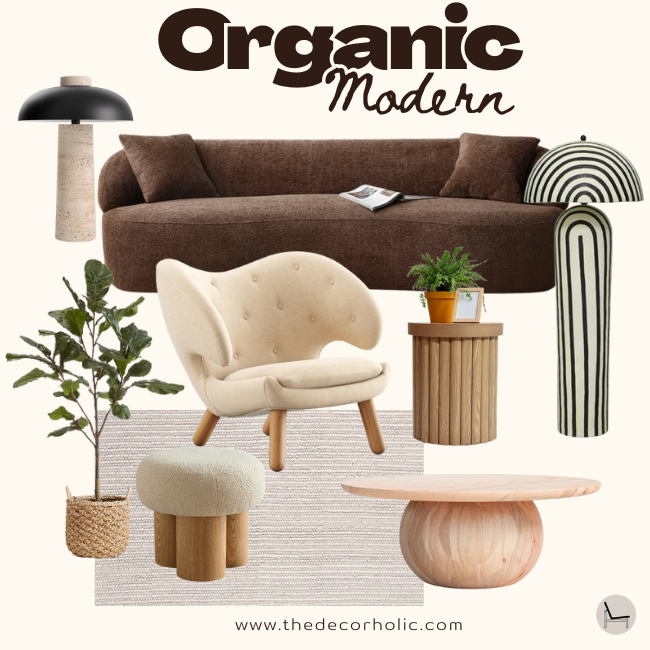
TL;DR Summary: Modern organic interior design merges contemporary clean lines with nature-inspired materials like wood, stone, and linen. This guide reveals exactly how to achieve the aesthetic through strategic color choices, smart material investments, and practical maintenance tips—whether your budget is $500 or $5,000.
Introduction: Why Your Home Doesn’t Feel Like “Home” Yet
You’ve seen it everywhere—those serene living rooms on Instagram where sunlight streams across a sculptural sofa, warming the honey-toned wood floor. The space feels effortlessly pulled together, like someone who just “gets it” lives there.
Meanwhile, your own living room is a collection of well-intentioned purchases that somehow don’t speak to each other. You’ve tried adding plants. You bought beige throw pillows. But instead of calm sophistication, you’re stuck with… beige chaos.

Here’s what nobody tells you: modern organic interior design isn’t about buying the “right” pieces. It’s about understanding a handful of principles that transform disconnected rooms into a cohesive sanctuary. This guide gives you the exact roadmap—from decoding paint undertones to knowing where to splurge versus save—so you can finally create the grounded, beautiful home you’ve been craving.
- Introduction: Why Your Home Doesn’t Feel Like “Home” Yet
- I. What Is Modern Organic Interior Design?
- II. Modern Organic vs. Similar Styles: What’s the Difference?
- III. Modern Organic Starter Checklist: Your First 4 Moves
- IV. Core Elements That Define Modern Organic Style
- V. Choosing the Right Modern Organic Color Palette (The Undertone Secret)
- VI. Architectural Essentials: Beyond the Furniture
- VII. Room-by-Room Modern Organic Design Guide
- VIII. Living with Modern Organic: The Maintenance Reality Check
- IX. The Modern Organic Investment Guide: Where to Splurge vs. Save
- X. Modern Organic Mistakes to Avoid
- XI. Conclusion: Creating Your Modern Organic Sanctuary
- XII. Modern Organic-Frequently Asked Questions
- Q: Is modern organic design expensive?
- Q: Will modern organic feel too minimal or cold?
- Q: How do I maintain the minimalist look with kids and pets?
- Q: What’s the best starting point for this style?
- Q: Does modern organic work in small spaces?
- Q: How often should I update my modern organic decor?
- Subscribe To the Newsletter!
I. What Is Modern Organic Interior Design?

Modern organic design is the intentional fusion of contemporary minimalism with nature-inspired warmth, creating spaces that feel both refined and deeply human. Born from architect Frank Lloyd Wright’s organic architecture philosophy, this style has evolved into today’s answer for people craving sophisticated spaces that don’t sacrifice comfort or soul.
Think of it as the antidote to cold minimalism. Where stark modern design can feel sterile, modern organic introduces texture through raw linen and handwoven jute. Where minimalism strips away personality, this style embraces sculptural wood furniture and curved forms that soften straight lines. The result is spaces that breathe—airy and uncluttered, yet inviting enough to actually live in.
Why Modern Organic Design Actually Works: The Science of Biophilic Design
Modern organic isn’t just aesthetically pleasing—it’s rooted in biophilic design principles, the science of connecting humans with nature through our built environment. Research shows that spaces incorporating natural elements reduce stress, improve cognitive function, and enhance overall wellbeing.
The 14 Patterns of Biophilic Design inform modern organic’s success, but two are particularly critical:
- Material Connection with Nature: Using materials that show age, patina, and natural imperfection (raw wood grain, stone veining, linen’s natural slubs) triggers our innate recognition of natural patterns, creating subconscious calm.
- Non-Rhythmic Sensory Stimuli: Elements like a flickering candle’s light dancing across textured plaster walls, or a plant’s leaves moving in a breeze from an open window, provide gentle, unpredictable sensory variation that keeps our nervous system engaged without overwhelming it.
This explains why a modern organic room feels different from a sterile minimalist space—your body literally responds to the natural cues embedded in the design.
💡 Pro Tip: If your space currently feels “too cold,” you’re likely missing tactile textures. If it feels “too busy,” you need cleaner lines. Modern organic lives in the sweet spot between both extremes.
You’ll Also Like: The Ultimate Guide to Sling Chairs: Design, Comfort & Style for Modern Homes
II. Modern Organic vs. Similar Styles: What’s the Difference?
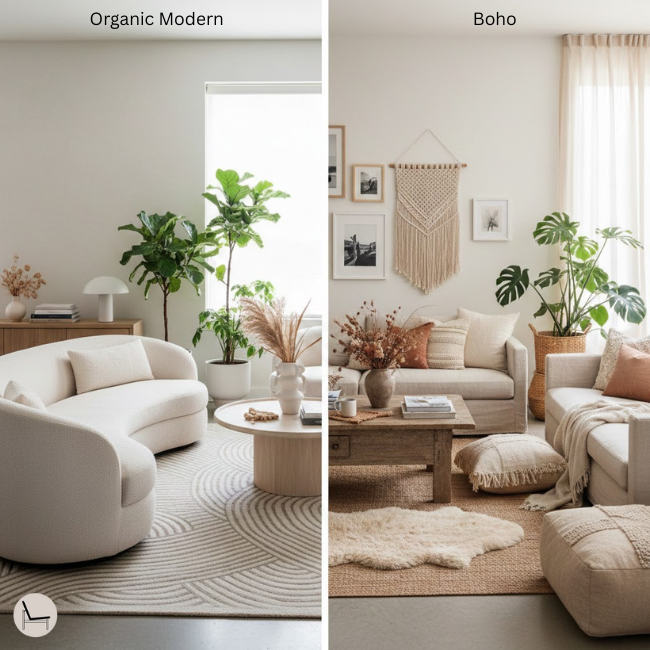
Confused whether modern organic is the same as Japandi or Scandinavian? You’re not alone. Here’s the definitive comparison:
| Style Element | Modern Organic | Japandi | Scandinavian |
| Color Palette | Warm neutrals, earthy accents | Cool neutrals, muted tones | Bright whites, pastels |
| Textures | Layered, tactile (bouclé, jute, linen) | Minimal, refined | Cozy (wool, sheepskin) |
| Forms | Curved, sculptural | Angular, zen-inspired | Mixed geometric |
| Material Focus | Raw, imperfect (live-edge wood) | Refined natural (smooth wood) | Light woods, painted surfaces |
| Greenery | Abundant, statement plants | Minimal, bonsai-style | Moderate, in simple planters |
| Black/Dark Accents | Strategic (fixtures, frames) | Rare (only charcoal gray) | Minimal (mostly light tones) |
| Overall Vibe | Warm sophistication | Serene minimalism | Bright hygge comfort |
The Verdict: Choose modern organic if you want spaces that feel warm and inviting while maintaining contemporary polish. Pick Japandi for more austere, zen-like calm. Go Scandinavian for brightness and cozier, lived-in charm.
Why this matters for your design:
Understanding these distinctions prevents the common mistake of accidentally creating a Japandi room when you wanted modern organic warmth, or a Scandinavian space when you craved modern sophistication.
In Case You Missed It: How to Decorate a Modern Cottage Style Home
III. Modern Organic Starter Checklist: Your First 4 Moves

Before diving into full room transformations, make these four strategic changes to instantly shift your space toward modern organic:
- [ ] Swap 1 sharp-edged item for 1 curved item (Replace rectangular mirror with round one, or swap square coffee table for oval)
- [ ] Add 3 different textures in one vignette (Stone vessel + linen throw + wood bowl creates instant organic layering)
- [ ] Remove 2 items of “clutter” to create breathing room (Clear countertops, consolidate small decor into one statement piece)
- [ ] Replace 1 cool-white bulb with a warm-toned (2700K) bulb (Instant warmth transformation for under $10)
Implementation timeline: Complete this checklist this weekend. These micro-changes create immediate visual shift while you plan larger investments.
Don’t Miss This Post: Bold Wall Art: The Complete Guide to Transforming Your Space with Statement Pieces
IV. Core Elements That Define Modern Organic Style
A. The Foundation: Natural Materials
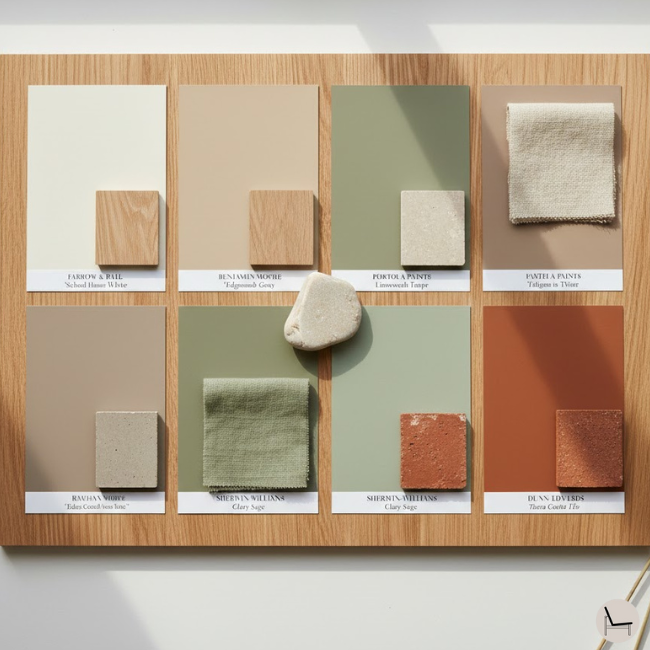
Modern organic relies on materials you’d find in nature, but refined with contemporary sensibility. Raw oak dining tables with live edges, honed travertine coffee tables, chunky jute rugs underfoot. These aren’t rustic—they’re polished versions of organic elements.
Key materials to incorporate:
- Wood: Light to medium tones (white oak, walnut, teak) with visible grain
- Stone: Travertine, limestone, marble (honed or tumbled, not glossy)
- Natural fibers: Linen, cotton, jute, sisal, wool, bouclé
- Earth elements: Terracotta, ceramic, concrete, rattan
The magic happens when you layer these textures. A smooth leather sofa against a nubby wool rug, beside a rough-hewn wood side table—this interplay creates visual interest without clutter.
B. Modern Organic Material Cheat Sheet: High vs. Budget Options
Finding affordable alternatives to high-end pieces is key to making this style accessible. Here’s your product curation guide:
| Material Type | Splurge Option | Save Option | Why It Works |
| Coffee Table | CB2 Travertine Round Table ($1,299) | Mango Wood Pedestal Table from World Market ($399) | Both feature organic circular shapes and natural material variation |
| Dining Chairs | Article Svelti Leather Chair ($449/each) | IKEA Tobias Clear Chair with sheepskin throw ($79 + $35) | Layer texture over affordable modern base |
| Area Rug | West Elm Chunky Jute 9×12 ($899) | Rugs USA Jute 9×12 ($247) | Same natural fiber, similar texture at 1/3 price |
| Lighting | Schoolhouse Electric Pendant ($428) | Threshold Natural Rattan Pendant from Target ($80) | Organic material creates similar visual impact |
| Sofa | Interior Define Charly in Linen ($2,995) | Burrow Nomad in Performance Fabric ($1,695) | Both offer clean lines; performance fabric = practical luxury |
Shopping strategy: Invest in your sofa and one statement wood piece. Save on accessories, lighting, and accent furniture by choosing natural materials over brand names.
C. The Palette: Warm Neutrals with Intention
Modern organic color palettes mirror nature’s subtle variations. Forget stark white walls; instead, reach for creamy off-whites with warm undertones, soft taupes, warm grays, and earthy browns. Accent colors pull from natural landscapes: sage green, terracotta, rust, deep charcoal, soft black.
Designer Insight: Your room’s natural light dictates your palette. North-facing rooms with cool light need warmer neutrals to compensate. South-facing rooms with abundant warm light can handle cooler tones without feeling cold.
- Identify your room’s light direction and intensity
- Test paint samples at different times of day
- Layer three shades of your base neutral for depth (lightest on walls, medium on textiles, darkest on accents)
D. Best Modern Organic Paint Colors: The Definitive List
Stop guessing—these paint colors are proven modern organic winners:
Warm Neutrals (North/East-facing rooms):
- Benjamin Moore “White Dove” OC-17 (soft, creamy white with subtle warmth)
- Sherwin-Williams “Shoji White” SW 7042 (creamy white with yellow undertones)
- Benjamin Moore “Manchester Tan” HC-81 (warm greige with depth)
- Sherwin-Williams “Accessible Beige” SW 7036 (perfect warm neutral base)
Cool Neutrals (South/West-facing rooms):
- Benjamin Moore “Chantilly Lace” OC-65 (crisp white with slight coolness)
- Benjamin Moore “Gray Owl” OC-52 (soft gray-green, incredibly versatile)
- Sherwin-Williams “Repose Gray” SW 7015 (true gray with subtle warmth)
- Benjamin Moore “Balboa Mist” OC-27 (greige with gray-green undertones)
Accent Colors:
- Benjamin Moore “Weimaraner” AF-155 (soft sage green)
- Sherwin-Williams “Cavern Clay” SW 7701 (warm terracotta)
- Benjamin Moore “Kendall Charcoal” HC-166 (sophisticated deep gray)
💡 Pro Tip: Buy sample pots and paint large swatches (at least 2’x2′) on your walls. Live with them for three days, observing how they look in morning, afternoon, and evening light before committing.
E. The Forms: Curves That Soften
Modern organic embraces organic shapes—curved sofas, rounded coffee tables, arched doorways, sculptural pendant lights. These fluid forms counterbalance the clean lines of contemporary design, creating movement and visual warmth.
Incorporate curves strategically:
- Major furniture pieces: Choose sofas with rounded arms or curved backs
- Accent furniture: Opt for circular or oval coffee tables and side tables
- Architectural details: Add arched mirrors or doorway modifications
- Lighting: Select pendant lights with sculptural, flowing forms
“Curves bring an immediate sense of calm to a space. They’re subconsciously reminiscent of nature’s forms—river stones, tree branches, hillsides—which our brains recognize as safe and nurturing.” Says Sarah Sherman Samuel, Interior Designer
F. The Role of Black Accents: Your Modern Anchor
Many people assume “organic” means avoiding dark colors—this is a costly mistake. Black and deep charcoal accents provide the “modern” anchor that prevents organic spaces from feeling too soft or undefined.
Strategic places for black/charcoal:
- Window frames: Black-framed windows create striking contrast against warm walls
- Lighting fixtures: Matte black pendants or sconces add contemporary edge
- Hardware: Cabinet pulls, faucets, door handles in matte black
- Frames: Gallery walls with black frames ground artwork
- Metal accents: Iron coffee table bases, black steel shelving
The ratio matters: aim for 5-10% black accents in your space. Too little and rooms lack definition; too much and you lose the organic warmth.
Here’s an Example: In a cream living room with natural wood furniture, add a matte black floor lamp, a black-framed mirror, and charcoal throw pillows. These dark punctuation marks create visual sophistication.
You’ll Also Like: Modern Luxury Living Room: A Step-by-Step Guide
V. Choosing the Right Modern Organic Color Palette (The Undertone Secret)
![Comparison showing modern organic room with warm neutral paint versus cool neutral paint demonstrating undertone impact based on natural light direction]](https://www.thedecorholic.com/wp-content/uploads/2025/12/organic-modern-living-room-with-cool-and-warm-color-comparasion.png)
This is where most people go wrong. They grab “greige” paint thinking it’s foolproof, only to discover their walls look dingy yellow in morning light or icy blue at sunset.
Undertones are the hidden hue beneath a neutral color, and they make or break your modern organic palette.
A. Understanding Paint Undertones
Warm undertones (yellow, red, orange base):
- Creates cozy, inviting atmosphere
- Best for: North-facing rooms, spaces needing warmth
- Prevents spaces from feeling cold or sterile
Cool undertones (blue, green, gray base):
- Creates crisp, fresh atmosphere
- Best for: South-facing rooms with abundant natural light
- Prevents spaces from feeling too yellow or dingy
B. The 3-Question Undertone Test
Before buying paint, answer these:
- What direction do your windows face? North/East = choose warm. South/West = choose cool or neutral-warm.
- What’s your flooring tone? Warm wood floors = warm walls. Gray/cool tile = cool walls work.
- What time of day do you use this room most? Morning light is cool (warm tones compensate). Evening light is warm (cool tones balance).
Here’s an Example: Your north-facing bedroom with oak floors and morning use needs Benjamin Moore “White Dove” (warm white). Your south-facing living room with concrete floors and evening use can handle Benjamin Moore “Gray Owl” (cool gray-green).
You’ll Also Like: Modern Boho Living Room Decoration Tips
VI. Architectural Essentials: Beyond the Furniture
Most modern organic guides focus solely on furniture and decor. But the real transformation happens when you address your space’s bones.
A. Wall Treatments: Limewash vs. Roman Clay
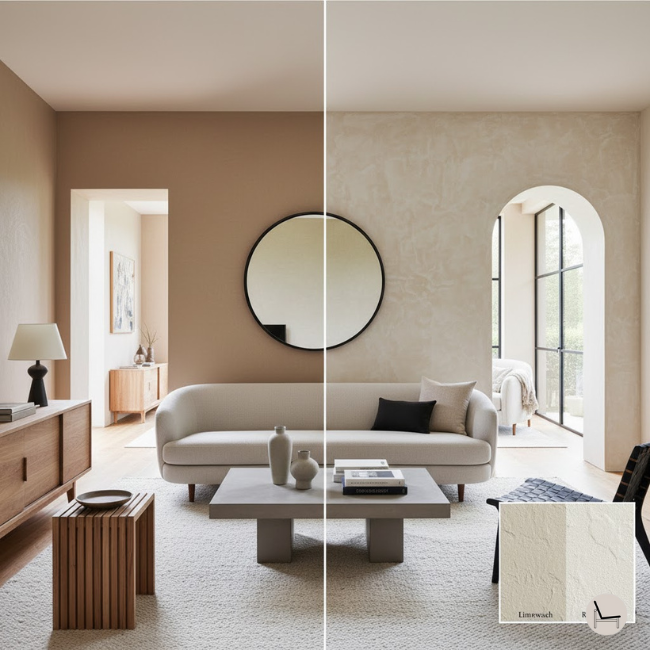
Standard flat paint reads as… standard. Textured wall treatments create subtle depth that catches light differently throughout the day, adding dimension impossible to achieve with regular paint.
Limewash:
- Finish: Suede-like, matte, slightly chalky
- Texture: Subtle, organic variation
- Best for: Traditional homes, creating aged European villa effect
- Breathability: Excellent (ideal for old plaster walls)
- Application: Brush or roller, intentionally imperfect
- Cost: $80-150 per average room (DIY-friendly)
- Brands: Portola Paints, Bauwerk Colour
Roman Clay:
- Finish: Smooth, marble-like, refined
- Texture: Minimal visible texture, sophisticated sheen
- Best for: Contemporary homes, polished modern organic look
- Breathability: Good (but less than limewash)
- Application: Trowel application, requires technique
- Cost: $150-300 per average room (more labor-intensive)
- Brands: Portola Roman Clay, BioLime
The decision: Choose limewash for warmer, more rustic organic spaces. Choose Roman Clay for sleeker, more contemporary modern organic interiors.
💡 Pro Tip: For renters or commitment-phobes, try grasscloth wallpaper or textured peel-and-stick options that mimic these effects without permanent installation.
B. Flooring Choices: Wide-Plank Oak vs. Polished Concrete
Your flooring anchors everything above it. In modern organic design, two options dominate:
Wide-plank white oak:
- Warm, timeless, works with any furniture
- Choose wire-brushed or hand-scraped textures for organic character
- Natural or light stain keeps spaces bright
- Install in 6-8″ widths (not standard 3″) for modern proportion
- Cost: $8-15/sq ft installed
Polished concrete:
- Sleek, cool-toned, increasingly popular in modern builds
- Requires radiant heating in cold climates
- Can feel cold without adequate textile layering
- Add area rugs strategically for warmth
- Cost: $6-12/sq ft for existing concrete, $15-30/sq ft for new pours
The hybrid approach: Use concrete in high-traffic areas (kitchen, entry) and wood in living spaces (bedrooms, living room) for practical warmth without sacrificing style.
C. Architectural Details That Elevate
Small structural changes create outsized impact:
- Arched doorways: Softens boxy rooms (DIY with prefab arch kits: $200-500)
- Exposed beams: Add in new construction or uncover existing in older homes
- Wood-wrapped windows: Replace white trim with stained wood for cohesion
- Built-in niches: Create display moments for pottery or plants ($300-800)
In Case You Missed It: Western Gothic Design: Embracing Rustic Charm for the Modern Pioneer
VII. Room-by-Room Modern Organic Design Guide
A. The Modern Organic Living Room

Your living room sets the tone for your entire home. In modern organic design, it should feel like a breath of fresh air—uncluttered yet layered, minimal yet warm.
Foundation pieces:
- Sofa: Choose neutral linen or performance bouclé in cream, warm beige, or soft gray. Opt for curved or rounded arms to soften the space.
- Coffee table: Travertine, white oak, or walnut. Round or oval shapes work beautifully.
- Accent chairs: Consider leather, textured fabric, or woven rattan
- Rug: Oversized jute, wool, or natural fiber rug (should extend at least 12″ beyond furniture on all sides)
Layer in warmth:
- Add throw pillows in varied textures (linen, bouclé, chunky knit)
- Drape a lightweight throw blanket casually over sofa arm
- Include 2-3 statement plants (fiddle leaf fig, bird of paradise, or olive tree)
- Choose sculptural table lamps with natural materials (ceramic, wood, stone bases)
The lighting strategy: Natural light is your best friend. Keep window treatments minimal—consider sheer linen curtains or woven shades that filter light without blocking it. Layer in ambient lighting with dimmable overhead fixtures, plus task lighting from floor and table lamps. All bulbs should be 2700K (warm white), never cool white or daylight bulbs.
B. The Modern Organic Bedroom

This should be your ultimate sanctuary—a place where stress dissolves the moment you enter.
The foundation:
- Platform bed: Choose wood (light oak or walnut) with clean lines and minimal ornamentation
- Bedding: Layer white or cream linen sheets, a textured duvet (bouclé, stonewashed cotton), and varied pillows
- Nightstands: Matching isn’t mandatory—consider one wood, one travertine stone for interest
Creating cocoon-like warmth: Wall treatments make an oversized impact in bedrooms. Consider limewash paint for texture, woven grasscloth wallpaper featuring natural fibers, or a subtle nature-inspired mural as an accent wall behind your bed.
Layer rugs for softness underfoot—a large jute rug as base with a smaller sheepskin or high-pile wool rug layered on top at the bedside creates luxury without expense.
💡 Pro Tip: Skip overhead lighting in bedrooms. Instead, use bedside lamps with warm bulbs (2700K) and consider wall sconces for a hotel-like atmosphere. Install dimmer switches on all bedroom lighting.
C. The Modern Organic Kitchen

Kitchens require durability, so modern organic here means choosing materials that age beautifully rather than showing wear.
Key elements:
- Cabinetry: Light wood (white oak, maple) or warm-toned painted cabinets (greige, soft sage)
- Countertops: Honed marble, soapstone, or butcher block (avoid glossy granite)
- Backsplash: Handmade ceramic tiles, natural stone, or limewashed plaster
- Hardware: Matte black, brushed brass, or leather-wrapped pulls
The wood question: Yes, wood in kitchens works—IF you seal it properly. Butcher block counters need monthly oiling with food-safe mineral oil. Open wood shelving requires regular dusting but creates warmth that upper cabinets can’t match.
Adding organic touches: Display wooden cutting boards and bowls on open shelving. Keep fresh herbs in ceramic pots on the windowsill. Choose bar stools in natural materials (rattan, wood, leather) to reinforce the aesthetic.
D. The Modern Organic Bathroom
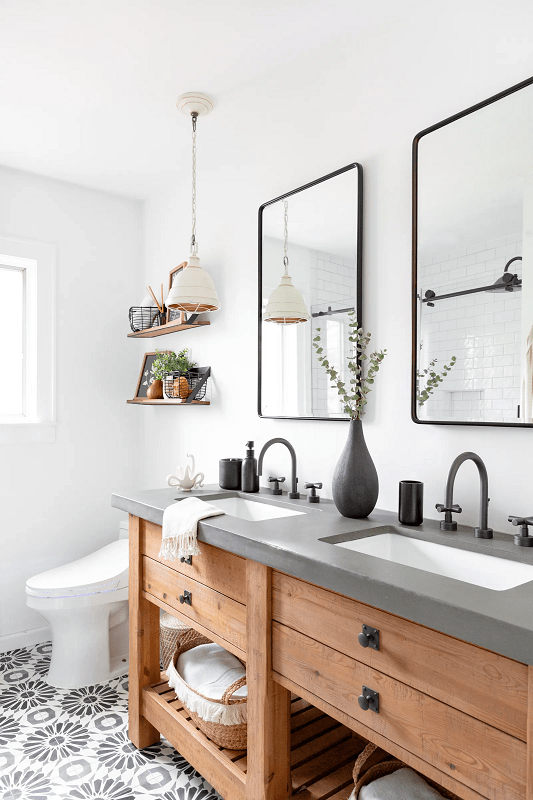
Bathrooms often get overlooked, but they’re prime opportunities for modern organic moments.
Transformation ideas:
- Replace standard mirrors with round or arched versions in brass or black frames
- Swap plastic accessories for ceramic soap dispensers, wood trays, and stone toothbrush holders
- Add warmth with rolled towels in baskets rather than folded on shelves
- Include a small potted plant (pothos, snake plant, or bamboo thrive in humidity)
The spa upgrade: If you’re renovating, consider large-format natural stone tiles, a wood vanity with vessel sink, and matte black or brass fixtures. These choices transform generic bathrooms into retreat-worthy spaces.
You’ll Also Like: Swivel Chairs Ultimate Guide: How to Choose & Style the Perfect One for Your Home
VIII. Living with Modern Organic: The Maintenance Reality Check
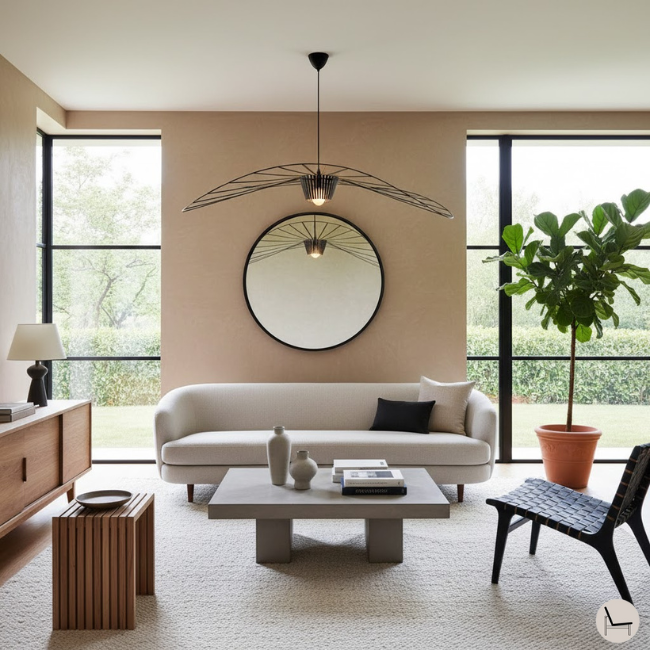
Let’s talk about what design blogs skip: Modern organic materials require care. Here’s the honest truth and practical solutions.
A. Performance Fabrics vs. Raw Linen
The dilemma: Linen looks incredible—relaxed, textured, perfectly imperfect. But it wrinkles, stains easily, and needs professional cleaning.
The solution: Performance fabrics have evolved. Modern options (like Crypton, Revolution, or Sunbrella) now come in linen-look weaves indistinguishable from the real thing. They resist stains, wipe clean, and won’t fade.
When to choose each:
- Raw linen: Formal living rooms, adult-only homes, spaces you’re willing to baby
- Performance fabrics: Family rooms, homes with kids/pets, dining chairs
“I exclusively spec performance fabrics for clients with young families. The technology has caught up with aesthetics—nobody can tell the difference, and the peace of mind is priceless.” Says designer Amber Lewis.
B. Sealing Your Stone: Keeping Travertine and Marble Pristine
Travertine and marble are porous, meaning they absorb liquids and stain easily. Proper sealing is non-negotiable.
The sealing schedule:
- New stone: Seal immediately, before use
- Regular maintenance: Reseal every 6-12 months (depends on use)
- Product: Use penetrating sealers like DuPont StoneTech (not topical coatings)
Daily care:
- Wipe spills immediately (especially acidic liquids like coffee, wine, citrus)
- Use coasters religiously
- Clean with pH-neutral stone cleaner only (never vinegar, Windex, or general cleaners)
The etching reality: Even sealed marble will etch (dull spots) from acids. Consider this part of its patina. If you can’t embrace imperfection, choose engineered stone or porcelain that mimics marble.
C. Wood Maintenance: Keep It Simple
Raw or unsealed wood needs regular oiling (monthly for surfaces like cutting boards). For furniture, seal with polyurethane or hard wax oil to protect while maintaining natural appearance.
Touch-up tip: Keep a furniture pen in your wood’s stain color. Small scratches disappear in seconds.
You’ll Also Like: How to Choose and Style a Mid Century Wall Unit That Transforms Your Living Space
IX. The Modern Organic Investment Guide: Where to Splurge vs. Save
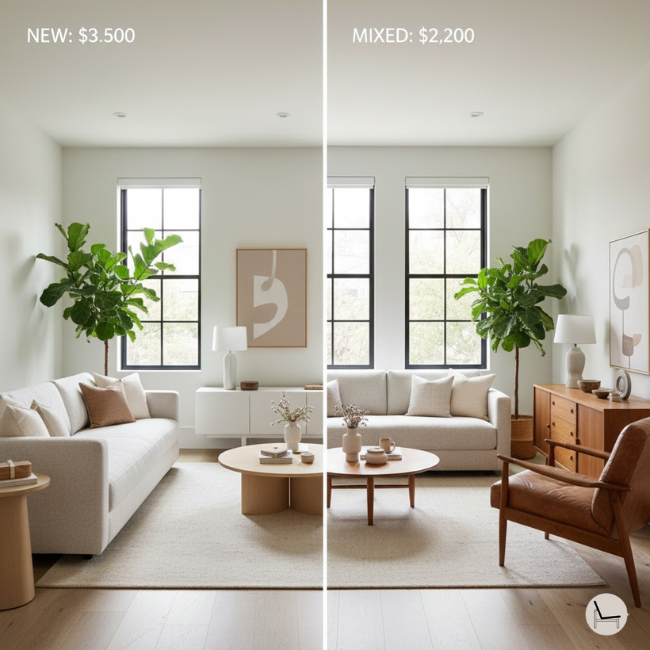
Budget anxiety is real. Here’s exactly where your money makes the biggest impact.
A. Where to Splurge
1. Your sofa ($2,000-5,000+) You use this daily. Quality construction, proper cushioning, and durable fabric pay dividends. A $4,000 sofa lasting 15 years costs less per year than replacing a $1,000 one every three years.
Recommended Brands: Allmodern, Article, Interior Define, Burrow, Floyd (all offer quality at various price points)
🛒 Editor’s Pick: Katrien 93” Upholstered Sofa, by All Modern (Check Price on Wayfair)
2. Key wood pieces ($500-2,000 each) Dining tables and bed frames in solid wood (not veneer) age beautifully. These often become family heirlooms.
Where to find: Room & Board, Wayfair, Pottery Barn, West Elm (solid wood collections), vintage/antique stores.
🛒 Editor’s Pick: 5-Piece Solid Oak Round Pedestal Dining Set by George Oliver (Check Price on Wayfair)
🛒 Editor’s Pick: Mille Platform Bed by AllModern (Check Price on Wayfair)
3. One statement lighting fixture ($300-800) A sculptural pendant over your dining table or in your entry creates instant impact. This is where people’s eyes go first.
Budget option: Target Threshold collection, Wayfair, World Market, Amazon, Schoolhouse Electric sale section
🛒 Editor’s Pick: Gamora 4 – Light Unique/Statement Pendant by Joss & Main (Check Price on Wayfair)
4. Quality area rug ($800-2,000) Large rugs anchor spaces. Natural fiber rugs (jute, sisal) or handwoven wool rugs in neutral tones work for years.
Where to buy: Rugs USA (budget), West Elm, Lulu & Georgia (mid-range), Wayfair, The Citizenry (investment)
🛒 Editor’s Pick: Uptown Hand Tufted Wool Area Rug by AllModern (Check Price on Wayfair)
B. Where to Save
1. Accent furniture ($100-300 each) Side tables, nightstands, and small accent pieces can be budget-friendly. Mix one high-end piece with affordable options.
Shopping tip: Wayfair, IKEA, Target, World Market, Amazon have excellent modern organic-friendly options
🛒 Editor’s Pick: Solid Wood End Table by Jamie Young Company (Check Price on Wayfair)
2. Decor accessories (under $50 each) Vases, bowls, throw pillows, and wall art—these are easily swapped and updated. Scout vintage shops and online marketplaces.
🛒 Editor’s Picks:
Handcrafted Natural Stone Bowl (Available on Amazon)
Modern throw Pillow Set Of 3 With Insert (Available on Wayfair)
3-Piece Wall Art (Available on Amazon)
3. Plants ($20-100 each) Even small plants create huge impact. Start with affordable options from local nurseries rather than designer shops charging 3x for the same fiddle leaf fig.
🛒 Editor’s Pick: Live Snake Plant by Coasta Farms (Check Price on Amazon)
Budget hack: Propagate your own plants from cuttings. Pothos, monstera, and snake plants root easily in water.
4. Window treatments ($200-600) Simple linen panels or woven shades from affordable retailers (Ikea, West Elm, Target) work perfectly. You don’t need custom treatments unless you have unusually sized windows.
🛒 Editor’s Pick: 100% Blackout Linen Curtains 84 Inches Long (Available on Amazon)
C. The Vintage & Second-Hand Advantage (Your 2026 Edge)
Here’s the secret established brands won’t tell you: Vintage and second-hand pieces add more authentic “soul” to modern organic spaces than new mass-produced items ever will.
A 1970s Danish teak credenza with natural patina creates instant character. A worn leather chair from an estate sale tells a story. These pieces align perfectly with modern organic’s emphasis on sustainability and connection to materials with history.
Where to hunt:
- Facebook Marketplace: Best for local pickup of large furniture
- Chairish: Curated vintage, higher-end pieces
- Estate sales: Hidden gems at fraction of retail
- Local vintage stores: Negotiate prices, build relationships
What to look for:
- Solid wood furniture (not particle board)
- Mid-century pieces with clean lines
- Natural materials (wood, leather, stone, ceramic)
- Pieces with “good bones” that need minimal refinishing
The sustainability benefit: Buying second-hand reduces environmental impact while creating a more collected, intentional aesthetic. In 2026, consumers increasingly value ethical sourcing—vintage shopping delivers both style and conscious living.
💡 Pro Tip: Budget $500-1,000 for vintage pieces in your first year. A vintage teak credenza ($600) plus a Danish leather chair ($400) creates more visual interest than $1,000 worth of new generic furniture.
D. Budget Transformation Roadmap
| Budget Level | $500 Transformation | $2,000 Transformation | $5,000+ Transformation |
| Priorities | Paint, textiles, plants | + Quality rug, lighting | + Furniture upgrades |
| Impact Items | Limewash walls ($150), throw pillows ($80), large plant ($50), vintage wood coffee table ($150) | Everything in $500 + 9×12 jute rug ($600), sculptural pendant ($400), performance fabric dining chairs ($800) | Everything in $2K + new sofa ($3,000), travertine coffee table ($800), vintage teak credenza ($600) |
| Timeline | Weekend project | 2-3 weeks | 2-3 months |
| Shopping List | Portola Limewash, Etsy pillows, local nursery, Facebook Marketplace | + Rugs USA, Target lighting, Article chairs | + Burrow/Article sofa, CB2 table, Chairish vintage |
In Case You Missed It: Statement Light Fixture: The Designer’s 5-Step Framework for Choosing the Perfect One

X. Modern Organic Mistakes to Avoid
Even with good intentions, these pitfalls derail modern organic spaces:
1. All beige everything Modern organic isn’t monochromatic beige. You need contrast—mix light and dark woods, layer textures, add strategic blacks or deep greens.
2. Skipping the curves If every piece has straight lines, you haven’t captured the “organic” part. Include at least 2-3 curved elements per room.
3. Fake plants Real plants are non-negotiable. They bring life, improve air quality, change with seasons, and provide the biophilic design benefits that define this style. Fake plants read as trying too hard.
4. Matching everything Perfectly matched furniture sets look catalog-staged, not organically collected. Mix wood tones, vary textures, embrace imperfection.
5. Ignoring scale Small furniture in large rooms feels lost. Oversized rugs, substantial sofas, and large-scale art anchor spaces properly. Your rug
Most Popular Post:
Interior Design Style Quiz
Timeless Paint Colors That Never Go Out of Style
Create Your Perfect Ergonomic Home Office: A Complete Guide
Must-Have Accessories for Guys: The Secret to a Stylish Space
Modular Sofas for Small Spaces: Brilliant Solutions for Compact Living
XI. Conclusion: Creating Your Modern Organic Sanctuary
You now have the complete blueprint for modern organic interior design—from understanding undertones that make or break your palette, to knowing exactly where to invest your budget for maximum impact.
Here’s the truth: Your home doesn’t need a complete overhaul to feel transformed. Start with one room. Choose warm, neutral paint. Add a substantial plant. Layer a textured throw over your existing sofa. These small, strategic changes shift energy immediately.
The modern organic movement isn’t about perfection—it’s about intentionality. Spaces that honor both contemporary living and connection to nature. Rooms that look beautiful in photos but feel even better in person.
Your home should be the place where stress dissolves and energy restores. Where morning coffee isn’t just routine, but ritual. Where every corner reflects thoughtfulness, warmth, and your unique story.
You have the knowledge. Now take the first step.
Your Next Action: Choose one room to start. Identify its lighting direction. Test paint samples this weekend. Order one substantial plant. Within two weeks, you’ll walk into a space that finally feels like home.
XII. Modern Organic-Frequently Asked Questions
Q: Is modern organic design expensive?
A: It doesn’t have to be. The aesthetic is achievable at any budget by prioritizing natural materials over brand names. Thrifted wood furniture, affordable natural fiber rugs, and DIY limewash walls create the look for hundreds, not thousands. Focus on textures and neutrals rather than designer pieces.
Q: Will modern organic feel too minimal or cold?
A: No, if you balance materials correctly. The “modern” provides clean lines and breathing room, while “organic” adds warmth through wood, textiles, and texture. Spaces only feel cold when you skip tactile elements or choose too many hard surfaces. Layer soft textiles, add plants, and include varied textures.
Q: How do I maintain the minimalist look with kids and pets?
A: Choose performance fabrics that look like linen but withstand real life. Select sealed stone surfaces. Keep cleaning supplies accessible in decorative baskets. Designate specific storage for toys/pet items. The key is function disguised as design—everything has a beautiful home.
Q: What’s the best starting point for this style?
A: Begin with paint. A warm neutral wall color immediately shifts your space toward modern organic. Next, add one substantial plant and one textured throw. These three changes cost under $200 and create noticeable transformation while you plan larger investments.
Q: Does modern organic work in small spaces?
A: Absolutely. The uncluttered aesthetic actually enhances small spaces. Use light wood tones to maintain airiness, add mirrors to reflect light, and choose furniture with exposed legs to create visual flow. Avoid heavy, dark pieces that weigh down compact rooms.
Q: How often should I update my modern organic decor?
A: The beauty of this style is its timelessness. Quality pieces last decades. Simply refresh textiles (throw pillows, blankets) every 2-3 years, rotate accessories seasonally, and add new plants as you feel inspired. The foundational pieces—furniture, rugs, lighting—shouldn’t need replacing for 10-15 years.
Disclaimer: This post may contain affiliate links. I earn a commission on qualifying purchases at no additional cost to you.
Subscribe To the Newsletter!
Subscribe now for an endless feed of inspirational women’s cave decor ideas, pampering rituals, and more tips for curating your ultimate escape. Let’s start making your cozy refuge a reality – you so deserve this!
CATCH THE LATEST IN HOME DECOR TRENDS:
Steal These 16 Expert-Approved Decorating Secrets

How To Accessorize Your Living Room
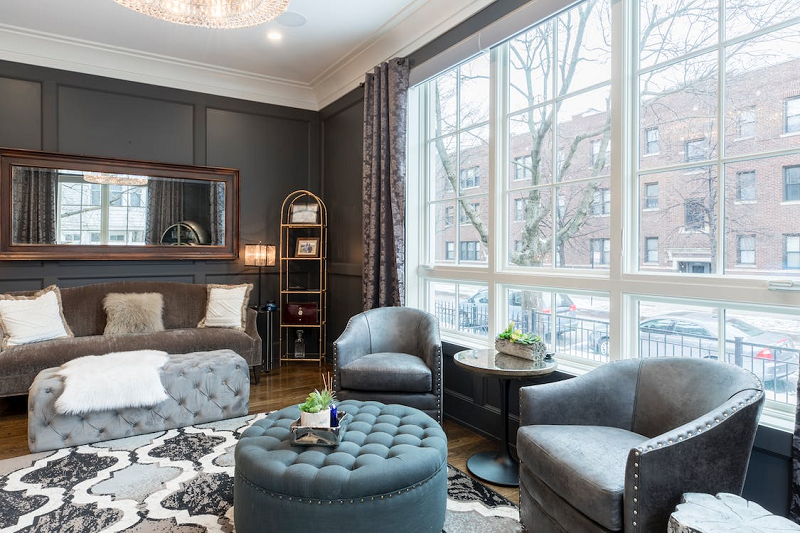
Small Space? 10 Ways To Make A Room Appear Bigger
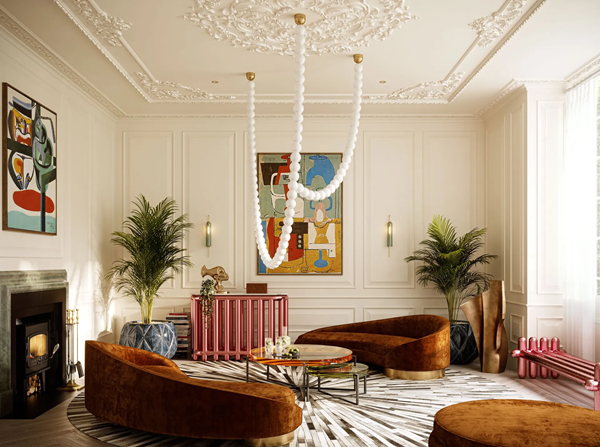
Make Your space Look Expensive
GET CAUGHT UP ON ALL THE INSPIRING DECOR TIPS:
18 Fresh Decorating Ideas To Update Your Fireplace
How to Make a Gallery Wall: The Complete Step-by-Step Guide (Even If You’ve Never Hung a Picture)


