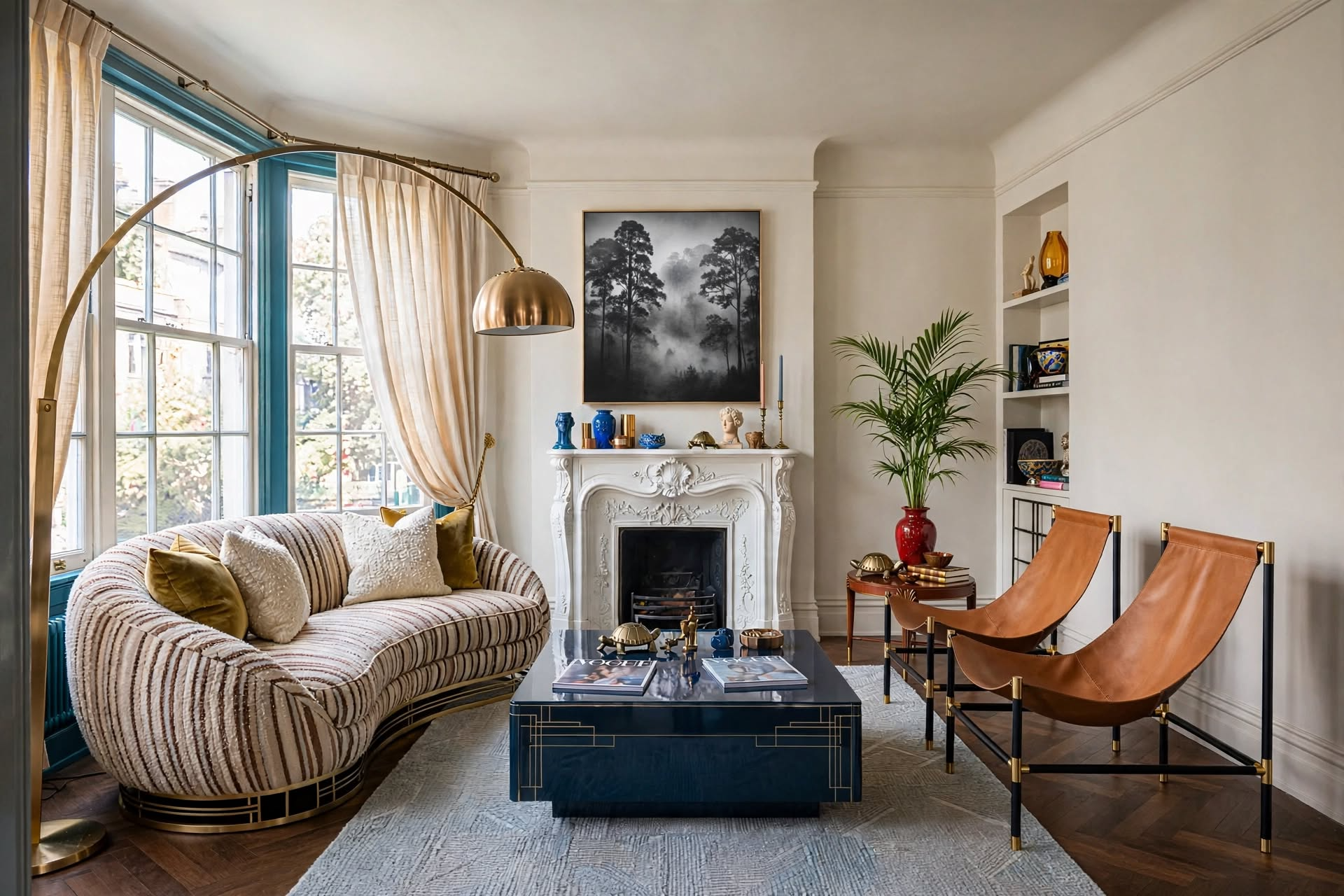
“Still rearranging the same room hoping it’ll click? It won’t — until you know this.”
The Designer’s SECRET Cheat Sheet121 designer-approved rules for every room in your home. The shortcut every well-styled home is built on.
Here’s why you shouldn’t use dark paint colors without a plan: deep shades soak up light, show scuffs, take extra coats to put on (and even more to cover later), and they can make a room you use in daylight feel gloomy. The same shades can also make a tiny powder room or a dining room look rich and expensive. What decides which one you get is the room, the light, and the finish, not the color.
Designer Resource The Decorator’s Black Book The sources, rules, and shortcuts designers use to finish a room. Get your copy →This guide walks through the real pros and cons of dark paint colors, what designers now say about dark walls in small rooms, and a quick three-question test so you can decide before you buy a single gallon.
Skip dark paint in rooms you use for daytime work or study, in high-traffic halls painted in flat finish, and anywhere you’d paint only the ceiling dark over white walls. Dark paint works best in rooms you use mostly at night (bedrooms, dining rooms, dens) and in small, low-light spaces like powder rooms. Check the color’s LRV, use warm undertones, plan for tinted primer and two to three coats, and match the sheen to how much the walls get touched.
Table of Contents
- Pros and Cons of Dark Paint Colors at a Glance
- The Light-Hours-Finish Test
- Why You Shouldn’t Use Dark Paint Colors: The Real Drawbacks
- Does Dark Paint Make a Room Look Smaller?
- LRV: The Number That Explains Dark Paint
- When Dark Paint Does Work (and How to Pull It Off)
- Renter-Friendly: The Dark Look Without Painting
- Exploring Alternatives to Dark Paint Colors
- Dark Paint Do’s and Don’ts
- Dark Paint Colors Cheat Sheet
- FAQs
Pros and Cons of Dark Paint Colors at a Glance
Dark walls aren’t good or bad on their own. Most of the drawbacks show up when the color lands in the wrong room or the wrong finish. Here’s the honest side-by-side.
| Factor | The Upside | The Downside |
|---|---|---|
| Mood | Cozy, wrapped-in feeling at night | Can feel heavy in rooms you use in daylight |
| Room size | Blurs corners when walls, trim, and ceiling match | Sharp contrast with white trim or ceiling draws the box around you |
| Art and furniture | Makes art, brass, and light wood pop | Dark furniture and fine details disappear into the wall |
| Wall flaws | A dark matte finish can disguise small patches | Any sheen on a dark color exaggerates dents and roller marks |
| Everyday cleaning | Hides grubby fingerprints better than white | Scrubbing dark matte can leave shiny or uneven patches |
| Painting day | One material, big transformation | Usually needs tinted primer plus two to three coats |
| Changing your mind | Easy to warm up with lighting and decor | Covering it later takes primer and extra coats |
| Lighting | Lamps and candles glow against it | You’ll need more lamps on to see the room clearly |
Light
How much light does the room get, and what’s the color’s LRV? Low light plus a very low LRV means you’ll live with lamps on.
Hours
When do you actually use the room? Evening rooms love dark walls. Daytime work rooms usually don’t.
Finish
How often do hands, bags, and furniture touch the walls? Traffic decides matte, washable matte, or eggshell.
Two “good” answers out of three: go dark. One or none: try a mid-tone or a dark accent instead.
Why You Shouldn’t Use Dark Paint Colors: The Real Drawbacks

Dark paint isn’t a mistake by default, but it is less forgiving than a light neutral. These are the drawbacks worth knowing before you commit.
The Psychology of Dark Paint Colors
Research on color and mood is mixed, and how a color makes you feel is personal. What’s consistent is that dark walls make a room feel enclosed and intimate. That’s lovely for winding down and less helpful when you need to focus. Interior designer Melanie Lissack found this out after painting her own office a near-black navy: she needed the main light and a desk lamp on every evening just to see the room, and she suggests saving dark rooms for relaxing rather than studying or creative work.
Maintenance Dilemmas With Dark Paint Colors
Dark walls hide grubby fingerprints, but they show other things. Scuffs from bags and chairs read as pale streaks, and dust and lint stand out on dark baseboards. Designer Jenna Sue points out that dark matte paint can show marks or uneven areas after scrubbing, so cleaning can leave a wall looking worse. Touch-ups are pickier too. Livingetc’s designers recommend keeping extra paint from the original batch, because a fresh mix of the same color can look slightly different on the wall.
More Prep, More Coats
Dark paint leaves less room for error. Bob Vila’s painting guide notes that dark shades usually need primer plus an extra coat to reach full color, and any slip-ups along the edges are easier to spot. Changing your mind later costs the same effort in reverse: getting back to a light color means priming over the dark and painting several coats.
Decorative Complications With Dark Paint Colors
Dark walls change how everything in front of them reads. A charcoal sofa against a charcoal wall turns into one dark shape, and fine trim details can fade away. Designers featured by Apartment Therapy suggest the opposite pairing: light furniture in a dark room tricks the eye into reading the space as bigger and brighter. Plan your furniture, rug, and art around contrast before you paint.
Does Dark Paint Make a Room Look Smaller?

Not automatically. The old rule says dark paint shrinks a room, but what actually makes a room feel boxed in is contrast. When dark walls meet bright white trim and a white ceiling, your eye traces every edge. When the walls, trim, and ceiling share one deep color, the corners blur and the room can feel larger.
This Old House explains that color drenching a room in a deep tone can make it feel bigger because there are no visual breaks. They warn against the reverse setup, a dark ceiling over white walls, which can feel like the ceiling is closing in. Bob Vila’s guide to changing a room’s shape with paint uses the same idea on purpose: painting one far wall dark makes a narrow room feel wider.
- Feels smaller: dark walls with stark white trim and ceiling, dark furniture on dark walls, one weak overhead light.
- Feels bigger or cozier: walls, trim, and ceiling in the same deep color, light furniture and rugs, several lamps at different heights.
In a small room, commit fully or not at all. A half-dark room (dark walls, white everything else) is the version that feels cramped.
LRV: The Number That Explains Dark Paint
LRV stands for Light Reflectance Value. It’s a score from 0 (black) to 100 (white) that tells you how much light a paint color bounces back into the room. For a sense of the range, Sherwin-Williams Tricorn Black sits at an LRV of 3, while High Reflective White sits at 93. Most brands print the LRV on the back of the paint chip or list it online.
A low-LRV wall absorbs most of the light that hits it. That’s why the same deep green can look rich at noon and almost black at 9 p.m. The number won’t tell you whether you’ll love a color, but it will tell you how much lighting help it needs.
| LRV Range | Reads As | Good Fit For |
|---|---|---|
| 0 to 10 | Near-black, very deep | Powder rooms, dining rooms, fully drenched dens |
| 10 to 25 | Deep and moody | Bedrooms, accent walls, cabinetry |
| 25 to 50 | Mid-tone | The safe middle ground for rooms used day and night |
| 50 and up | Light to very light | Daytime work rooms, rooms that need to bounce light |
These ranges are a practical rule of thumb, not an industry standard. Always test a large sample on your own wall.
Sheen nudges reflectance too. A higher gloss level reflects a bit more light than a flat finish in the same color, which is one reason a slight sheen can keep a dark room from reading as a black hole at night.
Not sure if moody walls even fit your style? Find out in two minutes.
Take the Style Quiz →When Dark Paint Does Work (and How to Pull It Off Without Making a Cave)
Here’s the part most “don’t do it” advice leaves out: some rooms are better dark. Designer Crystal Sinclair, quoted by Apartment Therapy, says a tucked-away room with little natural light is a good place to lean into a darker color instead of fighting it. Painting a dim room white won’t make it bright, it just makes it look gray.
Where Dark Paint Thrives

Powder Room
A small room you pass through for a few minutes at a time is the safest place to go fully dark. It reads as a jewel box, not a cave.
Color: inky green, deep plum, or warm charcoal
Light: sconces on both sides of the mirror

Dining Room
Dinner happens after dark, so the room only has to look good by lamp and candlelight, which is exactly where deep colors shine.
Color: navy, oxblood, or deep olive
Light: dimmable pendant plus a buffet lamp
Bedroom
A bedroom is mostly used for sleeping and winding down, so a dark, enveloping color supports what the room is for.
Color: warm charcoal or deep blue-green
Light: bedside lamps with warm bulbs

Evening Den or TV Room
A room built for movies and reading at night benefits from walls that cut glare. Warm wood keeps it from going flat.
Color: soft black, chocolate brown, or forest green
Light: floor lamp, table lamp, and picture light
Where Dark Paint Struggles
Daytime Office or Study
Rooms where you need to focus and see clearly in daylight usually work better in a mid-tone. Go dark on one wall behind the desk instead.
Dark Ceiling Over White Walls
The contrast makes the ceiling feel like it’s pressing down. Paint the walls and ceiling together, or keep the ceiling light.
Cool Darks in Dim Light
Icy blue-blacks and cool grays can feel cold and harsh in rooms with weak, cool daylight. Pick dark colors with warm undertones instead.
Busy Hallways in Flat Paint
Hands, bags, and strollers scuff dark flat paint fast. Use eggshell in halls and entryways, or keep the dark color on doors and trim.
Lighting Rules for Dark Walls
- 1Plan three layers of light
Combine overhead light, task lamps where you read or work, and at least one accent light like a picture light or sconce. One ceiling fixture alone leaves dark corners.
- 2Use warm bulbs
Warm white bulbs (around 2700K) make dark colors look rich. Cool daylight bulbs can turn deep greens and blues muddy or gray.
- 3Bounce light with mirrors and metal
A large mirror, brass hardware, glass lamp bases, and metallic frames catch lamplight and spread it across the room.
- 4Bring in light-toned pieces
Cream textiles, light wood, and pale rugs give the eye a place to rest and keep the room from feeling like one dark mass.
- 5Put lamps on dimmers
Dimmers let you keep the room bright for cleaning and moody for evenings with the same fixtures.
Choosing the Right Sheen for Dark Paint

Sheen is where most dark-paint regrets come from. Flat and matte finishes look velvety and soften wall flaws, but they’re harder to clean. Eggshell and satin wipe down better, but they show dents and roller marks more and are harder to touch up invisibly. Designer Joanne Day, quoted by color expert Maria Killam, warns that a dark dining room left flat can look black at night, while a little sheen reflects lamplight back into the room.
| Finish | Best For | Watch Out For |
|---|---|---|
| Flat / Matte | Bedrooms, dining rooms, powder rooms, ceilings | Scrubbing can leave shiny or uneven patches |
| Washable Matte | Living rooms and bedrooms that get some wear | Still not ideal for kid zones or busy halls |
| Eggshell | Hallways, entryways, family rooms | Shows dents more; touch-ups are harder to blend |
| Satin | Kitchens, bathrooms, kids’ rooms | Visible sheen highlights uneven walls |
| Semi-Gloss | Trim, doors, built-ins | Too shiny for most dark walls |
Sheen names aren’t standardized. One brand’s eggshell can be another brand’s low-lustre, so look at a sheen sample in the store before buying.
How to Paint Walls a Dark Color
- 1Test big samples, day and night
Paint a large swatch (or a sample board) on two different walls and check it in morning light and under your lamps at night before choosing.
- 2Fix the wall first
Fill holes, sand bumps, and wipe the walls clean. Dark paint makes every dent easier to see.
- 3Use a tinted primer
Ask the store to tint your primer toward the final color. It cuts down on coats and helps the color come out even.
- 4Plan for two to three coats
Let each coat dry fully (Bob Vila suggests two to four hours between coats), then check the walls in raking light for thin spots.
- 5Cut in carefully
Use good painter’s tape and a quality angled brush. Wobbly edges are much more visible with dark paint.
- 6Save leftover paint
Label and keep at least a quart from the same batch for touch-ups, so repairs match.
Renter-Friendly: The Dark Look Without Painting

If you rent, dark paint has one more drawback: you may have to cover it before you move out, and that means primer and multiple coats on your own time and dime. You can get most of the moody effect without touching the walls.
- Peel-and-stick wallpaper in a deep solid or a dark pattern on one wall.
- Removable wall panels in black or dark wood behind a bed or sofa.
- Floor-to-ceiling dark curtains hung high and wide, which act like a dark wall when closed.
- Large dark art or a dark rug to bring depth into a white rental.
- Ask first if you do want to paint, and get permission in writing so you know whether you’ll need to repaint.
Exploring Alternatives to Dark Paint Colors

If the Light-Hours-Finish Test came back mixed, you still have options that give you depth without the full commitment.
- A mid-tone wall color. Colors in roughly the 25 to 50 LRV range add warmth and depth but still reflect enough light for daytime.
- One dark accent wall. Choose the wall your eye lands on first, like behind a bed, sofa, or fireplace.
- Dark trim, doors, or built-ins. A black door or deep green bookcase gives you the drama in a small dose.
- Color drenching in a softer shade. Painting walls, trim, and ceiling in one muted color gives that wrapped-in look while keeping the room brighter.
- Dark furniture and textiles. A velvet sofa, a dark rug, or heavy curtains bring moodiness you can swap later.
Dark Paint Do’s and Don’ts
Do
- Check the LRV before you buy
- Choose warm undertones for dim rooms
- Paint trim and ceiling to match in small rooms
- Use tinted primer and budget for extra coats
- Add at least three light sources
- Keep leftover paint from the same batch
Don’t
- Pick a color from a tiny chip under store lights
- Paint only the ceiling dark over white walls
- Use flat paint in a busy hallway
- Pair dark walls with all-dark furniture
- Rely on a single ceiling light
- Paint a rental without permission
Dark Paint Colors Cheat Sheet
- ◆Powder room
- ◆Dining room
- ◆Bedroom or den
- ◆Daytime office
- ◆Busy hallway
- ◆Dark ceiling only
- ◆0–10 near-black
- ◆10–25 deep
- ◆25–50 mid-tone
- ◆Matte: low traffic
- ◆Eggshell: halls
- ◆Semi-gloss: trim
- ◆Three layers
- ◆Warm bulbs
- ◆Dimmers
- ◆Tinted primer
- ◆2–3 coats
- ◆Save a quart
Dark Paint Colors: Your Questions Answered
The main reasons you shouldn’t use dark paint colors without a plan are that they absorb light, need more coats and prep, show scuffs and scrubbing marks, and can make daytime-use rooms feel gloomy. In the right room, with good lighting and the right sheen, those drawbacks mostly disappear.
Not on its own. Strong contrast between dark walls and white trim or ceiling makes a room feel boxed in. Painting walls, trim, and ceiling the same deep color blurs the edges and can make a small room feel larger.
Yes, if it’s a room you use mostly in the evening or only briefly, like a powder room, dining room, or bedroom. Commit to the whole room, including trim, and add several warm light sources. For a small daytime workspace, a mid-tone is usually the better choice.
Matte or washable matte works for low-traffic rooms like bedrooms and dining rooms. Eggshell is better in hallways, entryways, and family rooms because it wipes clean more easily. Save semi-gloss for trim and doors.
Plan on a tinted primer plus two to three coats of paint, depending on the paint quality and the color underneath. Check the walls in different light before you put the paint away.
As a rule of thumb, colors under about 25 LRV read as dark, and colors under 10 read as near-black. Colors between about 25 and 50 are mid-tones that add depth while still reflecting a fair amount of light.
- 01Best Faux Fireplace Rental Friendly
- 029 Best Black Accent Wall Ideas
- 03How to Choose a Rental Apartment
- 04Fall Coffee Bar Setup: The Complete Designer Guide
- 059 Best Fall Front Porch Decor
- 066 Best Fall Wreaths for Every Door, Budget & Style
- 07Best Accent Chair for Small Spaces
- 08Cozy Small Bathroom Ideas That Feel Warm
Conclusion
The real answer to why you shouldn’t use dark paint colors is narrower than the old rule suggests. Dark walls struggle in rooms you need bright during the day, in busy halls painted flat, and anywhere the dark color fights a white ceiling and trim. They shine in powder rooms, dining rooms, bedrooms, and evening dens, especially when the whole room shares the color and the lighting is warm and layered.
Run your room through the Light-Hours-Finish Test, check the LRV, test a big sample day and night, and pick the sheen for how the walls get used. If the answers point the other way, a mid-tone, a dark accent wall, or dark trim will give you depth without the regret.
If you want the full formulas, spacing rules, and layout math from this guide (and every other room in your home) in one place, grab The Designer’s SECRET Cheat Sheet — it’s the shortcut version of everything a designer checks before calling a room finished.
Get the Cheat Sheet →And if you want more of this in your feed, come find us @thedecorholic on Instagram, Facebook, TikTok, and Pinterest for more room-by-room styling breakdowns like this one.

Stephanie writes The Decorholic’s styling guides, with a focus on small spaces, rentals, and practical design rules you can use right away.
About The Decorholic →CATCH THE LATEST IN HOME DECOR TRENDS:

Steal These 16 Expert-Approved Decorating Secrets

Accessorize a Small Living Room: 7 Genius Styling Secrets

How to Make a Small Room Appear Bigger

How to Make Your Home Look Expensive
GET CAUGHT UP ON ALL THE INSPIRING DECOR TIPS:

Best Fireplace Makeover Ideas

How to Make a Gallery Wall: The Complete Step-by-Step Guide (Even If You’ve Never Hung a Picture)