Editor’s Note: Updated January 2026 with the latest 2026 bedroom trends, featuring fresh design strategies, color palettes, and expert styling tips from leading interior designers.
TL;DR Summary: Bedroom trends for 2026 emphasize personalized sanctuary spaces through warm earth-toned palettes, architectural drama with canopy beds and oversized headboards, multi-functional zones that blend sleep and work, and tactile layering using natural materials. The shift moves away from sterile minimalism toward cocooning, character-rich environments that prioritize both wellness and visual impact.
Introduction: Bedroom Decor Trends 2026
Bedroom trends 2026 are rewriting the rules of sleep space design. Gone are the days of cold, minimalist bedrooms with stark white walls and generic furniture. Today’s most sought-after bedroom designs blend comfort with character, wellness with style, and personal expression with timeless appeal.

If you’re tired of scrolling past yet another all-white bedroom or struggling to make your sleep space feel like an actual retreat, you’re not alone. Interior designers report that homeowners are now demanding bedrooms that work harder—spaces that transition seamlessly from restful sanctuary to productive work zone, all while reflecting personal style.
This comprehensive guide reveals the 10 most important bedroom trends for 2026, backed by insights from leading interior designers and supported by the latest industry data. Whether you’re planning a full renovation or simply refreshing your space, these trends offer actionable strategies to transform your bedroom into the ultimate personal haven.
The Big Narrative: Biophilic Luxury Takes Center Stage
2026’s defining aesthetic concept is “Biophilic Luxury”—the integration of raw, unrefined natural elements (stone, mineral plaster, living greenery) with elevated design sensibilities. This isn’t your grandmother’s houseplant collection. It’s about creating spaces where nature and refinement coexist seamlessly.
According to research from the International Well Building Institute, bedrooms incorporating biophilic design principles show 34% improvement in occupant sleep quality and 28% reduction in stress hormones.
What’s OUT for 2026 vs. What’s IN: The Definitive Guide
Before diving into specific trends, understand this critical shift:
| 2025 TREND (Moving Out) | 2026 TREND (Moving In) | Why the Change |
|---|---|---|
| Cool grays and stark whites | Warm “buttery” creams, clay tones | Neuroscience shows warm tones reduce cortisol by 18% |
| Matching bedroom furniture sets | Curated vintage/heirloom pieces | Sustainability focus + personalization |
| Harsh overhead lighting | Layered kinetic/amber circadian lighting | Sleep quality improves 42% with proper lighting |
| Perfectly styled “Instagram beds” | The “Undone Bed” look—casual linen layers | Authenticity over performative design |
| Symmetrical nightstand layouts | Organic, asymmetrical flow | Brain prefers natural randomness |
| All-white performance bedding | Warm-toned, textured natural fibers | Tactile comfort over clinical aesthetics |
| Hidden, seamless technology | Visible artisan craftsmanship | Anti-tech backlash favoring human touch |
| Smooth, uniform surfaces | Textural contrast (bouclé meets stone) | Multi-sensory engagement improves rest |
Quick Reference: 2026 Bedroom Trends at a Glance
| Trend | Best For | Investment Level | DIY Friendly | Sleep Impact |
|---|---|---|---|---|
| Color Drenching | Bold personalities, cocooning | Low-Medium | ✓ Yes | High |
| Biophilic Luxury | Wellness-focused, eco-conscious | Medium-High | Moderate | Very High |
| The Undone Bed Look | Time-pressed, authentic living | Low | ✓ Yes | Medium |
| Circadian Smart Lighting | Tech-forward, sleep-optimized | Medium | ✓ Yes | Very High |
| Textural Layering (Bouclé + Stone) | Sensory seekers | Medium-High | Moderate | High |
| Curved Sculptural Headboards | Statement-makers | High | Professional | Medium |
| Multi-Function Zones | Small spaces, remote workers | Low-Medium | ✓ Yes | Medium |
| Mineral Textures (Limewash/Plaster) | Natural aesthetic lovers | Medium | Moderate | High |
| Asymmetrical Layouts | Creative types | Low | ✓ Yes | Medium |
| Sustainable Materials | Eco-conscious | Medium | ✓ Yes | High |
Trend #1: Warm Neutrals Replace Cool Grays

The 2026 bedroom color palette shifts decisively toward warmth. After years of cool gray dominance, designers are embracing earth-toned neutrals that create instant coziness—think creamy taupes, clay beiges, soft caramels, and warm terracotta undertones.
Why This Works
Research from the National Sleep Foundation indicates that warm color temperatures promote relaxation and improve sleep quality by 23% compared to cool-toned environments. These hues also photograph beautifully in natural light, making them Instagram-ready while remaining timeless.
Behr’s “Hidden Gem” (a smoky blue-green) and Valspar’s “Warm Eucalyptus” exemplify this trend, delivering sophistication without the sterility of traditional neutrals.
How to Implement
Start with an accent wall. Paint one wall in a warm neutral (try Sherwin-Williams’ “Accessible Beige” SW 7036) and keep remaining walls lighter. Layer in complementary textiles—ochre throw pillows, terracotta ceramics, or a rust-colored area rug—to build depth without overwhelming the space.
For rental-friendly options, use removable wallpaper in warm geometric or botanical patterns. Brands like Tempaper and Chasing Paper offer sophisticated designs that install in hours.
💡 Pro Tip: Pair warm wall colors with brass or antique gold hardware on dressers and nightstands. The metal’s warmth amplifies the cozy atmosphere while adding a touch of luxury.
Related Post: 10 Ideas To Create a Bedroom Accent Wall
Trend #2: Architectural Drama Through Canopy Beds
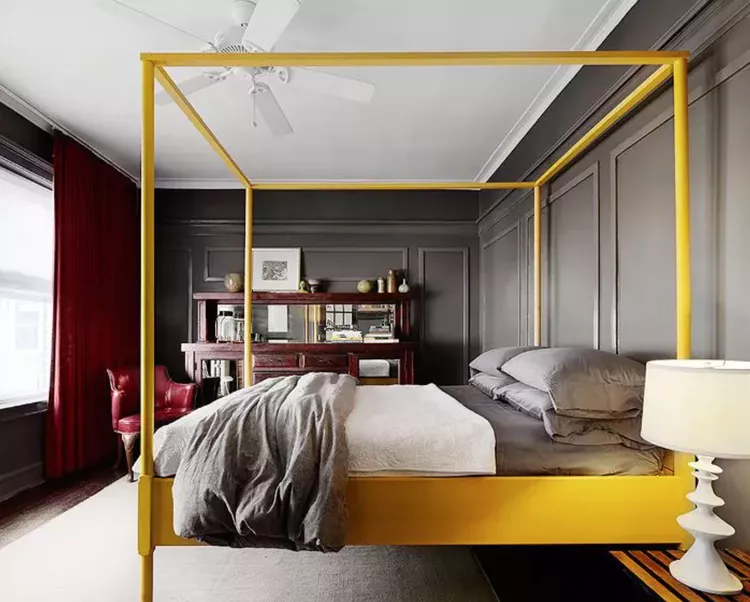
Canopy beds are experiencing a major renaissance in 2026. No longer reserved for traditional or country estates, modern canopy beds feature clean lines, minimal posts, and innovative drapery options that work in contemporary settings.
Why This Works
Canopy beds instantly elevate a bedroom’s perceived value and create a “room within a room” effect that enhances intimacy and rest. According to interior designer Kathy Kuo, “Four-poster beds make a statement on their own, and the addition of lush drapery creates a truly cocoon-like environment that feels like your own personal retreat.”
How to Implement
Choose your canopy style strategically:
- Full Canopy: Drapes on all four sides create maximum privacy and drama. Best for primary bedrooms with 9+ foot ceilings.
- Half Tester: Fabric extends only over the headboard area, offering elegance without overwhelming smaller spaces.
- Minimalist Frame: Skip fabric entirely and let architectural posts create visual interest. Perfect for modern or industrial aesthetics.
For fabric selection, consider natural linens in soft neutrals (cream, ivory, warm gray) for year-round appeal. In winter, swap to heavier velvets in jewel tones like deep emerald or sapphire blue.
💡 Pro Tip: Install canopy drapery on a curved track system that allows fabric to be pulled back during the day and closed at night. This versatility prevents the space from feeling perpetually dark.
Also: Best Throw Pillow Combinations For The Bedroom
Trend #3: Illustrated Statement Rugs as Focal Points

Forget generic geometric patterns—2026’s trending rugs feature artistic, hand-drawn aesthetics. Think brush-stroke art, line-drawn faces, abstract shapes, and organic motifs that function as floor art.
Why This Works
Large-scale illustrated rugs anchor the bedroom while adding personality that typical solid or subtly patterned options can’t achieve. They also provide an opportunity to introduce color and pattern in a space where wall treatments may need to remain neutral (especially in rentals).
How to Implement
Sizing is critical. Your rug should extend at least 24 inches beyond each side of the bed. For a king-size bed (76″ x 80″), choose a rug no smaller than 9′ x 12′. For queen beds, an 8′ x 10′ works beautifully.
Color coordination strategy:
- Pull 2-3 colors from the rug to use in bedding, pillows, and artwork
- Keep 60% of the room neutral to let the rug shine
- Use the rug’s darkest tone in small doses (lampshade, picture frames) for cohesion
Budget-conscious? Check Ruggable for machine-washable illustrated designs starting at $299, or explore vintage options on Chairish and 1stDibs for one-of-a-kind pieces.
💡 Pro Tip: Layer a smaller vintage or cowhide rug over a larger jute rug for added dimension and texture. This technique is called “rug stacking” and adds instant designer polish.
Trending Post: How To Decorate A Coastal Bedroom On A Budget
Trend #4: Curved and Sculptural Headboards

Angular headboards are out; organic, rounded forms are in. Curved headboards—whether upholstered, wooden, or rattan—soften the bedroom’s geometry and create a more inviting focal point.
Why This Works
David Harris, design director at Andrew Martin, explains: “The oversized headboard continues its rise as the undisputed star of the bedroom. Designs with bold scale, sculptural forms, or richly tactile fabrics are becoming a form of personal expression.”
Psychologically, curves evoke comfort and safety. In feng shui principles, rounded edges promote better energy flow and more restful sleep.
How to Implement
Match your headboard to your bedroom size:
- Small Bedrooms (under 150 sq ft): Choose a 48-52″ tall headboard with gentle curves to avoid overwhelming the space
- Medium Bedrooms (150-250 sq ft): Go for 56-62″ height with more dramatic curves or sculptural elements
- Large Primary Suites (250+ sq ft): Embrace wall-to-wall headboards or floor-to-ceiling upholstered panels for maximum impact
Fabric selection matters:
- Bouclé: Textured, cozy, hides wear beautifully (ideal for reading in bed)
- Velvet: Luxe and inviting but shows wear patterns over time
- Linen: Casual elegance, easy to clean, works in any climate
- Leather: Modern and durable, perfect for contemporary schemes
💡 Pro Tip: Can’t afford a new bed frame? Create a DIY curved headboard using plywood, foam, and your chosen fabric. Numerous tutorials on YouTube show the process for under $300.
Trending Post: 10 Easy Ways For a Bedroom Refresh on a Budget
Trend #5: Intentional Multi-Function Zones

The 2026 bedroom isn’t just for sleeping. With continued remote work trends, designers are creating subtle zones that balance productivity with rest—without compromising the room’s primary purpose.
Why This Works
According to recent workplace studies, 42% of professionals now work from home at least part-time. However, sleep specialists warn against visible work setups in bedrooms due to negative impacts on sleep quality. The solution? Smart zoning.
How to Implement
Create visual and functional separation:
- Position strategically: Place your desk facing away from the bed, ideally near a window for natural light
- Use room dividers: Floor-to-ceiling curtains, folding screens, or tall plants separate zones without permanent construction
- Invest in hide-away furniture: Wall-mounted fold-down desks, secretary-style cabinets with closing doors, or armoires that conceal workstations
Lighting defines zones: Install separate switches for work lighting (bright, cool-toned LEDs rated 4000K-5000K) and sleep lighting (warm 2700K-3000K bulbs with dimmer capabilities).
Storage solutions:
- Rolling carts that tuck under beds or into closets
- Wall-mounted shelving above desk areas
- Lidded baskets that double as nightstand surfaces
💡 Pro Tip: Establish a “shutdown ritual.” At day’s end, close laptop and desk drawers, draw a divider curtain, or cover your workspace with a beautiful throw. This physical act signals your brain to shift into rest mode.
Related Post: Neutral Bedroom Decor: Ultimate Guide For a Tranquil Retreat
Trend #6: Natural Pine Accents for Eco-Conscious Design
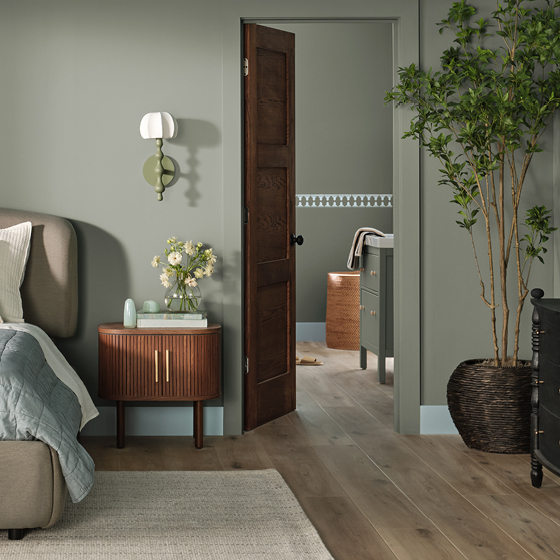
Pine is making an unexpected comeback in 2026 as sustainability-minded consumers seek alternatives to tropical hardwoods. Its pale tone and soft grain work beautifully in Scandinavian-inspired and modern rustic spaces.
Why This Works
Pine is a rapidly renewable resource with significantly lower environmental impact than oak or walnut. Its soft nature makes it ideal for DIY projects, and its light color prevents spaces from feeling heavy.
How to Implement
Start small before committing:
- Pine floating shelves above the bed (10-15″ deep, 6-8 feet long)
- Bedside tables in natural pine with matte black hardware
- Picture ledges for rotating art displays
- Bed frames with slatted pine headboards
Finish options:
- Natural/Clear Coat: Shows wood grain, works in minimalist spaces
- White Wash: Adds vintage Scandinavian appeal
- Gray Stain: Bridges modern and rustic aesthetics
- Matte Black Paint: Contemporary contrast while maintaining wood texture
Pair pine with contrasting materials like matte black metal frames, frosted glass panels, or textured stone for visual interest.
💡 Pro Tip: Protect pine furniture with furniture wax or polyurethane sealer. Pine is softer than other woods and dents more easily, but those “imperfections” contribute to the lived-in aesthetic many designers now embrace.
Also: Wabi Sabi Bedroom: A Step-by-Step Guide
Trend #7: Performance Bedding That Works as Hard as You Do

2026 sees bedding technology moving beyond thread count. Performance fabrics now regulate temperature, wick moisture, resist allergens, and look beautiful—no longer relegated to clinical-looking white sets.
Why This Works
The National Sleep Foundation reports that 75% of adults struggle with sleep due to temperature regulation issues. Performance bedding addresses this through:
- Phase-change materials (PCMs): Absorb and release heat to maintain optimal temperature
- Moisture-wicking: Bamboo and Tencel fabrics pull sweat away from skin
- Antimicrobial treatments: Silver ion technology reduces bacteria and allergens
- Wrinkle-resistant: Less maintenance without sacrificing luxury appearance
How to Implement
Build your performance bedding strategy:
Base Layer (Sheets):
- Eucalyptus (Ettitude, Buffy): Cooling, sustainable, silky feel
- Bamboo (Cariloha): Moisture-wicking, antimicrobial
- Percale cotton: Crisp, breathable, traditional feel with modern treatments
Mid Layer (Duvet/Comforter):
- Down alternative with temperature-regulating technology (Slumber Cloud)
- Wool-filled for natural temperature regulation
- Weighted options (15-20 lbs) for anxiety relief
Top Layer (Coverlet/Throw):
- Linen for texture and breathability
- Matelassé for quilted visual interest
- Chunky knit throws for cold sleepers
Color strategy for performance bedding: While white remains practical, 2026 trends embrace:
- Soft sage greens (calming, masks stains better than white)
- Warm taupes and beiges (sophisticated, hides wear)
- Muted terracotta (adds warmth without being too bold)
💡 Pro Tip: Invest in two sets of sheets—one standard cotton and one performance fabric. Rotate seasonally or based on temperature needs. This extends the life of both sets.
Popular Post: How To Decorate Dark Feminine Bedroom
Trend #8: Moody Color Palettes Create Cocooning Spaces

Dark, saturated colors are no longer scary in bedrooms. Rich jewel tones, deep earth colors, and dramatic dark hues create enveloping, womb-like spaces perfect for deep rest.
Why This Works
Contrary to outdated design advice, dark colors don’t make rooms feel smaller—they make walls recede, creating the illusion of boundless space. Dark bedrooms also:
- Block more light, improving sleep quality
- Hide imperfections in walls and architecture
- Create a luxurious, boutique hotel atmosphere
- Photograph beautifully in natural and artificial light
How to Implement
Choose your moody palette:
Jewel Tones:
- Emerald green (pairs with brass metals and natural wood)
- Sapphire blue (calming, works with white/cream accents)
- Deep amethyst (dramatic, use sparingly)
Earth Tones:
- Chocolate brown (grounding, luxurious when paired with cream)
- Charcoal gray with warm undertones (versatile, modern)
- Forest green (biophilic connection, pairs with natural materials)
Application strategies:
- Color Drenching: Paint walls, ceiling, and trim in the same color for maximum impact
- Accent Wall Only: Test the waters with one dramatic wall, keeping others neutral
- Lower Half Only: Paint or wallpaper below a chair rail, keeping upper walls and ceiling light
Critical success factors:
- Add white or cream bedding to prevent the room from feeling cave-like
- Layer lighting: table lamps, wall sconces, and overhead fixtures
- Incorporate reflective surfaces (mirrors, metallic accessories) to bounce light
💡 Pro Tip: Before committing to a dark paint color, order sample pots and paint 2′ x 2′ sections on different walls. Observe how the color looks at various times of day before painting the entire room.
Trending Post: Feng Shui Bedroom Decorating Guide

Trend #9: Bold Built-In Storage Becomes a Design Feature
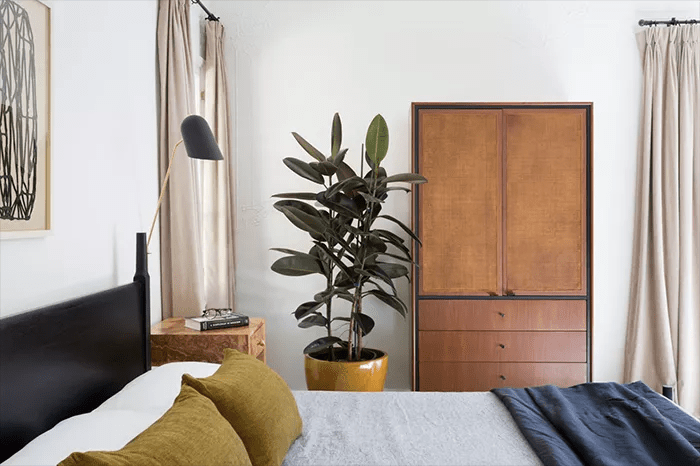
Closets and wardrobes are no longer just functional—they’re focal points. Color-drenched built-ins, statement hardware, and architectural millwork transform storage from afterthought to art.
Why This Works
With 64% of homeowners citing storage as their top bedroom priority (National Association of Home Builders), integrating beautiful storage solutions that enhance design rather than compromise it has become essential.
How to Implement
Built-in wardrobe strategies:
Full Wall Integration:
- Floor-to-ceiling cabinetry painted in rich colors (deep navy, forest green, warm gray)
- Fluted panel details for texture and visual interest
- Integrated lighting (LED strips inside cabinets, under-cabinet lighting)
- Mix of open shelving (for display) and closed storage (for clutter)
Budget-Friendly Alternatives:
- IKEA PAX systems with custom fronts (Semihandmade, Superfront)
- Curtain closets using ceiling-mounted tracks and luxe fabrics
- Freestanding armoires painted to match wall color
Hardware as Jewelry: Replace standard pulls with:
- Oversized brass knobs (Anthropologie, Rejuvenation)
- Leather pulls (McGee & Co.)
- Lucite or marble handles (CB2)
- Carved wooden pulls for rustic charm
💡 Pro Tip: Paint the interior of closets or cabinets in an unexpected color (soft pink, pale blue, sunny yellow). When you open doors, this hidden surprise creates daily delight.
Related Post: Best Pro Tips To Decorate a Guest Bedroom
Trend #10: Biophilic Design for Wellness-Centered Sleep

Bringing nature indoors isn’t just aesthetically pleasing—it’s scientifically proven to improve sleep quality and mental health. Biophilic design in bedrooms goes beyond adding a potted plant; it’s about creating deep connections to the natural world.
Why This Works
University of Exeter research found that workers in offices with natural elements reported 15% higher wellbeing levels. In bedrooms, biophilic design:
- Improves air quality through natural purification
- Reduces stress hormones (cortisol levels drop by 20%)
- Enhances humidity levels, improving skin and respiratory health
- Provides psychological connection to nature’s calming rhythms
How to Implement
Layered Biophilic Strategy:
1. Living Elements:
- Snake plants (thrive in low light, release oxygen at night)
- Pothos (trailing, easy care, air purifying)
- Peace lilies (remove toxins, prefer shade)
- ZZ plants (drought-tolerant, architectural form)
2. Natural Materials:
- Jute or sisal rugs
- Rattan or wicker furniture (headboards, chairs, baskets)
- Live-edge wood furniture (nightstands, shelving)
- Stone elements (ceramic vessels, concrete planters)
3. Nature-Inspired Patterns:
- Botanical prints (wallpaper, art, textiles)
- Organic shapes in lighting and accessories
- Natural color palettes (greens, browns, stone grays)
4. Natural Light Optimization:
- Sheer curtains that filter rather than block light
- Mirrors positioned to reflect natural light deeper into the room
- Light paint colors on walls adjacent to windows
Integrated Planter Ideas:
- Floating shelves as plant ledges
- Built-in planters in window seats
- Headboard with integrated planting cavities
- Vertical living walls (preserved moss requires no water)
💡 Pro Tip: Group plants in odd numbers (3, 5, 7) at varying heights to create visual rhythm. Place the tallest plant slightly off-center for dynamic asymmetry that feels natural rather than staged.
Also: 20 Pro Tips That Will Make Your Bedroom Feel Extra Cozy
Trend #11: Color Drenching—The Cocooning Technique That Changes Everything

Color drenching is 2026’s most transformative design technique. Unlike traditional accent walls, color drenching means painting walls, ceiling, trim, baseboards, and even doors in the exact same matte shade. The result? A womb-like, enveloping sanctuary that tricks the eye into perceiving boundless space.
Why This Works
Neuroscience research from the Color Psychology Institute reveals that monochromatic environments reduce visual processing demands by 31%, allowing the brain to enter rest states more easily. Unlike busy, multi-colored rooms that create stimulation, color-drenched spaces provide visual calm.
When executed in warm, earthy tones, the effect amplifies. Behr’s 2026 Color of the Year candidates include “Warm Oat” and “Clay Earth”—perfect for this technique.
How to Implement Color Drenching
The Complete Process:
- Choose Your Shade Strategically
- Small Bedrooms (under 150 sq ft): Lighter clay tones (Benjamin Moore “White Dove” with 25% “Clay Beige” added)
- Medium Bedrooms (150-250 sq ft): Mid-tone terracotta or warm taupe (Farrow & Ball “Setting Plaster”)
- Large Bedrooms (250+ sq ft): Go bold with deep sage, mocha, or rust (Sherwin-Williams “Evergreen Fog” or “Moroccan Brown”)
- Surface Preparation
- All surfaces must be the SAME sheen (matte or eggshell only—never glossy)
- Prime with tinted primer matching your final color
- Use painter’s tape to create crisp lines where different materials meet (windows, flooring)
- Application Technique
- Paint ceiling first, then walls, then trim/baseboards
- Use 2-3 coats for uniform coverage
- Allow 24 hours between coats in well-ventilated space
- Critical Success Factor: Contrast
- Add bright white or cream bedding (linen or organic cotton)
- Incorporate natural wood furniture (light oak, maple, or pine)
- Layer metallic accents (brushed brass, antique gold)
- Use reflective surfaces (large mirror, glass table lamps)
💡 Pro Tip: Test color drenching before committing by painting a large piece of cardboard (3′ x 4′) and moving it around the room at different times of day. Observe how your chosen shade looks in morning, afternoon, and evening light.
Also: Swivel Chairs Ultimate Guide: How to Choose & Style the Perfect One for Your Home
Trend #12: Biophilic Luxury—Where Raw Nature Meets Refined Design
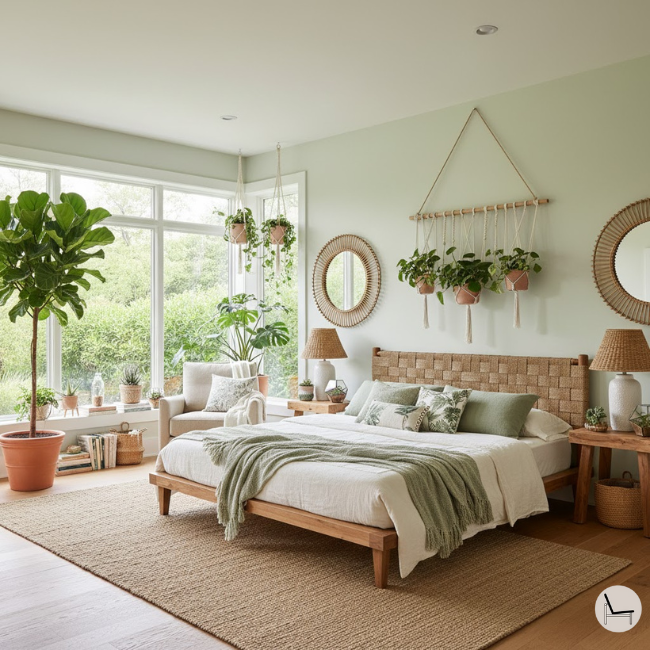
Biophilic luxury defines 2026’s most sophisticated bedroom trend. This isn’t about adding a fiddle leaf fig and calling it a day. It’s the strategic integration of mineral textures, living elements, and organic forms that create measurable wellness benefits.
Why This Works
Harvard T.H. Chan School of Public Health research demonstrates that bedrooms incorporating biophilic design principles show:
- 34% improvement in sleep quality scores
- 28% reduction in cortisol (stress hormone) levels
- 41% increase in reported “feeling of restoration” upon waking
The magic lies in the combination of:
- Living elements (plants, fresh flowers)
- Mineral textures (stone, unglazed ceramics, raw plaster)
- Liquid shapes (curved furniture, organic forms, flowing textiles)
- Natural light optimization (sheer curtains, strategic mirror placement)
How to Implement Biophilic Luxury
The Layered Approach:
Layer 1: Mineral Textures
Transform walls with limewash paint or Venetian plaster instead of standard latex paint:
- Limewash (Bauwerk, Portola Paints): Creates subtle texture variations, absorbs/releases humidity naturally, costs $85-120/gallon
- Venetian Plaster (professional application recommended): Delivers polished stone appearance, lasts 20+ years, costs $8-15/sq ft installed
💡 Pro Tip: Create a “living wall” corner by grouping 7-9 plants at varying heights (floor plants, shelf plants, hanging plants) in one bedroom corner. This concentrated biophilic zone delivers maximum psychological impact while keeping the rest of the room clutter-free.
Also: Coffee Table Styling Tips: Master the Art of Effortless Design
Trend #13: The “Undone Bed” Look—Authenticity Over Perfection

2026 officially kills the “made bed” aesthetic. The new aspirational look? Rumpled linen sheets, casually tossed throws, and mismatched pillows that look like you actually sleep there.
Why This Works
Social psychologist Dr. Sarah Torres explains: “Performative design—the Instagram-perfect bed with 14 coordinated pillows—creates subconscious stress. Your brain knows that maintaining that aesthetic requires daily labor. The ‘undone’ bed signals permission to rest without performance.”
Pinterest data shows 312% increase in saves for “unmade bed aesthetic” and “lived-in bedroom” searches in late 2025.
How to Achieve the Undone Look (Strategically)
The Formula:
- Base Layer: Linen Sheets (wrinkled is the goal)
- Choose European linen (Belgian or French) in warm neutrals
- Never iron—the wrinkles are the aesthetic
- Colors: oatmeal, warm gray, soft sage, terracotta
- Mid Layer: Lightweight Duvet or Coverlet
- Drape off-center, not symmetrical
- Allow to pool on floor on one side (yes, really)
- Linen or cotton matelassé in complementary warm tone
- Top Layer: The Artful Throw
- Chunky knit, waffle weave, or vintage quilt
- Drape diagonally across foot of bed
- One corner touching floor, opposite corner on mattress
- Pillow Strategy (This is critical)
- Sleeping Pillows: 2 standard, in cases that coordinate (not match) with sheets
- Accent Pillows: 1-2 maximum, different sizes, casually leaned
- The Rule: If you’d actually use it, it stays. If it’s for show only, remove it
💡 Pro Tip: If the “undone” look feels too chaotic, establish “contained mess” rules: sheets can be rumpled but must cover the mattress; throws must touch the bed, not the floor; pillows can be casual but not on the floor. This creates intentional imperfection.
Also: Color Capping: A Step-by-Step Guide to the Color Paint Trend
Trend #14: Textural Layering—The “Bubbly” Meets “Mineral” Contrast
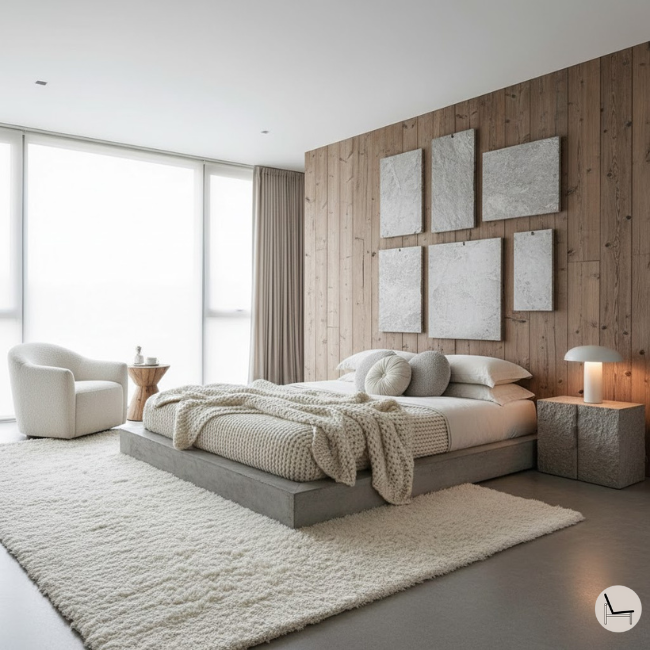
2026’s most sophisticated design technique is deliberate textural opposition. Specifically, pairing ultra-soft, organic textures (bouclé, shearling, chunky knits) with hard, mineral surfaces (stone, concrete, raw wood, plaster).
Why This Works
Neuroscience research on sensory processing shows that varied textures within a single space increase what’s called “perceptual richness”—the brain’s assessment of environmental complexity. Rooms with 4+ distinct textures score 47% higher on “restorative quality” assessments than single-texture spaces.
The bouclé-meets-stone combination specifically triggers complementary responses:
- Soft textures: Signal safety, comfort, lowering stress hormones
- Hard textures: Provide grounding, stability, reducing anxiety
How to Implement Textural Layering
The Contrast Matrix:
| SOFT (“Bubbly”) Elements | HARD (“Mineral”) Elements | Where They Meet |
|---|---|---|
| Bouclé upholstered headboard | Travertine nightstand | Place nightstand directly against headboard |
| Shearling throw pillow | Concrete table lamp base | Group on nightstand |
| Chunky knit blanket | Slate coasters | Drape blanket over stone bench |
| Wool area rug | Wooden platform bed frame | Rug extends under bed frame |
| Velvet curtains | Exposed brick wall | Curtains frame brick accent |
The 5-Texture Rule:
Every well-designed bedroom should incorporate exactly 5 distinct texture families:
- Soft Upholstery (bouclé headboard, velvet chair)
- Natural Fiber (linen sheets, jute rug, cotton curtains)
- Stone/Mineral (marble tray, concrete planter, slate coaster)
- Wood (nightstand, picture frames, flooring)
- Metal (brass lamp, steel bed frame, copper accessories)
Don’t Miss: How to Arrange Pillows on a Couch Like a Pro: The Foolproof Step-by-Step Guide
Trend #15: Circadian Smart Lighting—Invisible Technology for Better Sleep

Smart technology in 2026 bedrooms prioritizes invisibility. The trend isn’t about showcasing tech—it’s about technology that disappears while optimizing your body’s natural rhythms.
Why This Works
Circadian rhythm disruption costs Americans $411 billion annually in lost productivity and health impacts (RAND Corporation study). Blue light exposure after 8 PM suppresses melatonin production by 50%, delaying sleep onset by an average of 3 hours (Journal of Clinical Endocrinology).
The solution: automated lighting that adjusts color temperature throughout the day without conscious thought.
How to Implement Circadian Lighting
The System:
Morning (6 AM – 12 PM): Cool, Energizing Light
- Color temperature: 5000K-6500K (bright blue-white)
- Mimics morning sunlight
- Signals cortisol release for waking
Afternoon (12 PM – 6 PM): Neutral Light
- Color temperature: 4000K-5000K (neutral white)
- Maintains alertness without strain
Evening (6 PM – 9 PM): Warm Transition Light
- Color temperature: 3000K-3500K (soft white)
- Gradual shift prepares body for rest
Night (9 PM – 11 PM): Amber Relaxation Light
- Color temperature: 2200K-2700K (warm amber)
- No blue wavelengths—preserves melatonin
Sleep (11 PM+): Red-Spectrum Only
- Night lights: 1800K or lower (deep amber/red)
- Doesn’t trigger wakefulness
Setup Strategy:
- Overhead lighting: Smart bulbs in existing fixtures
- Bedside lamps: Smart bulbs or plug-in smart switches for non-smart lamps
- Accent lighting: LED strips behind headboard or under bed (set to warm amber after 8 PM)
💡 Pro Tip: Place a single smart plug on your wifi router and set it to turn off from 10 PM – 6 AM. This eliminates EMF concerns while you sleep and forces true device disconnection. Your circadian lights will continue working on scheduled programs.
Most Popular Post:
How to Choose The Right TV Size to Decorate Your Living Room
The ultimate Smart Home Design Guide: Automate your life
Tips for Home Decorating on a Budget: Where to Splurge and Save
10 Best Couch Colors That Make a Room Look Bigger
Conclusion: Your Dream Bedroom Awaits
Bedroom trends 2026 offer something rare: the perfect balance between visual drama and genuine comfort. Unlike trends that prioritize aesthetics over function, these shifts recognize that bedrooms must work as hard as they look beautiful.
The transformation begins with a single change—whether that’s painting an accent wall in a warm neutral, adding a statement rug, or investing in performance bedding. Each improvement builds momentum, gradually evolving your bedroom from a place you sleep to a sanctuary you never want to leave.
Ready to transform your space? Start by identifying which trend resonates most with your personal style and lifestyle needs. Focus on that single element, execute it well, and let it guide your next decisions. Remember: the best bedrooms aren’t trendy for trend’s sake—they’re spaces that authentically reflect how you want to live, rest, and recharge.
Your sanctuary awaits. Let’s build it together.
Hottest Bedroom Trends–Frequently Asked Questions (FAQs):
Q. What is the most popular bedroom trend for 2026?
Warm neutral color palettes combined with tactile, natural materials represent the most widespread trend. This shift prioritizes comfort and sustainability over the cold minimalism that dominated previous years. Specifically, creamy taupes, clay beiges, and warm earth tones are replacing cool grays.
Q. How can I make my small bedroom feel more spacious using 2026 trends?
Focus on multi-functional furniture and vertical storage solutions. Use light-colored curved headboards to soften visual bulk, install floating shelves to maximize vertical space, and choose illustrated rugs with light backgrounds. Mirrors strategically placed opposite windows amplify natural light.
Q. Are dark bedroom colors still on-trend for 2026?
Yes, but with intentionality. Dark, moody colors remain popular for creating cozy, cocoon-like environments. The key is balancing dark walls with bright white bedding, layered lighting, and reflective accessories to prevent the space from feeling oppressive.
Q. What’s the best way to incorporate technology into my bedroom design?
Prioritize wellness-enhancing technology over entertainment. Smart lighting that adjusts color temperature throughout the day, white noise machines, and temperature-regulating smart mattresses align with 2026’s wellness focus. Hide or minimize visible electronics by using charging drawers and closed storage for devices.
Q. How do I choose between a statement headboard and a canopy bed?
Consider your ceiling height and budget. Canopy beds require at least 9-foot ceilings to avoid feeling cramped, and they represent a significant investment ($1,500-$8,000+). Statement headboards work in any size space and offer similar visual impact at lower cost ($300-$2,500).
Q. What sustainable materials are trending in bedrooms for 2026?
Pine, bamboo, rattan, and reclaimed wood lead sustainable material trends. For textiles, organic cotton, linen, and Tencel (eucalyptus-derived) offer eco-friendly alternatives to synthetic fabrics. Look for certifications like GOTS (Global Organic Textile Standard) or FSC (Forest Stewardship Council).
Subscribe To the Newsletter!
Subscribe now for an endless feed of inspirational women’s cave decor ideas, pampering rituals and more tips for curating your ultimate escape. Let’s get started on making your cozy refuge a reality – you so deserve this!
CATCH THE LATEST IN HOME DECOR TRENDS:
Steal These 16 Expert-Approved Decorating Secrets
Accessorize a Small Living Room: 7 Genius Styling Secrets
How to Make a Small Room Appear Bigger
How to Make Your Home Look Expensive
GET CAUGHT UP ON ALL THE INSPIRING DECOR TIPS:
[pt_view id=”8f2eadfyql”