TL;DR Summary: Living room corner ideas transform neglected triangular spaces into high-impact design features through strategic furniture placement, vertical design elements, and purposeful lighting. The key is matching your corner’s specific dimensions and natural light conditions to one of five corner archetypes, then layering function with aesthetics.
Introduction: How to Decorate a Living Room Corner
You walk past it twenty times a day. That corner. The one that collects dust, awkward shadows, and maybe a forgotten houseplant that’s seen better days.
It’s not just empty space—it’s a daily reminder that your living room doesn’t quite work. You’ve scrolled through hundreds of impossibly perfect living rooms on Pinterest, wondering why your space can’t look that pulled-together. The truth? Those designers know something you don’t: corners aren’t afterthoughts. They’re opportunities.
Here’s what nobody tells you about living room corner ideas: that “dead space” you’re ignoring represents 15-20% of your room’s visual real estate. When left empty or poorly designed, it creates an unsettling imbalance your brain registers every time you enter the room. But when you transform it intentionally, that same corner becomes the room’s most conversation-worthy feature.
I’ve spent the last decade analyzing why some living rooms feel magazine-ready while others—despite expensive furniture—fall flat. The difference almost always comes down to how they handle corners. In this guide, you’ll discover exactly how to diagnose your corner’s specific problem, then execute a transformation that makes people ask if you hired a designer.
I. Why Your Living Room Corners Feel Wrong (The Psychology of Dead Space)
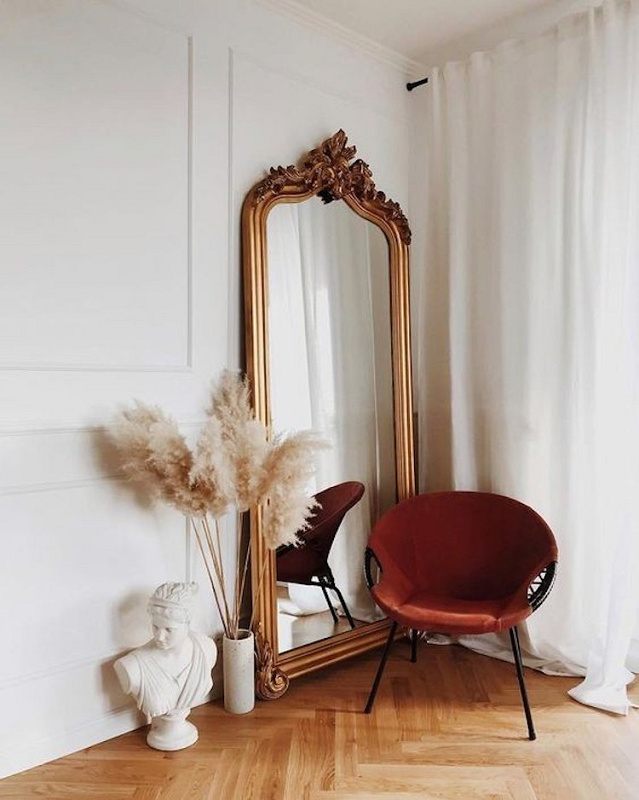
Living room corners feel awkward because they create “triangular dead zones” where human traffic naturally avoids, leaving a visual and functional void that disrupts your room’s spatial flow and makes the entire space feel unfinished.
Let me explain what’s actually happening. Your brain processes rooms through visual weight distribution—it instinctively seeks balance and purpose in every zone. Corners present a unique challenge: they’re the intersection of two walls (high visual priority) but exist outside natural walking paths (low functional priority). This creates cognitive dissonance.
Interior designer Sarah Sherman Samuel explains: “When I walk into a home and immediately sense something is ‘off,’ nine times out of ten, it’s because corners are either over-stuffed or completely abandoned. The eye has nowhere to rest” (House Beautiful, 2025).
Here’s the science: corners occupy roughly 16-20% of your wall space but receive only 5-8% of decorating attention in most homes. That massive imbalance makes your brain work overtime trying to “complete” the visual puzzle of your room.
The good news? Once you understand this principle, fixing it becomes systematic rather than mysterious.
💡 Pro Tip: Stand in your doorway and photograph your living room. Your corner problem will become immediately obvious in the photo—either gaping emptiness or visual clutter with no focal point.
You’ll Also Like: How to Choose and Style a Mid-Century Wall Unit That Transforms Your Living Space
II. The 5 Corner Archetypes: Diagnose Your Space First
Before implementing any living room corner ideas, you must identify which of five corner archetypes you’re working with, as each requires completely different design solutions based on size, light, and adjacent furniture.
Getting this wrong is why most corner makeovers fail. You can’t copy a solution from Pinterest if your corner type is fundamentally different. Here’s how to diagnose yours:
1. The Tight Squeeze (24-36 inches of clearance)
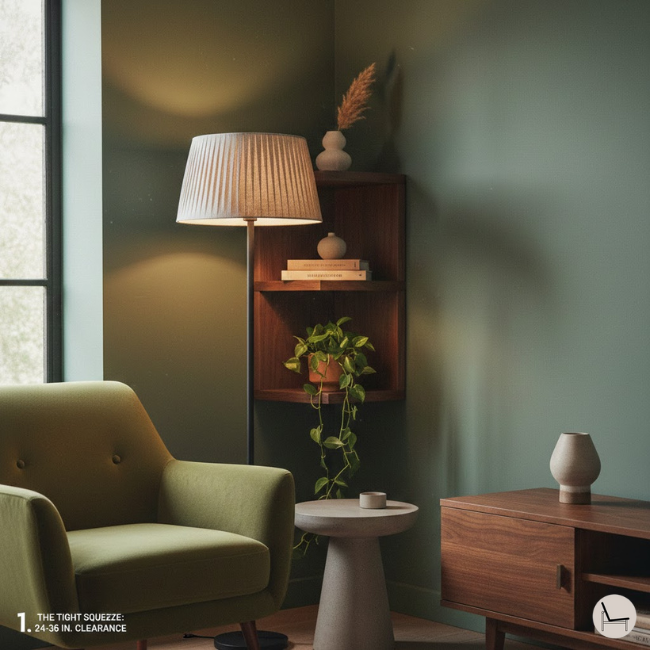
This corner sits between two pieces of furniture or in a narrow room configuration. It can’t accommodate full-size furniture but desperately needs visual interest.
Best Solutions:
- Tall, narrow floor lamps (10-12″ diameter base)
- Vertical plant stands with trailing greenery
- Corner-mounted floating shelves in ascending heights
- Sculptural objects on slim pedestals
2. The Open Canvas (48+ inches of clearance)
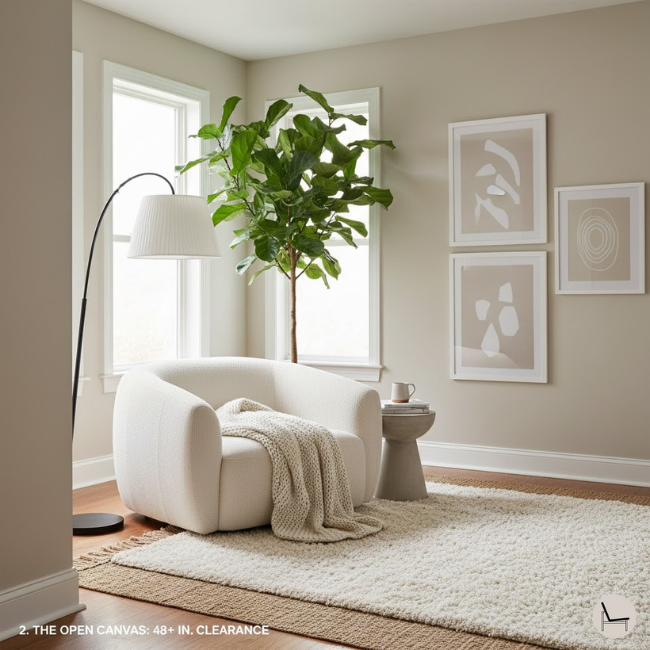
You’ve got room to breathe here—this corner can handle substantial furniture without crowding traffic flow.
Best Solutions:
- Accent chairs with ottoman
- Corner reading nooks with floor cushions
- Large fiddle leaf fig trees (6-8 feet tall)
- Bar cart stations or coffee stations
3. The Dark Hole (less than 30% natural light)
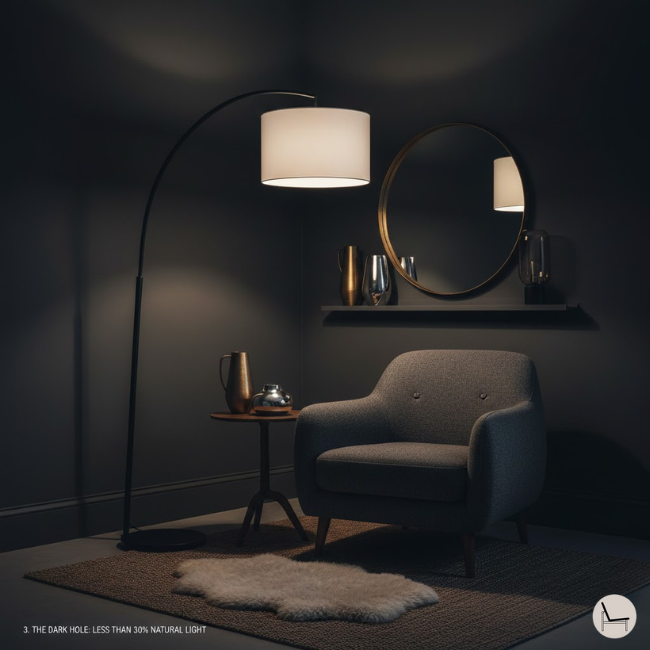
Located away from windows, this corner disappears visually, creating a black void that makes your room feel smaller.
Best Solutions:
- Arc floor lamps with 3-way bulbs (minimum 1500 lumens)
- Mirrors positioned to reflect existing light sources
- Light-colored furniture to bounce ambient light
- Metallic or glass materials for reflectivity
4. The Window Corner (adjacent to windows)
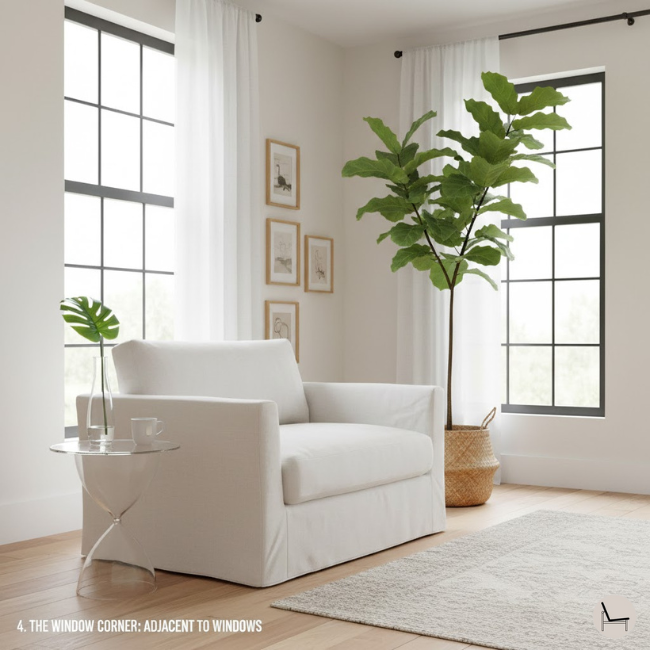
This premium real estate gets natural light but often becomes wasted because people fear blocking windows.
Best Solutions:
- Low-profile seating (reading chairs, poufs, floor cushions)
- Transparent furniture (acrylic chairs, glass side tables)
- Plant galleries that frame rather than block the view
- Window-height bookshelves that maximize the light
5. The Architectural Oddity (angled walls, support columns, weird juts)

Your corner has structural quirks that make standard furniture impossible.
Best Solutions:
- Custom-fit corner shelving units
- Modular furniture you can configure around obstacles
- Embrace it with dramatic lighting that makes the architecture a feature
- Corner gallery walls that work with the angles
💡 Pro Tip: Measure your corner’s clearance at both 36″ height (seated eye level) and 60″ height (standing eye level). Different measurements mean you need to layer your design vertically.
You’ll Also Like: How to Style a Console Table: The Designer’s 3-Step Formula That Actually Works
III. Furniture Solutions: The Exact Pieces That Transform Corners
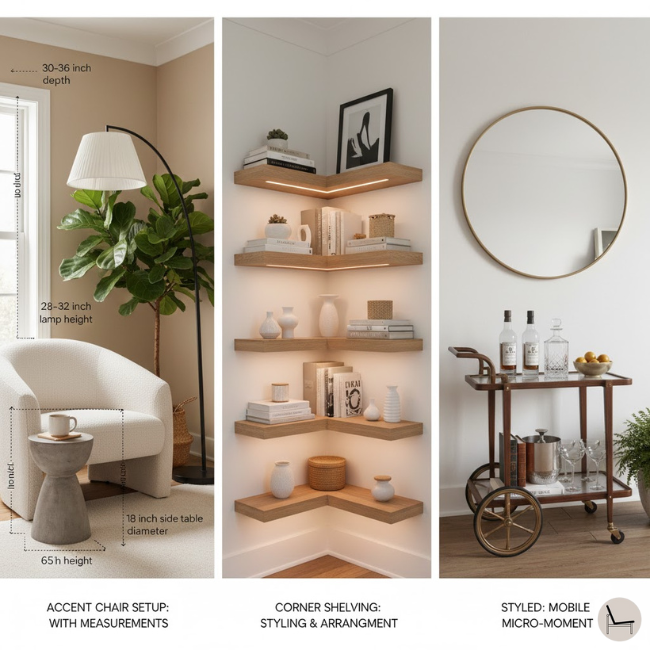
Strategic corner furniture creates instant functionality while establishing visual anchors that balance your room’s design, with accent chairs, corner shelving units, and bar carts ranking as the highest-impact, most versatile solutions for living room corners.
Let’s talk about what actually works—not vague Pinterest inspiration, but specific furniture strategies with real dimensions.
6. The Accent Chair Strategy
This is the gold standard for open canvas corners. Here’s why it works: an accent chair signals “intentional design” while creating an actual place to sit, read, or set down your coffee. The key is choosing one that contrasts with your sofa in either color, texture, or silhouette.
Critical specifications:
- Width: 28-32 inches maximum (wider blocks traffic flow)
- Depth: 30-36 inches to create cozy proportions
- Seat height: 17-19 inches for comfort
- Arm height: Should align or be slightly lower than window sills if near windows
Pair with a small side table (14-18″ diameter) positioned at arm’s reach. Add a floor lamp behind and slightly to the side—this creates the “triangular cluster” that professional designers use to establish visual weight.
Budget Intelligence:
- Save zone: The side table (Target, Amazon, Wayfair knock-offs work fine)
- Splurge zone: The chair itself—cheap chairs look cheap and wear poorly
7. Corner Shelving Units
For tight squeeze or architectural oddity corners, vertical shelving becomes your hero. The secret is using the corner’s natural “dead triangle” for storage while creating display space along the vertical edges.
Three configurations that work:
Ladder Shelves: Lean against the corner at a 75-degree angle, creating visual interest through asymmetry. Load bottom shelves with baskets (functional storage), middle shelves with books (horizontal + vertical for texture), top shelf with one statement piece.
Corner Bookcases: Look for units specifically designed for corners—they’re deeper (18-20″) and won’t create that “floating furniture” look. Fill only 70% of the shelf space; overcrowding kills the sophisticated vibe.
Floating Corner Shelves: Install 3-5 shelves in descending or ascending order. This works brilliantly in dark hole corners because you control the exact heights to catch any available light.
8. The Bar Cart Moment
This mobile solution works for renters and commitment-phobes. A well-styled bar cart creates a “micro-moment” in your corner—a tiny, purposeful vignette that feels curated.
Styling formula:
- Top shelf: 2-3 bottles + one decorative object
- Bottom shelf: Glassware, cocktail books, ice bucket
- Wheels: Keep it mobile so you can adjust for parties
You’ll Also Like: How to Style an Entryway Table: A Designer’s Step-by-Step Guide
IV. Vertical Design: Using Height to Multiply Your Impact
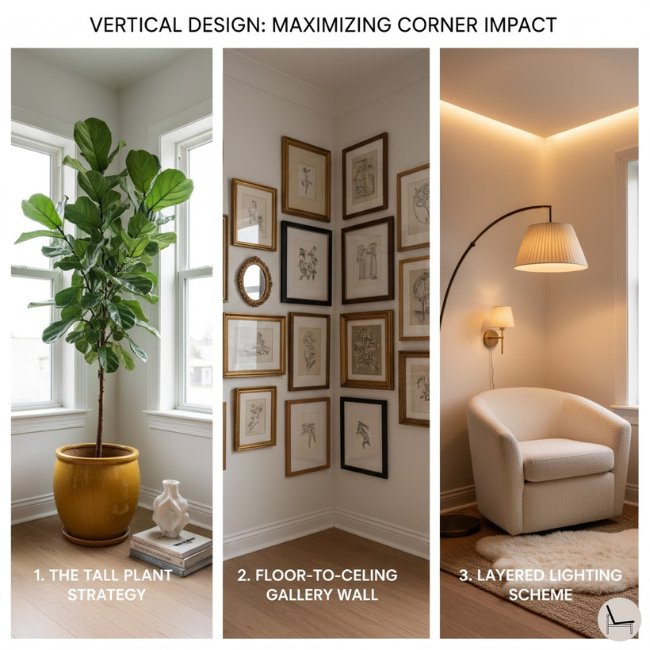
Vertical living room corner ideas leverage the often-ignored space between 4-8 feet high, where strategic placement of tall plants, floor-to-ceiling art, and stacked lighting creates dramatic visual impact without consuming floor space.
Most people make the same mistake: they think horizontally. They put a short plant on a short table and call it done. Meanwhile, the 5 feet of wall space above it screams “empty.”
Here’s the shift: corners demand vertical thinking because they lack width. When you build upward, you create a visual “exclamation point” that draws the eye deliberately to that area.
9. The Tall Plant Strategy
A 6-8 foot fiddle leaf fig, bird of paradise, or dracaena in a corner creates instant drama. The key is proportion:
- Room height 8-9 feet: Use 6-foot plant
- Room height 10-12 feet: Use 7-8 foot plant
- Never go shorter than 5 feet—it’ll look apologetic
Place the planter directly in the corner (not 12 inches out—that wastes your tight squeeze space). The foliage will naturally extend outward, softening the hard corner angle.
Maintenance reality check: If you lack a green thumb, invest in a quality faux plant ($150-300 range). A bad fake plant looks terrible, but a good one is indistinguishable from 5 feet away and eliminates the “brown leaf guilt.”
10. Floor-to-Ceiling Gallery Walls
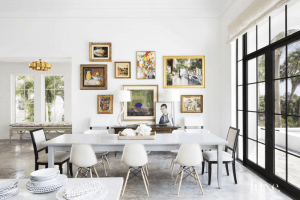
Transform your corner into an art moment by running frames from 12 inches off the floor to within 6 inches of the ceiling. This works exceptionally well for architectural oddity corners because you’re embracing the weird angles rather than fighting them.
Layout hack:
- Use 7-11 frames (odd numbers read as intentional)
- Keep frames within the same color family (all black, all natural wood, all white)
- Vary the frame sizes but maintain consistent matting
- Start with your largest frame at eye level (57 inches), then build up and down
11. Layered Lighting
Stack three light sources at different heights:
- Floor lamp: 65-72 inches tall with adjustable arm
- Wall sconce: Mounted at 60 inches (if you own) or battery-powered adhesive version
- String lights or LED strips: Run along the ceiling corner to create ambient glow
This creates depth and makes the corner “glow” at night—transforming it from dead space to the room’s most inviting zone.
💡 Pro Tip: Paint the corner walls (just those two intersecting walls) in a shade one degree darker than your main wall color. This creates subtle depth that makes vertical arrangements pop.
In Case You Missed It: The Interior Design Rule of Thirds: Your Step-by-Step Guide to Balanced, Designer-Approved Spaces (Even on a Budget)
V. Lighting Strategies That Fix Dark, Forgotten Corners
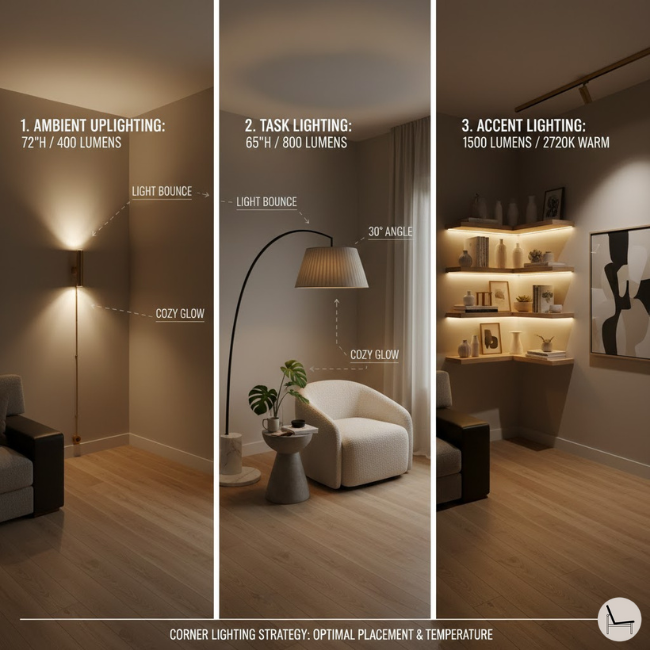
Corner lighting requires 1500-2000 lumens minimum to overcome natural shadow pooling, with layered light sources (ambient + task + accent) positioned to bounce light off adjacent walls rather than directly downward.
Let’s solve the dark hole corner problem with actual science. Corners naturally collect shadows because they’re farthest from central light fixtures and receive light from only narrow angles. You need to engineer light, not just add a lamp.
According to Amber Lewis, “Lighting is the most powerful tool you have for a corner. An overhead light is a utility; a corner lamp is a mood. If a corner doesn’t have its own dedicated light source, it doesn’t exist after 5:00 PM.”
12. The Arc Floor Lamp Technique
Arc lamps are corner miracle workers. Here’s why: the weighted base sits behind furniture while the arched shade extends outward, lighting the area without consuming floor space.
Critical specs:
- Minimum arc reach: 60 inches from base to center of shade
- Bulb position: Should hang 60-68 inches from floor (just above seated eye line)
- Shade direction: Angle toward the room’s center, not the corner walls
- Dimmer switch: Non-negotiable—you need light control for different times of day
The mistake everyone makes: They buy arc lamps that are too short or position them pointing into the corner. The light needs to wash across the adjacent walls to create ambient glow.
13. Wall-Mounted Uplighting
If you own your home, install a wall sconce 72 inches high in the corner, positioned to shine upward. The light bounces off the ceiling and diffuses downward, eliminating harsh shadows.
For renters: battery-powered LED puck lights with adhesive backing ($25 for 3-pack) achieve 70% of the same effect.
14. Color Temperature Matters
This is where most DIYers fail. You need warm white light (2700-3000K) in living room corners. Cool white (4000K+) makes corners feel clinical and unwelcoming.
Layer your light temperatures:
- Ambient corner lamp: 2700K (warm, inviting)
- Task light (if reading nook): 3000K (functional but still warm)
- Accent lighting (art or plant spotlight): 2700K (dramatic)
Designer Emily Henderson notes: “I see people invest in beautiful corner furniture, then ruin it with a $15 lamp using a blue-tone LED. The color temperature of your bulbs affects the entire room’s mood—get this wrong and nothing else matters” (Style by Emily Henderson, 2025).
You’ll Like This Popular Post: Modern Organic Interior Design: The Ultimate Guide
VI. Style-Specific Corner Ideas (Copy These Exact Formulas)
Different design styles require distinct approaches to living room corners, with modern styles favoring sculptural simplicity, traditional styles emphasizing symmetry and fabric layers, and bohemian styles celebrating eclectic vertical arrangements.
Stop trying to force Pinterest ideas into your actual style. Here are plug-and-play formulas for the five most popular aesthetics:
15. Modern/Minimalist Corners
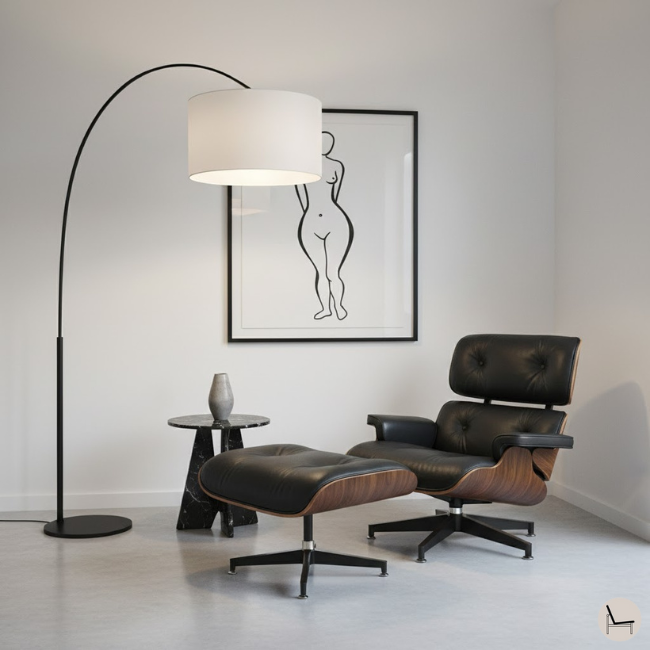
Formula: One statement piece + negative space + sculptural lighting
Exact setup:
- Eames lounge chair replica ($800-1200) OR
- Sculptural floor lamp (Arco-style, $200-500) + concrete pedestal side table ($150)
- Color palette: Black, white, natural wood only
- Add nothing else—restraint is the point
Why it works: Modern design celebrates the object itself, so your corner becomes a mini-gallery showcasing one perfect thing.
16. Bohemian/Eclectic Corners
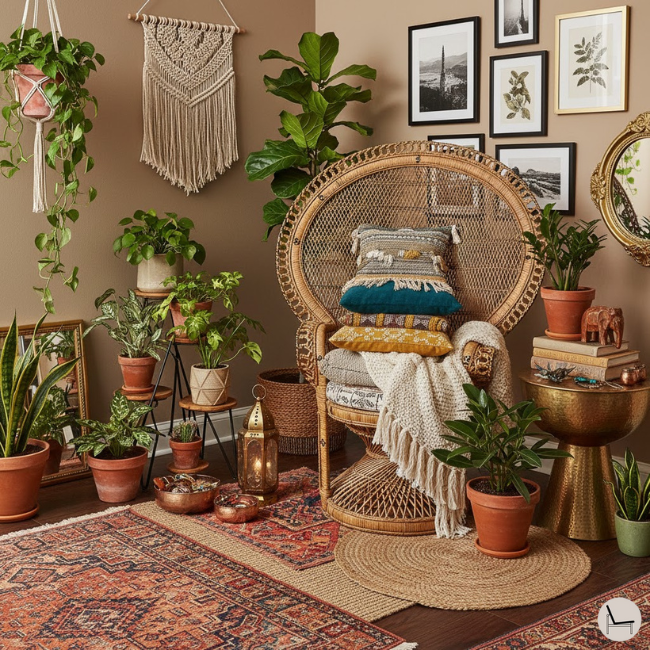
Formula: Layered textiles + plants + warm metals + collected objects
Exact setup:
- Rattan peacock chair ($300-600) with layered throw pillows
- Macramé wall hanging above (fills vertical space)
- 3-4 plants at varying heights (floor, table, hanging)
- Woven basket for blanket storage
Why it works: Boho thrives on “organized chaos”—your corner becomes a collected vignette that feels traveled and personal.
17. Traditional/Classic Corners
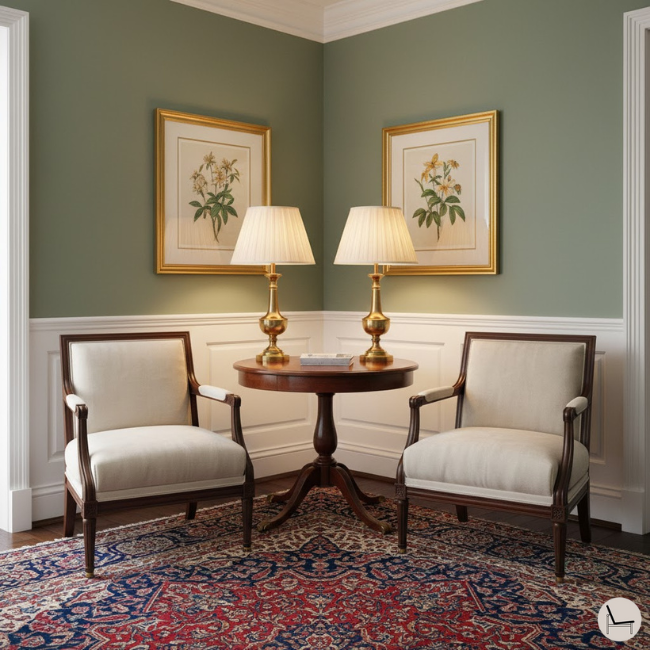
Formula: Symmetry + wood furniture + table lamps + fabric luxury
Exact setup:
- Bergère chair in linen or velvet ($600-1200)
- Round pedestal side table in dark wood
- Traditional table lamp with fabric shade (not floor lamp)
- Small framed art above at 12 inches above chair back
Why it works: Traditional design demands balance and established hierarchy—your corner follows parlor room rules.
18. Scandinavian/Japandi Corners
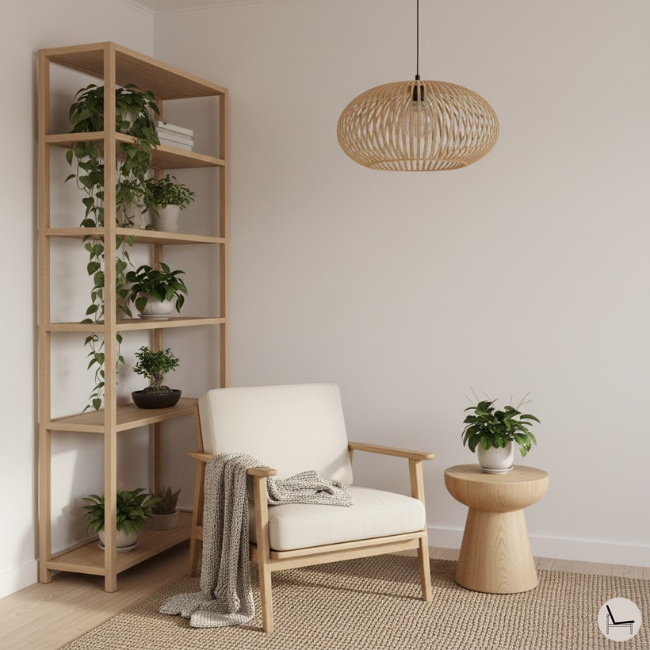
Formula: Natural materials + function + light wood + plants
Exact setup:
- Light oak or birch ladder shelf (5-6 feet tall, $150-250)
- Ceramic planters in white/gray (3-4 plants)
- Minimal art (line drawings, abstract prints)
- Paper or linen pendant shade if adding lighting
Why it works: Scandi design prizes function disguised as beauty—your corner shelf serves practical storage while looking effortless.
19. Coastal/Airy Corners
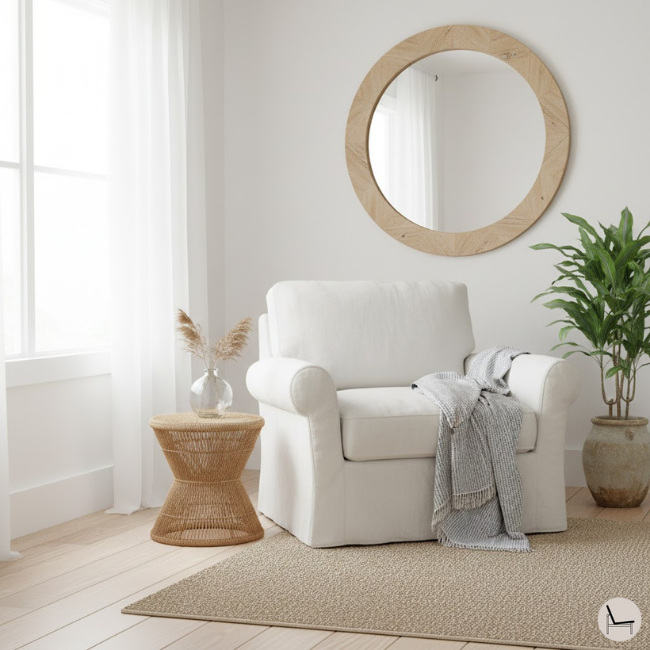
Formula: White + natural textures + reflective surfaces + breezy textiles
Exact setup:
- White slipcovered chair OR white-washed wood chair
- Glass or lucite side table (maintains airiness)
- Large mirror leaning against wall (24×36″ minimum)
- Bleached driftwood or coral in glass hurricane
Why it works: Coastal design manipulates light—your corner reflects and bounces light rather than absorbing it.
💡 Pro Tip: Take your favorite room from Instagram and identify just the corner—then replicate that exact corner in your space. Start with corners, not whole rooms.
In Case You Missed It: How to Arrange Pillows on a Couch Like a Pro: The Foolproof Step-by-Step Guide
IX. The Renter’s Guide to Non-Permanent Corner Solutions
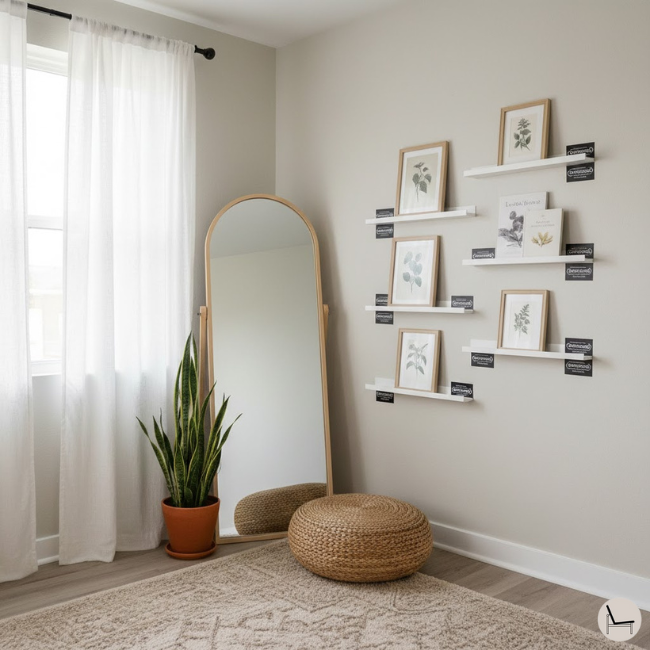
Renters can transform living room corners without damaging walls by using freestanding furniture, tension-mounted solutions, and adhesive products specifically designed for temporary installation that leave no marks.
You don’t own your walls, but you can still create corners that rival permanent installations. Here’s how:
20. Command Strip Strategy
Heavy-duty Command strips (rated for 12-16 lbs) can hold floating shelves, mirrors, and lightweight art. The key is using multiple strips and distributing weight correctly.
What you can hang safely:
- Floating corner shelves (load maximum 8 lbs)
- Lightweight mirrors (maximum 24×36 inches)
- Gallery walls of smaller frames (6×8″ or 8×10″)
What to avoid:
- Heavy wooden shelves
- Large mirrors over 15 lbs
- Anything that requires drilling into studs
21. Tension Rod Solutions
Place a tension rod 8-12 inches from the ceiling in your corner, then hang:
- Curtains to create a cozy reading nook
- Macramé or tapestries for boho corners
- String lights for ambient lighting
- Hanging plants at varying heights
22. Leaning Furniture Philosophy
Large mirrors, ladder shelves, and art can lean against walls rather than hanging. This works brilliantly for renters because:
- Zero wall damage
- Easily movable for cleaning or rearranging
- Creates casual, lived-in aesthetic
- Simple to take when you move
Safety note: Use museum putty or furniture anchors (removable) to prevent leaning items from sliding or tipping.
23. “Backdrop” Technique
Can’t paint? Create a color backdrop using:
- Removable wallpaper (one corner wall only)
- Large fabric tapestry hung with tension rod
- Peel-and-stick tiles for texture (especially good for dark corners)
This transforms the corner visually without permanent changes.
You’ll Also Like: Coffee Table Styling Tips: Master the Art of Effortless Design
VII. Budget Breakdown: Where to Splurge vs. Save

| Budget Tier | Splurge Here | Save Here | Total Investment | Expected Impact |
| Budget Starter | Quality floor lamp ($120-180) | Wayfair/Amazon side table ($40-80), faux plant ($50-80) | $210-340 | Transforms dark corners into functional spaces |
| Mid-Range Refresh | Accent chair ($400-700) | Amazon decorative accessories ($30-60), DIY art ($20-40) | $450-800 | Creates magazine-worthy focal point |
| Investment Transformation | Custom corner shelving ($800-1200) OR designer chair | Professional styling service ($150-300 for consultation) | $950-1500 | Achieves professional designer look |
The Splurge-Save Philosophy:
Always splurge on:
- Seating: Cheap chairs look cheap and feel uncomfortable—this is your 10-year investment
- Lighting fixtures: The bones of your design; good lamps elevate everything around them
- Large plants (if real): Healthy, established plants cost more but the visual impact justifies it
Always save on:
- Side tables and pedestals: These are supporting actors; IKEA and Target versions work perfectly
- Decorative objects: Thrift stores, HomeGoods, and Amazon offer identical “styled” objects for 1/3 the boutique price
- Textiles: Throw pillows and blankets from budget retailers photograph identically to luxury versions
The $300 Corner Challenge: Here’s proof you don’t need $2,000 to transform a corner:
- Arc floor lamp: $120 (Target Project 62 line)
- Large faux plant: $80 (Nearly Natural brand on Amazon)
- Small side table: $50 (IKEA LACK or Wayfair)
- Decorative styling objects: $50 (books, vase, small art from thrift stores)
Total: $300 | Impact: 90% of what a designer would achieve
You’ll Also Like: Swivel Chairs Ultimate Guide: How to Choose & Style the Perfect One for Your Home
VIII. Common Corner Mistakes (And How to Avoid Them)
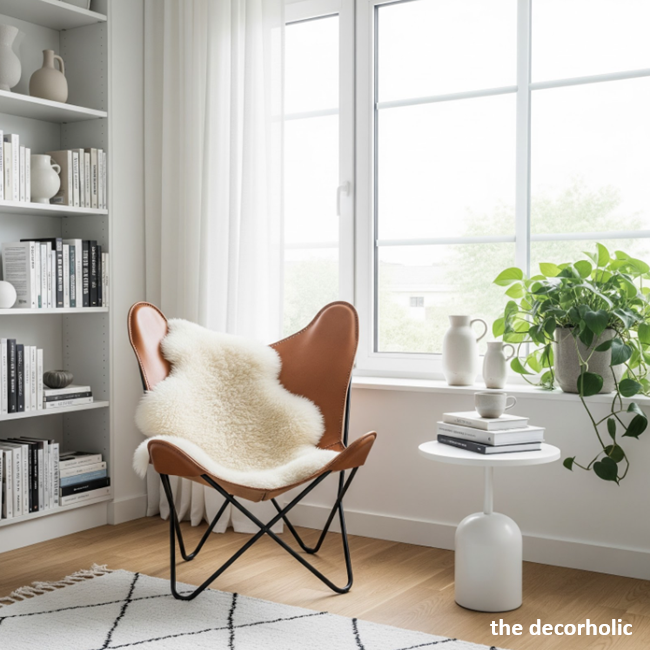
The most common living room corner mistakes include furniture scale errors, inadequate lighting, and treating corners as storage dumps rather than designed spaces—each of which can be fixed with specific measurement rules and intentional planning.
I’ve analyzed hundreds of “before” corners in design consultations. These five mistakes appear in 80% of failed corner attempts:
Mistake #1: The Floating Furniture Phenomenon
What it looks like: A chair or plant sitting 18-24 inches away from the corner, creating awkward empty space behind it.
Why it happens: People fear their furniture will look “pushed into the corner” so they pull it out. This creates two problems: wasted space AND the furniture looks unanchored.
The fix: Push furniture within 4-8 inches of the corner walls. Use a large plant, floor lamp, or art behind/beside it to “fill in” the corner wedge. This creates the anchored look while still using the corner’s depth.
Mistake #2: Scale Disasters
What it looks like: A tiny 4-foot ladder shelf in a room with 10-foot ceilings, or a massive armchair in a tight squeeze corner.
Why it happens: People shop online without measuring or visualizing actual proportions in their space.
The fix: Use the two-thirds rule: Your corner element should occupy roughly two-thirds of the vertical space in standard 8-foot ceiling rooms. For a tight squeeze corner (36″ width), nothing wider than 24 inches. For open canvas corners (60″+ width), your main piece should be 30-42 inches wide.
According to designer Nate Burkes, “The biggest mistake people make with corners is scale. They put a tiny plant in a big corner or a massive chair in a small one. Your furniture should feel like it was invited to the party, not like it’s being punished by being sent to the corner.”
Mistake #3: The “One Sad Plant” Syndrome
What it looks like: A single plant (usually struggling) on a small table, with 5 feet of empty wall above it.
Why it happens: People treat corners as an afterthought—they add “something” to fill space rather than designing intentionally.
The fix: Layer three elements minimum: a plant + a lamp OR a plant + art + a decorative object. Give the eye multiple places to land.
Mistake #4: Ignoring Sight Lines
What it looks like: A beautiful corner setup that you can’t actually see from where you sit or enter the room.
Why it happens: People design corners while standing in them, not from the room’s primary views.
The fix: Before buying anything, sit on your sofa and in your main seating areas. Take photos from these angles. Your corner needs to look good from the perspectives you actually use daily—not just when standing directly in front of it.
Mistake #5: Overhead Lighting Only
What it looks like: A gorgeous corner chair that becomes unusable after sunset because the overhead light casts shadows.
Why it happens: People assume room lighting is enough; they don’t add dedicated corner illumination.
The fix: Every functional corner (reading nooks, bar carts, plant displays) needs its own light source with a minimum 800 lumens for task areas, 400 lumens for ambient displays.
💡 Pro Tip: Before committing to furniture, cut cardboard to the exact dimensions and place it in your corner for 24 hours. You’ll immediately see if the scale works or if it blocks traffic flow.
Most Popular Post:
Interior Design Style Quiz
Timeless Paint Colors That Never Go Out of Style
Create Your Perfect Ergonomic Home Office: A Complete Guide
Must-Have Accessories for Guys: The Secret to a Stylish Space
Modular Sofas for Small Spaces: Brilliant Solutions for Compact Living

X. Transform Your Corner This Weekend
Your living room corner is staring at you right now. It’s either a missed opportunity or a space that quietly stresses you out every time you walk past it. But here’s what you now know that most homeowners don’t: corners aren’t design afterthoughts—they’re high-impact leverage points that transform your entire room’s balance and function.
The gap between your current corner and your dream corner isn’t talent or budget—it’s decision-making. You’ve got the framework: identify your corner archetype, choose your anchor piece, add vertical elements, layer your lighting, and style with intention.
Joanna Gaines says, “The most beautiful corners are the ones that feel collected over time. Don’t just buy a ‘corner set.’ Find a vintage pedestal, a meaningful book, or an inherited chair. It’s those layers that make a house feel like a home.”
The stakes are real: Every day you wait is another day living in a space that doesn’t reflect your potential. That’s not dramatic—it’s the psychological weight of unfinished spaces that subtly drains your energy. Your home should restore you, not remind you of incomplete projects.
Your Next Step:
- Measure your corner right now (width at 36″ and 60″ height, distance to nearest furniture)
- Identify your archetype (tight squeeze, open canvas, dark hole, window, or architectural oddity)
- Choose ONE solution from this guide that matches your space and budget
- Set a 48-hour deadline to order or source your anchor piece
Start with lighting if you’re overwhelmed—a quality floor lamp ($120-200) transforms any corner immediately and works in your next home too. This is the lowest-risk, highest-impact first move.
Living Room Corner Ideas-Frequently Asked Questions
Q: What should I put in an empty corner of my living room?
A: The best solution depends on your corner type and lifestyle needs. For open corners, an accent chair with a floor lamp creates an instant reading nook. For a tight corner, a tall plant (6-7 feet) or vertical shelving maximizes space without crowding. For dark corners, an arc floor lamp with a small table transforms the space. Always measure your clearance first (minimum 24 inches for walkability) and choose solutions that add both visual interest and function.
Q: How do you make a corner cozy?
A: Cozy corners require three elements: soft textures, warm lighting, and enclosure. Add a comfortable chair with throw pillows and a chunky blanket, position a floor lamp for warm ambient light (2700K bulbs), and create a sense of enclosure using a tall plant, curtain, or bookshelf that defines the space without blocking it. The key is making the corner feel intentionally carved out as a retreat, not just decorated.
Q: How much does it cost to decorate a living room corner?
A: Budget-friendly corner transformations start at $200-300 (quality floor lamp $120, faux plant $80, styling accessories $50-100). Mid-range corners cost $450-800 (accent chair $400-600, side table $80-150, lamp and accessories $100-150). High-end transformations run $1,000-1,500+ (designer furniture, custom shelving, or built-ins). The most impactful investment is always quality lighting and a substantial anchor piece (chair or shelving).
Q: Should furniture be pushed into corners or pulled away?
A: Furniture should sit 4-8 inches from corner walls, not flush against them or floating far away. This positioning allows you to use the triangular corner space behind for plants, floor lamps, or art while keeping the main piece anchored. Floating furniture 18+ inches from corners creates unusable dead space and makes rooms feel unfinished. The goal is intentional placement that respects traffic flow (minimum 30 inches walkway) while maximizing the corner’s visual impact.
Q: What is the best lighting for a dark corner?
A: Dark corners require 1,500-2,000 lumens minimum and layered light sources. The most effective solution is an arc floor lamp (60+ inch reach) with a warm white LED bulb (2700-3000K), paired with either wall-mounted uplighting or a table lamp. Position lights to bounce off adjacent walls rather than pointing directly into the corner—this diffuses light and eliminates harsh shadows. For renters, battery-powered LED puck lights with adhesive backing provide effective supplemental lighting without electrical work.
Q: How do you decorate awkward corners?
A: Awkward corners (angled walls, support columns, weird dimensions) work best when you embrace rather than fight the architecture. Use the angle to your advantage with corner-specific furniture like wedge shelving or curved chairs that fit unusual spaces. For columns, wrap them with floor-to-ceiling open shelving or use them as anchors for gallery walls. If the space is too small for furniture, make it a vertical plant gallery or install floating shelves in an ascending pattern that turns the awkwardness into a design feature.
Subscribe To the Newsletter!
Subscribe now for an endless feed of inspirational women’s cave decor ideas, pampering rituals, and more tips for curating your ultimate escape. Let’s start making your cozy refuge a reality – you so deserve this!
CATCH THE LATEST IN HOME DECOR TRENDS:
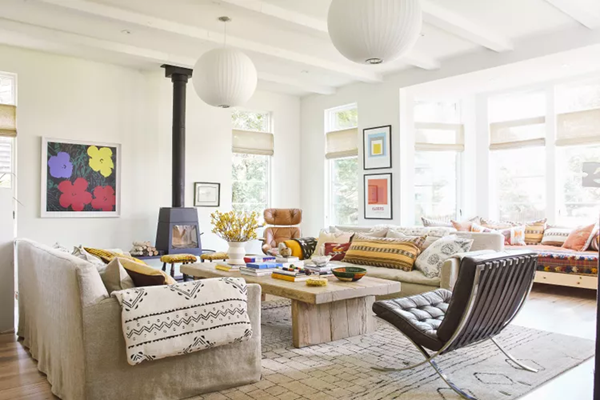
Steal These 16 Expert-Approved Decorating Secrets

How To Accessorize Your Living Room
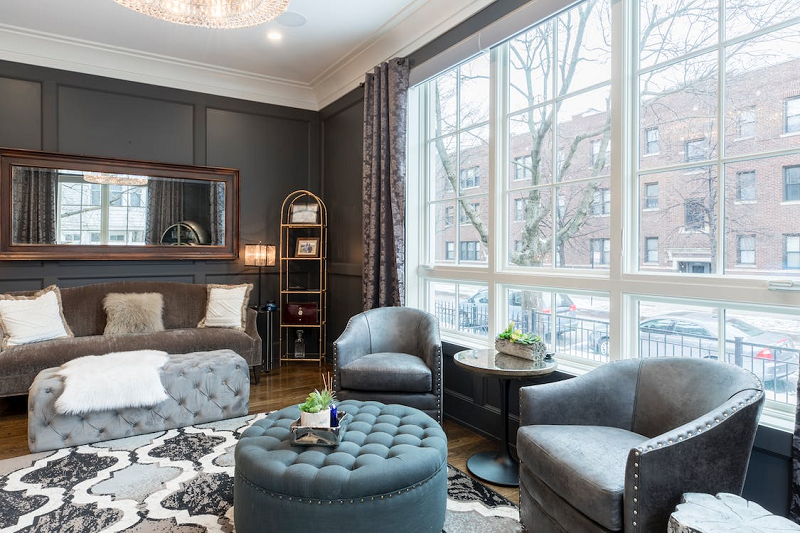
Small Space? 10 Ways To Make A Room Appear Bigger
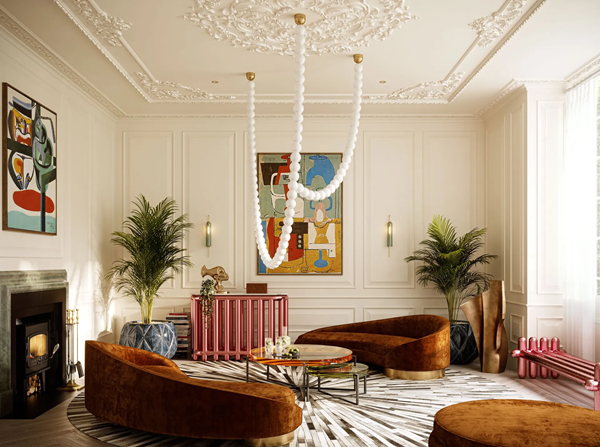
Make Your space Look Expensive
GET CAUGHT UP ON ALL THE INSPIRING DECOR TIPS:
18 Fresh Decorating Ideas To Update Your Fireplace
How to Make a Gallery Wall: The Complete Step-by-Step Guide (Even If You’ve Never Hung a Picture)


